28 August 2026
/

By Faradilla A.
/

8 minutes read

                </div>
            </div>

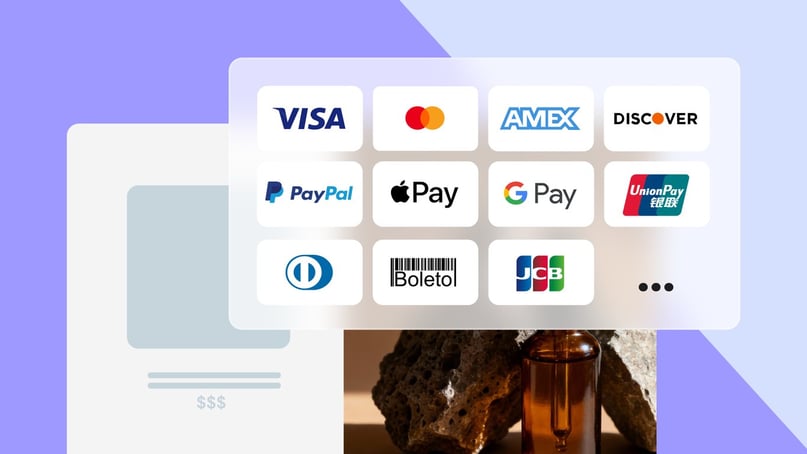
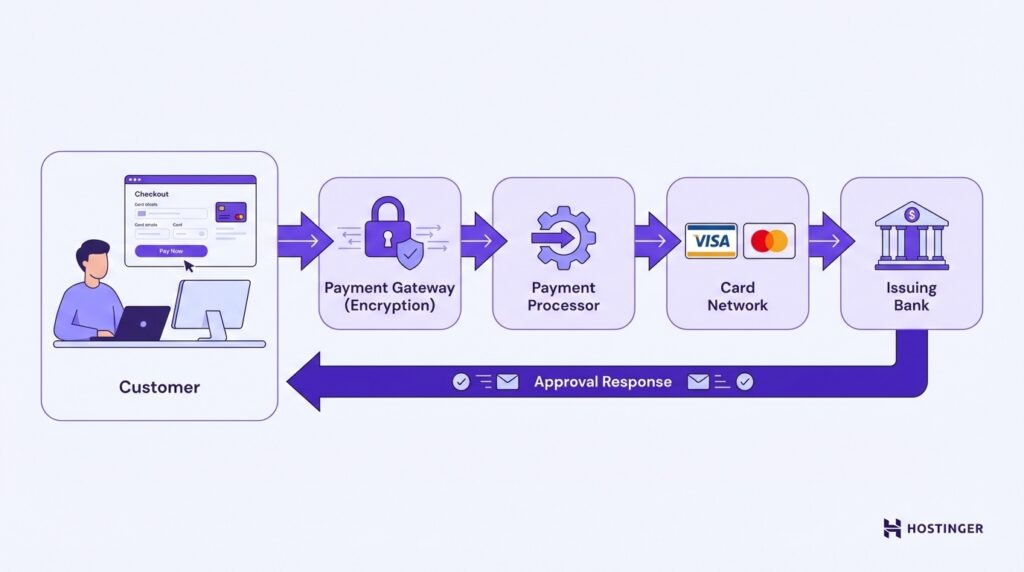
                            <p class="wp-block-paragraph">A payment gateway is a technology that transmits payment details securely among customers, merchants, and participating banks.</p><p class="wp-block-paragraph">It encrypts card or digital wallet details, forwards an authorization request to the issuing bank, and promptly returns either an approval or a denial in a matter of seconds.</p><p class="wp-block-paragraph">Every transaction undergoes a series of steps to verify payment details, check that funds are available, and start the transfer process between the involved financial institutions.</p><p class="wp-block-paragraph">Beyond merely facilitating transaction approvals, a payment gateway also manages authorization, encryption, and settlement processes, collaborates with payment processors, and exists in various forms. Consequently, before embedding a payment gateway into your business’s payment infrastructure, choose the appropriate option thoughtfully to prevent possible financial setbacks.</p><h2 class="wp-block-heading" id="h-fungsi-utama-payment-gateway">Primary functions of a payment gateway</h2><p class="wp-block-paragraph">A payment gateway typically performs four core tasks: authorization, encryption, fraud detection, and settlement.</p><p class="wp-block-paragraph"><strong>Authorization</strong></p><p class="wp-block-paragraph">Authorization verifies that the customer's payment details are legitimate and that the account has enough funds or credit capacity to cover the purchase.</p><p class="wp-block-paragraph">As soon as a shopper inputs card details on an e‑commerce site, the payment gateway forwards those details to the issuing bank for approval. Should the card be valid and have adequate funds or credit, the bank grants approval; otherwise, the transaction is denied within a few seconds.</p><p class="wp-block-paragraph">The shopper will immediately see a notification such as “Payment approved” or “Card declined” once the payment data has been submitted.</p><p class="wp-block-paragraph"><strong>Encryption</strong></p><p class="wp-block-paragraph">Encryption safeguards confidential payment data during its journey from the customer's browser to the merchant’s server and the bank. Card numbers and personal details are converted into an indecipherable code while in transit, rendering any intercepted information useless to unauthorized parties.</p><p class="wp-block-paragraph"><strong>Fraud Detection</strong></p><p class="wp-block-paragraph">A fraud detection system reviews transactions for anomalous behavior prior to approval. Payment gateways are able to mark irregular actions—like several buys within minutes, mismatched billing locations, or purchases from high‑risk territories.</p><p class="wp-block-paragraph">For instance, when a user tries to complete several large bookings from distinct IP addresses within a matter of minutes, the payment gateway can put a hold on the transaction or ask for extra verification.</p><p class="wp-block-paragraph"><strong>Settlement</strong></p><p class="wp-block-paragraph">Settlement transfers money from the customer's bank, via the payment processor and the acquiring bank, into the merchant’s account once the transaction has been authorized. While authorization is nearly instant, settlement generally requires 1‑3 business days, varying by service provider and geographic area.</p><p class="wp-block-paragraph">When an online purchase succeeds, the shopper will instantly observe the purchase as a charge on their statement, whereas the seller usually does not obtain the money for one to three business days.</p><h3 class="wp-block-heading">Difference between payment gateway and payment processor</h3><p class="wp-block-paragraph">A payment gateway serves as an interface that gathers and safely transmits payment information. In contrast, a payment processor is the system that interacts with banks to manage the flow of funds.</p><p class="wp-block-paragraph">When operating an e‑commerce site, you will rely more heavily on a payment gateway—the component that links to the checkout page to capture card details and forward them for bank authorization. The payment processor, however, handles the routing of the transaction between the shopper’s bank and the seller’s acquiring bank.</p><p class="wp-block-paragraph">Think of a payment gateway as a cashier who receives payment details and relays them onward, whereas a payment processor functions as an accounting system that reaches out to banks to verify if a payment can be cleared.</p><p class="wp-block-paragraph">Both components collaborate, yet each fulfills a distinct role:</p><figure tabindex="0" class="wp-block-table"><table><thead><tr><th>Feature</th><th>Payment gateway</th><th>Payment processor</th></tr></thead><tbody readability="8"><tr readability="4"><td><strong>Geographic coverage</strong></td><td>Operates within a single country or region</td><td>Operates across multiple countries</td></tr><tr><td><strong>Currency support</strong></td><td>Primarily local currency</td><td>Multiple currencies</td></tr><tr readability="4"><td><strong>Payment methods</strong></td><td>Commonly used payment methods in the local area</td><td>Blend of global and local payment options</td></tr><tr readability="2"><td><strong>Compliance focus</strong></td><td>Local regulations</td><td>Regulatory requirements across multiple regions</td></tr><tr><td><strong>Setup complexity</strong></td><td>Generally simpler</td><td>More complex</td></tr><tr readability="4"><td><strong>Expansion support</strong></td><td>Limited to local markets</td><td>Designed for international growth</td></tr><tr readability="4"><td><strong>Potential costs</strong></td><td>Usually more cost‑effective for domestic transactions</td><td>May include cross‑border transaction and currency‑conversion fees</td></tr></tbody></table></figure><h2 class="wp-block-heading" id="h-bagaimana-cara-kerja-payment-gateway">How does a payment gateway work?</h2><p class="wp-block-paragraph">During checkout, the payment gateway receives the card details and encrypts them to safeguard the data while it travels.</p><p class="wp-block-paragraph">It forwards the encrypted data to the payment processor, which transmits it through the card network—like Visa or Mastercard—to the issuing bank for authorization. The bank's reply then travels back via the payment processor and the payment gateway to the site.</p><div class="wp-block-image">
n
To the shopper, the whole operation occurs in just a few seconds, even though multiple security mechanisms and checks are active behind the scenes.
Generally, the steps are as follows:
- n
- Customer initiates payment. The shopper enters card or digital wallet details during checkout and confirms the purchase.
- Payment gateway encrypts and securely transmits data. The payment details are encoded with security protocols like SSL/TLS, making them indecipherable while in transit. Numerous payment gateways also use tokenization to substitute the actual card number with a temporary token.
- Payment processor sends authorization request. The encrypted data reaches the payment processor, which relays it to the issuing bank. The bank checks the card’s validity and the presence of sufficient funds or credit limit.
- Bank approves or rejects the transaction. The issuing bank communicates a result via the payment processor to the payment gateway. The shopper is informed almost instantly if the transaction succeeded or was declined.
- Transaction enters settlement stage. After authorization, the transaction moves to the settlement phase, which transfers funds from the customer’s bank into the merchant’s account.
nnn
nnn
nnn
nnn
n
Authorization and authentication process
Authentication verifies identity. This step confirms that the individual making the payment is indeed the rightful cardholder. Techniques such as two‑factor authentication, one‑time passwords, or 3D Secure checks are employed to ensure the customer has actual access to the card or account.
Authorization determines if a transaction can be approved. Once identity is confirmed, the issuing bank assesses whether the transaction can proceed. The bank checks that the account holds enough funds or credit and that the card is not blocked.
In brief, authentication asks, “Is this individual the actual cardholder?” while authorization asks, “Is this transaction eligible for approval?”
Settlement and fund transfer
Once the bank has authorized a transaction, the payment moves to the settlement phase. The customer will instantly see the purchase reflected as a charge, while the merchant usually does not get the money for one to three business days.
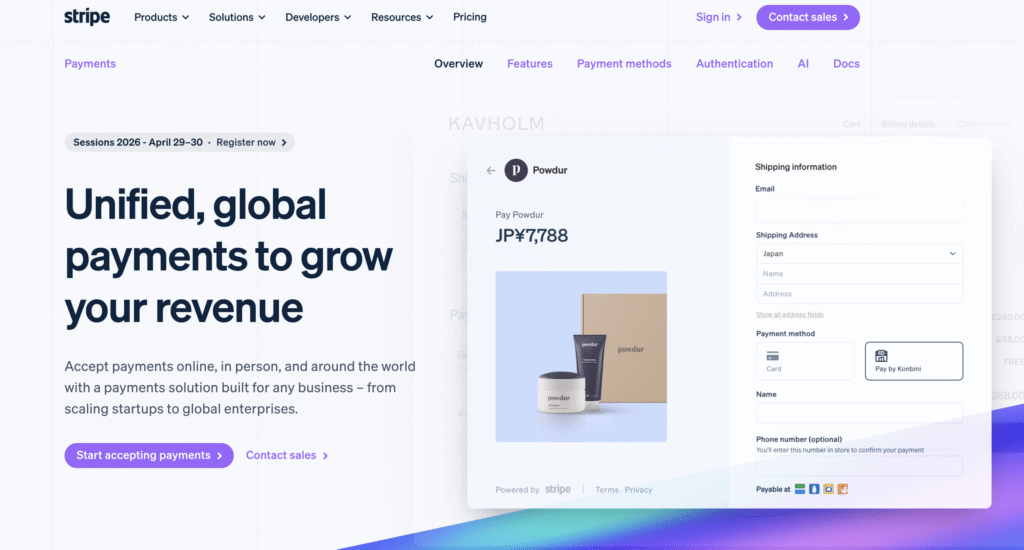
Clearing duration varies by service. Certain providers such as Stripe might keep part of a merchant’s earnings as a rolling reserve to cover potential refunds or chargebacks. The leftover amount is subsequently disbursed in line with the provider’s guidelines.
n
Alternative solutions such as PayPal provide immediate fund release at an extra cost. Traditional acquiring banks, however, commonly employ a batch clearing method, where multiple transactions are aggregated and processed during designated intervals instead of being handled individually in real time.
During this phase, the bank finalizes the payment and transfers the money to the merchant’s account. The merchant verifies that the received amount aligns with the authorized transaction value.
Despite the money being in the account already, the customer could raise a dispute concerning the purchase. In such cases, the funds may be placed on hold temporarily while the disagreement is examined. Consequently, maintaining thorough and well‑structured transaction documentation is vital.
Types of payment gateways
Payment gateways are categorized according to their processing method—hosted or self‑hosted—and their geographic reach, which can be local or global.
Hosted payment gateway
A hosted payment gateway sends shoppers away from the merchant’s site to a secure page controlled by the service provider for payment completion.
When the shopper clicks “Pay,” they are directed to the checkout page managed by the payment gateway provider. After entering payment details and finishing the transaction, the customer is sent back to the online store.
Advantages of hosted payment gateways:
- n
- Faster setup
- Lower technical complexity
- PCI compliance handled by the provider
nnn
nnn
n
Disadvantages of hosted payment gateways:
- n
- Limited control over checkout design
- Redirecting to another page can disrupt the user experience
nnn
n
Examples of hosted payment gateways include PayPal and Shopify Payments. With this model, the payment process occurs through a secure checkout page managed by the service provider.
Self‑hosted (integrated) payment gateway
A self‑hosted (integrated) payment gateway enables shoppers to input payment details right on the merchant’s website.
Instead of redirecting to an external checkout, the payment form is displayed directly within the online store. Card data is collected on the website and then securely sent to the payment processor for authorization.
Benefits of self‑hosted payment gateways:
- n
- Complete control over checkout design and branding
- Smoother customer experience without page redirects
- Greater flexibility for custom feature development
nnn
nnn
n
Drawbacks of self‑hosted payment gateways:
- n
- Higher technical complexity
- Greater PCI compliance responsibility
- Security management requires additional attention
nnn
nnn
n
With this approach, businesses have a more direct role in handling payment data. Even though sensitive details are tokenized or transmitted securely, you must still guarantee that your website meets applicable security standards and compliance requirements.
Local versus global payment gateways
A local payment gateway processes transactions inside a particular country or area, while a global payment gateway supports purchases across several nations and currencies.
Local payment gateways concentrate on a single market. They support the domestic currency, link to local banks, and provide region‑specific payment methods that customers recognize and trust.
For instance, Paystack functions across multiple African regions and supports local cards as well as bank transfers.
n
When the majority of customers are based in a single country, a local payment gateway often yields higher approval rates and a smoother checkout experience, as it aligns better with local payment habits and regulations.
Global payment gateways such as Adyen facilitate cross‑border transactions. Through a unified system, businesses can accept payments in multiple currencies and serve customers across various countries.
Payment regulations vary by location. In the European Union, for example, payment service providers must comply with the Revised Payment Services Directive (PSD2). This law requires Strong Customer Authentication (SCA), meaning shoppers may need to verify their identity using a two‑step process, such as a password and a one‑time code.
Certain jurisdictions also mandate that payment data be stored locally or enforce strict fraud‑monitoring standards. To legally process payments, a payment gateway must adhere to the regulations of each market in which the business operates.
Choosing between a local and a global payment gateway depends on the target market and the business’s growth plans. Key distinctions include:
| Feature | Local payment gateway | Global payment gateway |
|---|---|---|
| Geographic coverage | Operates within a single country or region | Operates across multiple countries |
| Currency support | Primarily local currency | Multiple currencies |
| Payment methods | Commonly used payment methods in the local area | Blend of global and local payment options |
| Compliance focus | Local regulations | Regulatory requirements across multiple regions |
| Setup complexity | Generally simpler | More complex |
| Expansion support | Limited to local markets | Designed for international growth |
| Potential costs | Usually more cost‑effective for domestic transactions | May include cross‑border transaction and currency‑conversion fees |
Key factors to consider when selecting a payment gateway
Choosing a payment gateway influences operational costs, the customer experience, and a business’s capacity to scale over time. Prior to integration with an online store, evaluate the following considerations:
- n
- Cost. Calculate the total monthly expense, not merely the per‑transaction fee. Include cross‑border transaction fees, currency conversion charges, chargebacks, and refund policies in your calculation.
- Security features. Verify that the payment gateway complies with PCI standards and employs encryption and tokenization. Also assess the availability of fraud‑detection capabilities, 3D Secure support, and adherence to regulations such as SCA if your business operates in jurisdictions that require them.
- Customer support. Prior to selecting a provider, test the quality of its support by asking pre‑sale questions. Observe how quickly and clearly the responses are given. If your business heavily depends on seamless payments, prioritize vendors that provide round‑the‑clock assistance.
- API and plugin support. Confirm that the payment gateway can be integrated with your platform via official plugins or APIs. Prior to launch, test the entire checkout flow, encompassing failed payment scenarios and refund processes.
- Fund settlement time. Examine how long it takes for funds to reach your account and whether the provider uses a rolling reserve. Delays or holds can impact cash flow, so select a vendor with transparent and predictable settlement terms.
- Customer trust. Offer payment methods that are familiar and favored by your customers. To identify these, review the payment options used by competitors or analyze your own business data. Popular methods can lessen checkout friction and boost conversion rates.
nnn
nnn
nnn
nnn
nnn
n
n Certain providers impose an initial transaction fee even when a refund is issued. For businesses that regularly handle refunds, this rule can markedly raise overall transaction expenses.n
n
Building a sustainable online payment strategy
The choice of payment gateway shapes customer confidence in an online store, determines how a business manages risk, and influences its ability to grow.
When shoppers enter card details, they entrust their financial information to your business. This trust is cultivated through visible e‑commerce security measures, reliable system performance, PCI compliance, and a consistent checkout experience.
The payment ecosystem is constantly evolving. Fraud tactics become more sophisticated, regulations grow stricter, and customers demand greater transparency concerning fees and data protection.
- n
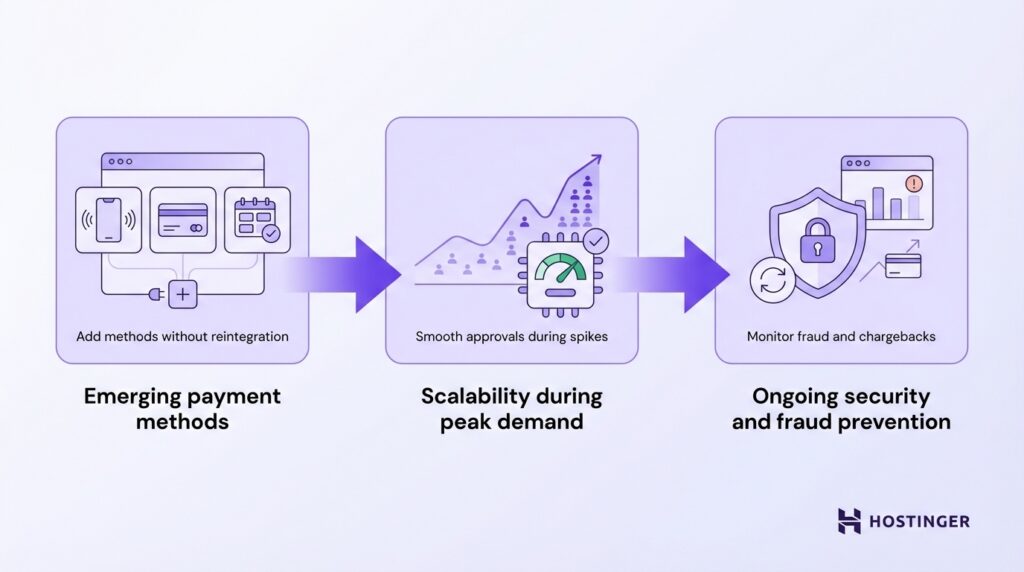
- Emerging payment methods. Verify that the payment gateway supports increasingly popular options such as digital wallets and buy‑now, pay‑later services. Choose a provider that can introduce new payment types without requiring a full re‑integration.
- Scalability during demand spikes. Confirm that the payment gateway can manage surges in traffic during promotions or product launches without slowing authorization times or causing checkout errors.
- Ongoing security and fraud prevention. Make sure the provider regularly updates security systems and monitors for potential fraud. Periodically review transaction data to spot unusual patterns or rising chargeback rates.
nnn
nnn
n
n
Reassess payment gateway security at least annually or whenever the business model shifts. Expanding into new markets, increasing transaction volume, or adding fresh payment types may require additional features or capabilities from the gateway.
A resilient payment strategy relies on flexibility, fraud prevention, regulatory compliance, and customer confidence. Therefore, selecting a payment gateway should be seen as a long‑term infrastructure decision rather than just a checkout‑feature choice.
n n All tutorial content on this site has been thoroughly reviewed in accordance with Hostinger’s editorial standards and commitments.n n
n n nn
 n
n n
n
n n n
n
n Faradilla, commonly known as Ninda, brings a decade of experience as a linguist and five years in content marketing at Hostinger. She stays updated with tech trends, digital marketing, and language learning. Through Hostinger tutorials, Ninda aims to share knowledge and assist readers in solving problems they encounter. Get to know her better on LinkedIn.n
n
n n
nn
Discover additional guides on the Seputar Tutorial Page. Thanks for stopping by thecuy! 🙂

Saya adalah jurnalis di thecuy.com yang fokus menghadirkan berita terkini, analisis mendalam, dan informasi terpercaya seputar perkembangan dunia finansial, bisnis, teknologi, dan isu-isu terkini yang relevan bagi pembaca Indonesia.
Sebagai jurnalis, saya berkomitmen untuk:
Menyajikan berita yang akurasi dan faktanya terverifikasi.
Menulis dengan bahasa yang mudah dipahami, namun tetap menjaga integritas jurnalistik.
Menghadirkan laporan mendalam yang memberi perspektif baru bagi pembaca.
Di thecuy.com, saya tidak hanya melaporkan berita, tetapi juga berupaya menganalisis tren agar pembaca dapat memahami konteks di balik setiap peristiwa.
📌 Bidang Liputan Utama:
Berita Terbaru & ekonomi, keuangan.
Perkembangan teknologi dan inovasi digital.
Tren bisnis dan investasi.
Misi saya adalah membantu pembaca mendapatkan informasi yang cepat, akurat, dan dapat dipercaya, sehingga mereka bisa membuat keputusan yang lebih cerdas dalam kehidupan sehari-hari maupun dunia usaha.
📞 Kontak
Untuk kerja sama media atau wawancara, silakan hubungi melalui halaman Kontak thecuy.com atau email langsung ke [email protected].