
Yoichi Takahashi, the figure credited with making Japan fall in love with football, met with us for an interview. He shared insights on why the character Tsubasa almost bore the name Taro, why he declined to craft a villainous trainer, and which celebrated athlete most resembles the true essence of his creation.

Rarely does a manga claim to have reshaped a nation, yet Captain Tsubasa stands apart. When Yoichi Takahashi, a high school student living in Tokyo’s Katsushika district, tuned in to the 1978 World Cup in Argentina on TV, football was virtually unknown in Japan. Three years later, the character Tsubasa Ozora struck his first ball on the pages of Weekly Shonen Jump, inspiring a whole generation of youngsters to take up the sport.
The J.League was launched in 1993. Several legendary players—Zidane, Iniesta, Messi and Mbappé—have all credited a boy whose name evokes “wings” as the inspiration that sparked their love for the game. Over four and a half decades, more than 80 million copies sold, multiple anime adaptations and a real football club later, the series endures, now presented as a storyboard on the Captain Tsubasa WORLD app, with Captain Tsubasa 2: World All-Stars released in August.

This summer, the long‑anticipated scenario Takahashi had been working toward since the first chapter finally unfolded: Japan faced Brazil in the round of 32 at the 2026 World Cup.
We sat down with Takahashi at San Diego Comic‑Con Málaga to discuss that historic fixture, the catchphrase that turned into a national saying, the adversaries who evolved beyond his original outline, and the reason Tsubasa was never forced into the grim trials typical of sports manga protagonists.
Q: You first saw a World Cup back in 1978 in Argentina, watching it on TV as a high‑school student. This summer Japan actually took to the field against Brazil—exactly the clash you’d imagined over four decades ago. Where were you when that match began, and did it feel as though you were seeing your own manga come alive?
Yoichi Takahashi: Facing Brazil in a World Cup is a remarkable moment. Tsubasa always held Brazilian football in the highest regard. He pursued his professional career in São Paulo, and his mentor, Roberto Hongo, was a Japanese‑Brazilian who had represented Brazil internationally. From the instant I began sketching football stories, Brazil represented the ultimate challenge for Japan to confront. Witnessing that encounter materialize on the world stage filled me with joy. Although we were defeated, it was an exceptional game, and I’m satisfied.
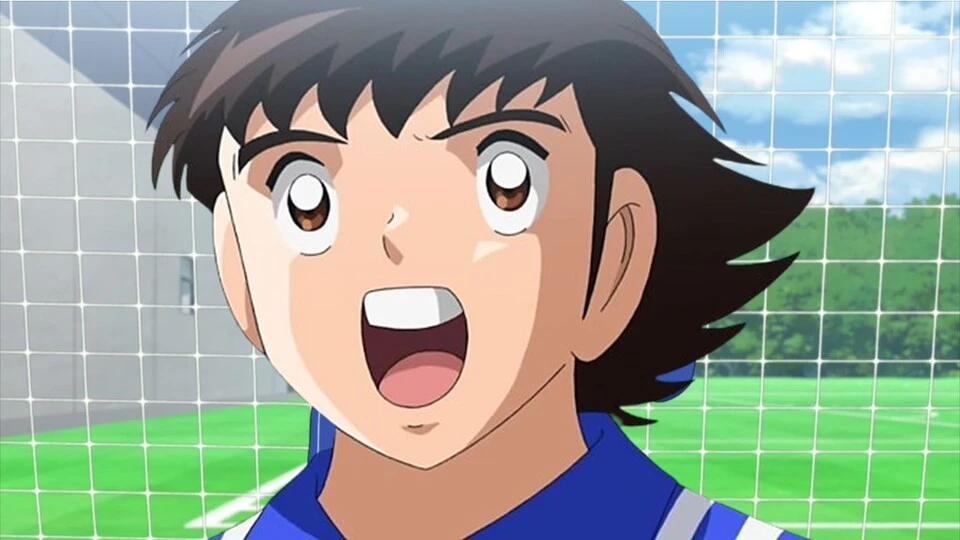
Q: The phrase “The ball is my friend” has turned into a widely recognized saying in Japan. When you first penned those words, was it merely a child’s perspective, or did you already foresee that personifying the ball could shift an entire nation’s view of football?
Yoichi Takahashi: I didn’t aim to coin a memorable expression; it just emerged on its own. In the early parts of the story, when Tsubasa is still a young child, his coach Roberto imparts basic football lessons, emphasizing that constant interaction with the ball improves skill. I figured that always being near the ball felt like being its companion, so the line naturally fell into place.
Q: The name Tsubasa Ozora, evoking “wings” and “great sky,” invites the question of whether the moniker preceded the character or vice versa. Did he almost bear a different name as well?
Yoichi Takahashi: Initially I considered naming him Tsubasa Taro. The surname “Tsubasa” was fixed from the start, while “Ozora” was introduced later. The concept of wings was the original inspiration.
Q: Modern sports narratives often spotlight prodigies, anomalies, and arrogant figures—Blue Lock being a prime illustration. In contrast, Tsubasa stands out as a hero defined by pure joy. Was this upbeat tone something you intentionally crafted, and does writing such a character feel more challenging now than it did back in 1981?
Yoichi Takahashi: At the launch of the series, the prevailing style in Japan was what we referred to as supokon, a “sports grit” genre featuring harsh drills, tyrannical coaches, and protagonists who become formidable only after enduring immense suffering. I deliberately chose the opposite approach. The essence of sport is enjoyment; striking a ball is enjoyable, and sharing that experience with friends makes it even more so—this is why anyone plays. My aim was to eliminate any sense of coercion, to portray a young athlete who embraces football joyfully because it’s his own choice. That principle guided everything I wrote.
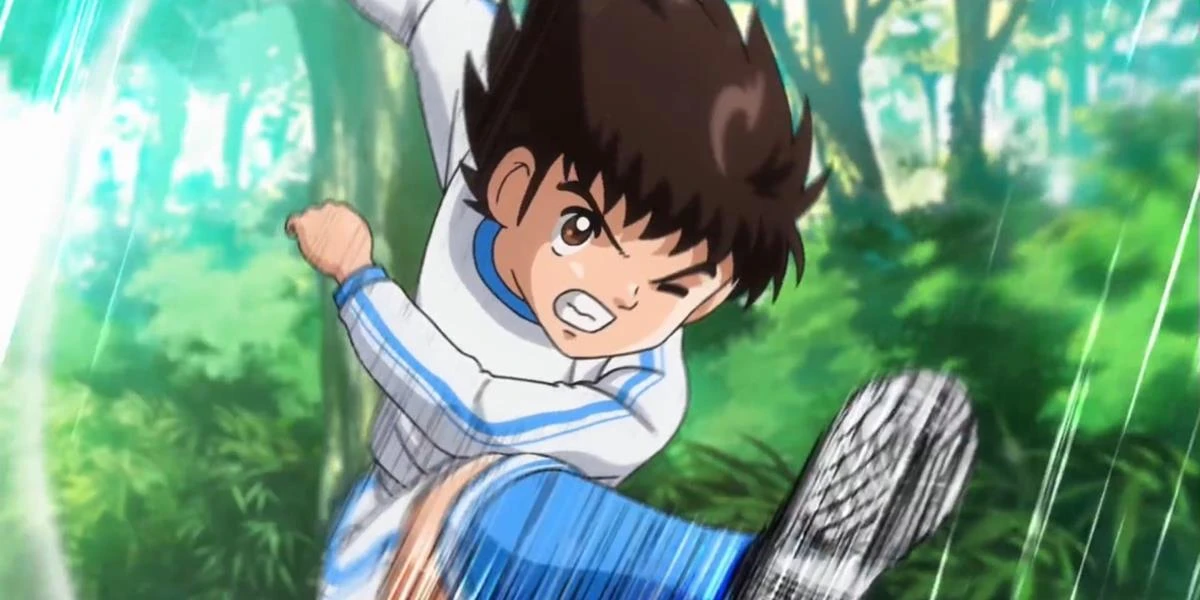
Q: Among your cast, the rivals stand out: Hyuga, the fierce tiger, and Wakabayashi, the keeper who shields the goal like a fortified gate. Do you see them as direct contrasts to Tsubasa, or as variations of the same underlying dream expressed through different perspectives?
Yoichi Takahashi: To keep Tsubasa’s narrative engaging, my initial concept was Wakabayashi: a goalkeeper facing a field player, creating the straightforward tension of whether a goal would be scored. Hyuga followed, designed as Tsubasa’s polar opposite—comfortable family background versus Hyuga’s modest, newspaper‑delivering upbringing to fund his football dreams; open, cheerful disposition contrasted with Hyuga’s intense fierceness. By flipping these traits, I ensured that their interactions heightened both the matches and the storyline. I crafted each rival by considering what kind of opponent would most intensify Tsubasa’s journey. Yet, as the characters evolved, their exaggerated qualities made readers perceive them as fully fledged personalities, eventually placing Wakabayashi and Hyuga on an equal footing with Tsubasa himself.
Q: You now manage Nankatsu SC, a genuine football club that bears the name of a fictional school from your manga. Have there been any moments on the actual field that you’d never have imagined depicting in the comics, believing your audience would find them too implausible?
Yoichi Takahashi: I tend to keep those two realms distinct in my mind. When I watch the real Nankatsu SC play, I rarely let the manga influence my thoughts. Still, since the club exists within my story, there are instances where a player executes an overhead kick, and for a fleeting instant the fictional and actual worlds seem to merge. Seeing a real‑life athlete emulate a Tsubasa‑like goal leaves a lasting impression.
Q: Shifting focus from football briefly, are there any manga or anime series you currently enjoy as a fan—something that made you think, “I wish I could have created that”?
Yoichi Takahashi: Truth be told, my manga reading habits have slowed down recently, so I’m not actively following any particular series at the moment.
Q: Several celebrated footballers—Zidane, Messi, Iniesta, and Mbappé—have acknowledged that they were inspired by Captain Tsubasa during their youth. Has any of them ever attempted to persuade you that they embody the true Tsubasa? And, in your view, who truly is the real Tsubasa?
Yoichi Takahashi: (laughs) Messi, I suppose.
Copyright: ©Yoichi Takahashi/SHUEISHA
Baca juga Anime lainnya di Info Anime & manga terbaru.
terimakasih sudah mengunjungi thecuy. 🙂

Saya adalah penulis di thecuy.com, sebuah website yang berfokus membagikan tips keuangan, investasi, dan cara mengelola uang dengan bijak, khususnya untuk pemula yang ingin belajar dari nol.
Melalui thecuy.com, saya ingin membantu pembaca memahami dunia finansial tanpa ribet, dengan bahasa yang sederhana.