
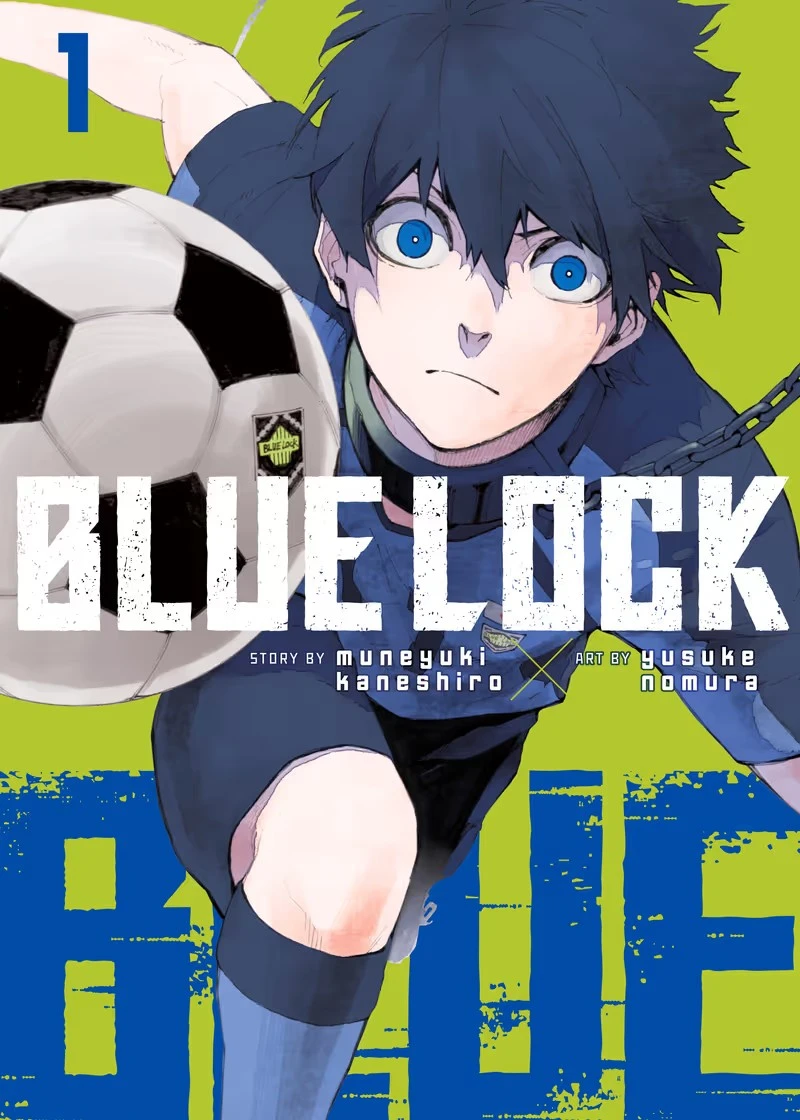
Fusing the excitement of a lethal battle series with the fast‑paced energy of a sports manga, BLUE LOCK offers an entertaining mix of the best elements from each. The writer Muneyuki Kaneshiro and the artist Yusuke Nomura crafted a narrative that subverts the usual tropes of a sports story. Typically, sports manga highlight teamwork, compassion, and selflessness, illustrated with warm, uplifting artwork. BLUE LOCK deliberately departs from that formula. Rather than teamwork and selflessness, the series centers on ego, pride, and individualism. Its illustrations depict inner “monsters” and convey intense passion, making the players appear more like fierce soccer creatures than ordinary humans.

During this year’s Kodansha House event, where BLUE LOCK featured interactive activities such as a soccer‑target game, we had the opportunity to chat with both creators. The talk ranged widely and was very engaging, delving into the artistic and narrative development, the series’ genre positioning, and even a brief mention of Attack on Titan.
Portions of this interview have been lightly edited for clarity. This interview was conducted with the assistance of an interpreter.
Q: BLUE LOCK sets itself apart from typical sports manga by expanding beyond soccer into a psychological battle narrative. When did this expanded vision first emerge during the series’ development, and how do you both feel you push the story past the confines of the sport?
Kaneshiro-sensei: From the very start of the project, I imagined blending a soccer manga with death‑game elements, featuring 300 high‑school students competing for spots in Blue Lock. I realized early on that this would make the series unlike any ordinary sports manga. It feels more like a battle manga, where characters confront life‑or‑death scenarios. That concept became the fundamental core of the story.
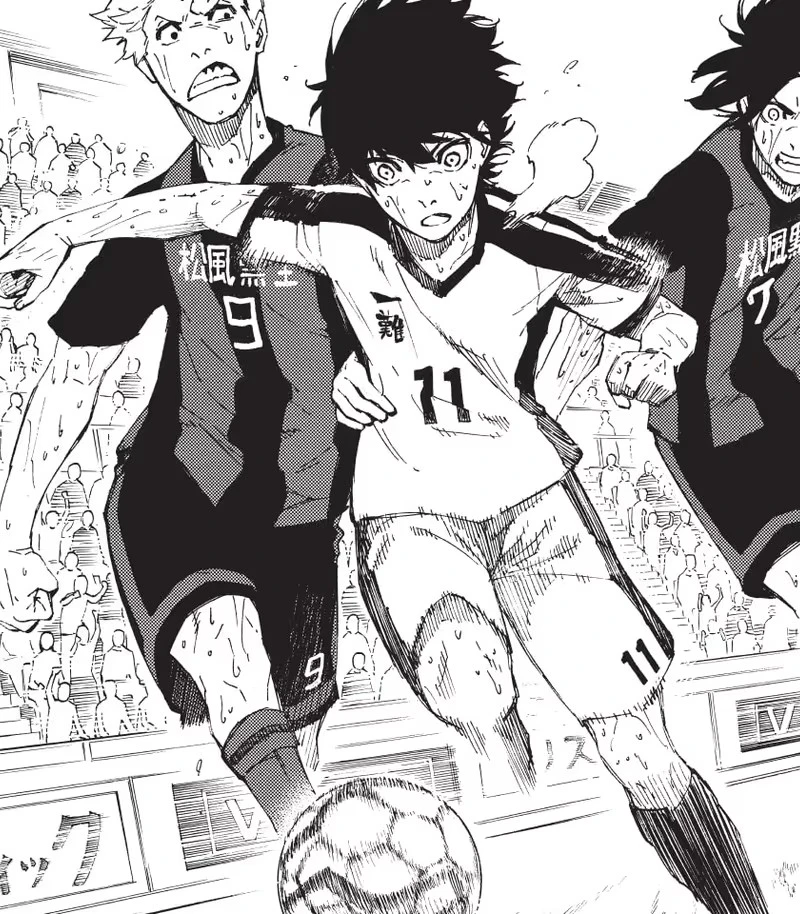
Nomura-sensei: Following Kaneshiro‑sensei’s premise, we introduced visual traits such as auras and dynamic shooting sequences to give the series the feel of a battle manga rather than a conventional sports title. This approach also makes the story appealing to younger readers or those new to soccer, presenting it as something exciting. Ultimately, we aim to transcend the typical sports manga format by merging it with the battle‑manga genre.
Q: Kaneshiro‑sensei, what inspired the central idea of the egoist characters, and did your personal sports experiences contribute to this concept?
Kaneshiro-sensei: My idea of ego stemmed from observing Japanese soccer teams that often settled for easy passes just before reaching the goal. As a fan, I frequently found myself thinking, “Why don’t they shoot?” This frustration mirrored the broader attitude in Japanese soccer at the time, leading me to believe players needed a stronger personal drive and ego, rather than merely caring about how they appeared to others. The concept of ego became a synthesis of that disappointment and what I saw on the field. Additionally, my own background in tennis—a one‑on‑one sport—influenced how I imagined soccer not as a team of eleven against one, but as a series of individual duels, a perspective I carried into the series.
Q: Nomura‑sensei, the artwork in the series is striking, especially the expressive eyes and the inner “monster” motifs. How did you develop these visual elements and bring them to life?
Nomura-sensei: I’ve already used similar techniques in earlier works, where I added intricate details to characters’ eyes and depicted them with aura‑like “monster” features. I thought it would be natural to apply those visual cues to BLUE LOCK as well, since they were my forte. My main challenge was to differentiate the series from the many other soccer manga out there. I wanted to create a unique visual identity for each character—one that would attract both newcomers to soccer and existing fans who might not typically engage with the sport.
Q: Kaneshiro‑sensei, the characters’ actions often serve as commentary on soccer, sports, and broader societal themes. How do you use your characters to deliver these messages—do you approach it organically or with deliberate intent?
Kaneshiro-sensei: It’s an excellent question. As I’ve said before, there are moments in my life in Japan that I couldn’t quite articulate—like wishing I’d spoken up or wondering why someone remained silent when they felt something. These unresolved feelings are what drove me to weave the concept of ego into the series, reflecting my own observations of Japanese society. When those emotions are transferred into a character like Isagi—who embodies aspects of me and the ideas we brainstormed with Nomura‑sensei—the character resonates widely, gaining popularity both in Japan and internationally. This makes me realize that the message we’re exploring in BLUE LOCK is both universal and distinctive, which is both thrilling and a bit unsettling to me.
Q: Since the series began, it has spanned several World Cup tournaments. How does this global event affect the series’ popularity, and do actual soccer matches shape the story or its illustrations?
Kaneshiro-sensei: The World Cup has a major impact on our work. We initially timed the anime’s release to coincide with the most recent World Cup four years ago, and the Japanese team’s loss at that tournament served as a catalyst for launching the series. We continuously monitor the performances of the Japanese squad and other national teams worldwide. Each time the World Cup rolls around, we imagine “What if Japan wins?”—which excites us while also creating narrative challenges, as a victory could alter the story’s direction. This blend of enthusiasm and caution guides our process.
Nomura-sensei: My goal was to make the series appealing to readers who aren’t deeply familiar with soccer. To achieve this, I studied the sport extensively while developing BLUE LOCK. The manga is intended to serve as an entry point for newcomers to discover and enjoy the game. We’re continuously learning and evolving, which I believe is our most significant contribution to the soccer community.
Q: Do you ever fear that your portrayals might draw criticism from actual soccer players?
Kaneshiro-sensei: I’m a bit concerned about possible backlash from actual soccer players. However, we made a conscious decision to include these elements because they help deliver the most compelling narrative and character development. That’s why we chose to portray them this way.
Q: Is there any character that either of you would like to explore further or give more spotlight to, perhaps in a side story?
Kaneshiro-sensei: There are quite a few. I think Igaguri (Gurimu Igarashi) could definitely be a stronger character and perhaps a more formidable player in a different scenario.
Nomura-sensei: If we were to create a spin‑off or side story, I’d love to focus on a character like Shido (Ryusei Shido) or Rin (Rin Itoshi). While Rin will get more development in the main series, Shido remains largely mysterious—his backstory is unknown. Exploring Shido in depth would be something I enjoy writing, and I think fans would appreciate it as well.
Q: Over the course of the series’ run, have there been any significant shifts in how you approach storytelling or illustration?
Nomura-sensei: As the series progresses, we’ve seen our readership expand, and the story has branched into anime, stage plays, novels, and films, each attracting new audiences. With that growth comes a sense of responsibility; I feel I must confront each character as an individual, carefully examining their personality and ensuring my portrayal resonates with them.
Kaneshiro-sensei: I’m genuinely amazed by the global number of readers and fans the series has gathered. Yet, I also feel the need to stay true to my own emotions about the story, as that’s where everything started. My current role is simply to delve deeper into myself; that’s the only way I can keep crafting the narrative.
Q: Both of you have ties to Hajime Isayama‑sensei. Which of his titans would you consider the most formidable as a striker?
Both: Reiner.
Nomura-sensei: He would be ideal for stopping a ball. As for his offensive capabilities, I’m not certain.
Kaneshiro-sensei: What about Annie?
Nomura-sensei: You mean the Female Titan?
Kaneshiro-sensei: She was known for kicking opponents. If there were a ball, I’d picture Reiner as the defender and Annie as the forward—the most powerful pairing among the titans.
We extend our gratitude to Muneyuki Kaneshiro‑sensei and Yusuke Nomura‑sensei for sharing their time and insights with us, and we thank Kodansha for arranging what turned out to be a highly engaging interview. Although Anime Expo and Los Angeles Kodansha House have concluded, keep an eye out for future Kodansha events—like New York Kodansha House—coming soon. You can explore BLUE LOCK on Kodansha’s platforms.
Blue Lock © Muneyuki Kaneshiro, Yusuke Nomura/KODANSHA LTD.
Explore more anime and manga at Info Anime & manga terbaru.
terimakasih sudah mengunjungi thecuy. 🙂

Saya adalah penulis di thecuy.com, sebuah website yang berfokus membagikan tips keuangan, investasi, dan cara mengelola uang dengan bijak, khususnya untuk pemula yang ingin belajar dari nol.
Melalui thecuy.com, saya ingin membantu pembaca memahami dunia finansial tanpa ribet, dengan bahasa yang sederhana.