
When the concept trailer for Goodbye, Lara premiered, I instantly sensed the soundtrack would be extraordinary: lively, unrestricted, nostalgic, magical, fresh, and instantly conjuring images of phenomena and memories I can’t even name, maybe never encountered.
It’s pure fantasy. With my eyes shut, a stream of consciousness shows me old Disney movies through a window — their vivid 2D worlds — then The Wizard of Oz, and scenes and feelings of golden days and imaginary realms never lived, until I figuratively get off at a train station to talk to Goodbye, Lara composer yuma yamaguchi and hear his thoughts. Like a train ride, you sometimes step off at a place you seldom visit. You start thinking differently; you re‑examine things that are supposedly trivial.
If someone claimed worldbuilding includes music, you’d likely hear a “Yeah, obviously” in reply. (Unless you’re chatting on Twitter, where it’s become a meme to mock anyone who suggests art direction covers more than just backdrops.) But what if worldbuilding actually encompasses music, then? There’s a big gap between casually knowing something and the effort it takes to prove this often‑overlooked truth. A soundtrack like Goodbye, Lara highlights that necessity. The whole creative process served as a reminder. It shows that music is worldbuilding — shouts it — and insists that if you crave fantasy, you must construct it with everything you have.
Below is the music interview with yuma yamaguchi. Hopefully you won’t feel rushed, and you can enjoy the music woven throughout this article, even beyond the specific questions it accompanies.
Q) I told you that I would see you on payday! We’re getting to experience the soundtrack you composed in real time, but for you, it’s perhaps been finished for some time. How are you, and what are you up to currently outside of music?
yuma yamaguchi: Haha, I loved your original tweet: “Goodbye Lara OST might be the greatest thing ever when it out. yuma yamaguchi I will see YOU on payday.” I definitely didn’t expect that it would lead to an interview! I’ve just been writing a lot of music lately. I think I’ve already finished a few more soundtracks since I completed Goodbye, Lara.
Q) How would you like to introduce yourself to readers?
yuma yamaguchi: Hi! I’m Yuma Yamaguchi, a composer and pianist based in Japan. I primarily create music for films, TV shows, and anime. I’d describe my musical background as an almost equal blend of classical, jazz, and dance/electronic music. That mix is probably a big part of what gives my music its distinct sound.
Q) The soundtrack dropped on September 30. Are there differences in the song versions between the anime and the soundtrack?
yuma yamaguchi: They’re mostly the same, but there are a few tweaks. For instance, Disc 1 M20, “two horizons,” lacks vocals in the anime because they didn’t fit the scene. The vocals were part of the original piece, so I kept them on the soundtrack. My daughter actually sings on that track! Also, some tracks used in key scenes, like “SaYoNaRa (feat. Ohzora Kimishima)” and “S.A.Y.O.N.A.R.A. (feat. Kaori Sakakibara),” are longer on the soundtrack. Those are the full versions as I originally wrote them.
Composing Anime OSTs: Rather Than ‘Fantasy Song 00X’, Music That Forms a True Part of a World
Writer’s Note: Optional to read.
Initially, I intended to ask yuma yamaguchi about the meetings he held with the other anime staff, but I felt that question didn’t properly set up how intertwined the soundtrack is with the visuals. Goodbye, Lara’s design is so distinctive, and the soundtrack is an essential part of that. The image a question like ‘What meetings did you have?’ might conjure in a reader’s mind could range from <yuma yamaguchi receiving a brief outline and having a quick check‑in every few months to see progress>, to <all‑nighters, arguments, back‑and‑forths, location scouting, and designing scenes together>.
Instead of Goodbye, Lara’s OST just being a backing track – like a Fantasy Song 00X – the music makes up part of the world. To the point that the images feel the way they do and evoke the nostalgia and emotion they do because of the accompanying sound.
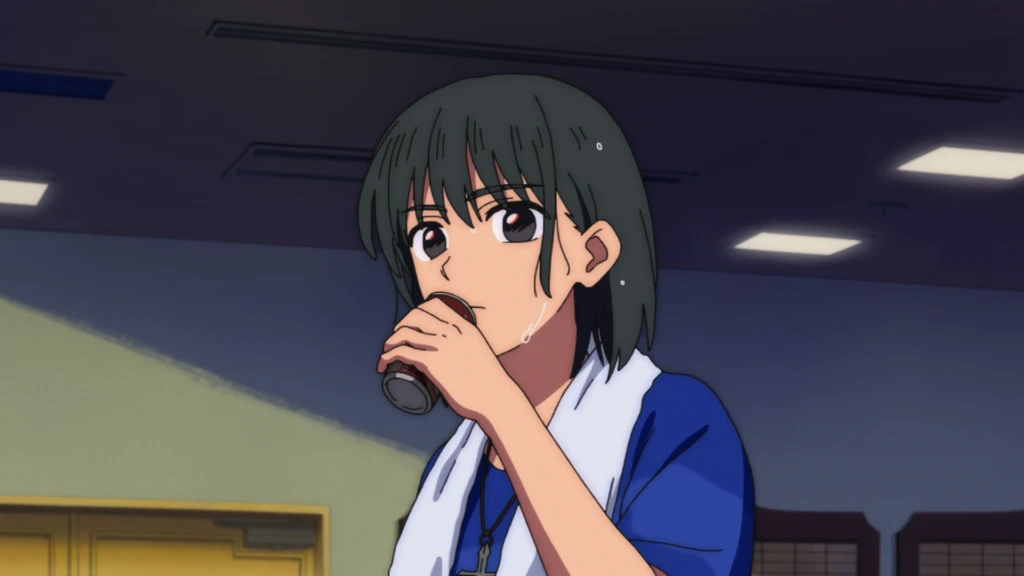
Goodbye, Lara’s director Takushi Koide coming to yuma yamaguchi’s home, going through multiple retakes, and advising on a song’s key made me realize the difference between my sensibilities and theirs. [Goodbye, Lara Official X]
I shared these thoughts with yuma yamaguchi, and wanted to hear it from the person himself.
Q) There are a lot of words that can describe the soundtrack. Wondrous, breathless, transformational – tension, too. ‘Tension’ can carry a sense of darkness, but here I would say it’s pushing the listener forward in an optimistic way.
The word ‘liminal’ has become incredibly popular in recent years, and it also comes to mind. Could you share the thoughts you employed from the design stage – the words/moods/cohesive vision that you used to create this soundtrack?
yuma yamaguchi: Thank you for your warm words about the soundtrack. As you noted, we didn’t have typical music slots like “Fantasy Song 00X” on Goodbye, Lara at all. From the very first meeting, we discussed far more specific things. One early idea was that the music for the scene in Episode 1 where Lara emerges from Lake Biwa could become one of the series’ main themes. I also felt I couldn’t really conceive the music for the whole series until I had written that scene first. That’s when I realized that, for this project, I didn’t want to deliberately make something alternative or avant‑garde. I felt I needed to confront what I consider my own version of a classic sound. Of course, my idea of “classic” might not sound very classic to everyone else! (laughs) The basic concept was to center the score around the orchestra while seeking a more contemporary feel through harmony, textures, and timbres. I wanted to use something as traditional as an orchestra but make it sound like something I’d create now. That balance was something I kept thinking about throughout the entire soundtrack.
Q) Could you help bridge that gap in sensibilities – how did your personal working style and those of the director and other Goodbye, Lara anime staff influence the collaborative process? Who did you work closely with?
yuma yamaguchi: I collaborated very closely with Koide‑san. At the same time, he really trusted me, leaving most musical decisions to me. Instead, we spent a huge amount of time making sure I understood what he was trying to achieve with each scene—what it meant, why he was directing it a certain way, and how he wanted the audience to feel. Sometimes he’d come to my studio late at night after finishing his anime work, and we’d talk about the music. Other times, I’d bring a keyboard to Kinema Citrus and we’d sit there brainstorming together. Looking back, we really took our time crafting the score as a team. I think the more specific the musical direction becomes, the more precisely the music can fit a scene, but it also creates more restrictions. Because Koide‑san trusted me and gave me so much freedom, I ended up questioning myself a lot: “Is this really the best thing for this scene?” “Could there be something that fits this series better?” I was constantly thinking about those things while writing. So it was difficult at times, but it was also a really creative process.
Q) The soundtrack has been at the forefront of the anime’s design from the beginning, even with the original concept video and PVs. Considering this anime project and its planning as a whole, what are your views on how the OST has been intertwined with the world via the anime’s planning, production, editing, marketing, etc.?
W/N: Play n’ read:
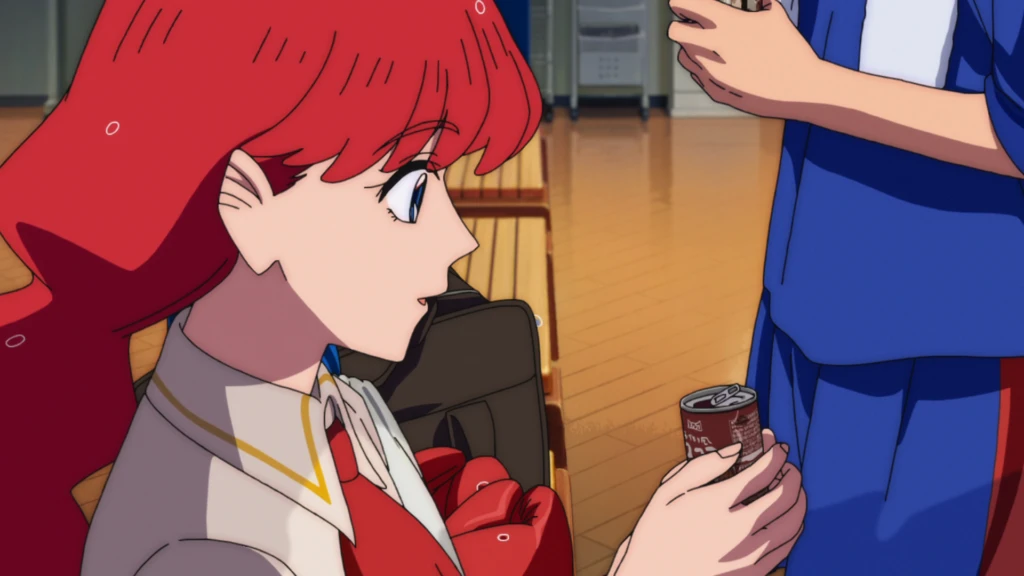
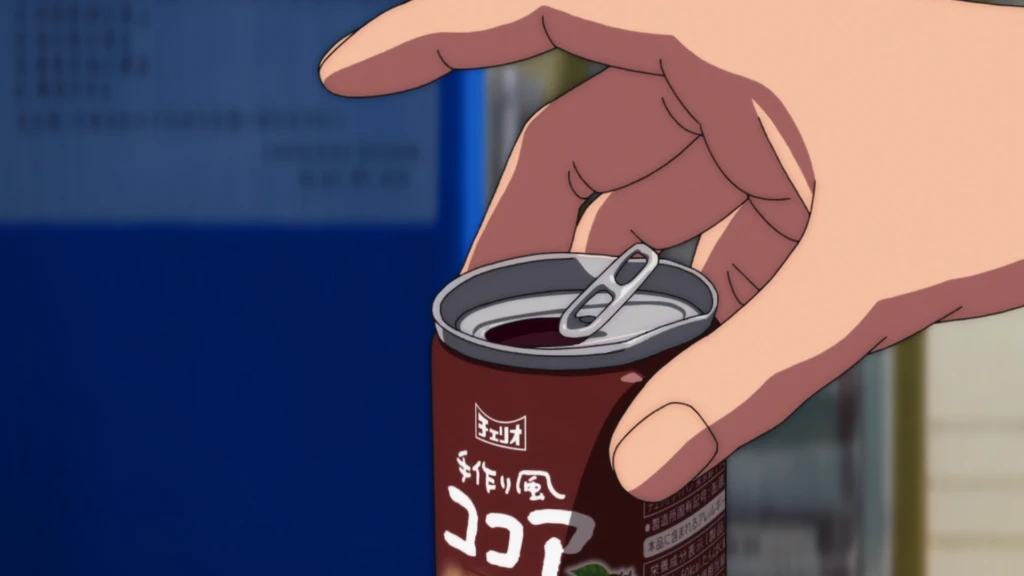
yuma yamaguchi: With this project, I don’t really feel like I wrote music after the anime was finished and then added it. With a typical TV anime score, you often start with a music menu—something like, “We need this kind of piece for this kind of scene”—and then compose based on that. With Goodbye, Lara, I first wrote around five pieces, and Koide‑san and I listened to them together and gradually figured out the direction of the music. So there wasn’t a complete plan for the music from the start. We were figuring out the music as the anime itself was taking shape. And it wasn’t one‑way. I would get inspiration from the visuals and write music, but Koide‑san would also get ideas from the music, and sometimes that would affect the visuals or the direction. The cocoa scene in Episode 2 is a good example. I played Koide‑san a piece that wasn’t originally written for that scene, and he said he wanted to use it there. There’s actually more than 30 seconds before the music starts where you hear almost nothing but ambient sound, because he wanted to create space for the music to be truly heard. Then, once the visuals started coming together, I went back and re‑recorded the guitar and adjusted the performances to fit the picture. So even though the piece wasn’t originally written as film scoring, it ended up becoming almost like film scoring. The visuals inspired the music, the music then changed the visuals, and that led me to change the music again. My music was already being used from the teaser PV stage, so looking back, I honestly can’t draw a clear line between where the anime influenced the music and where the music influenced the anime. The music wasn’t something added at the end to decorate the finished work. It became one of the materials we were using to build Goodbye, Lara from quite early on.
Q) While some composers may prefer total independence or a less involved working arrangement, what would you say can often be forgotten or overlooked at a producer-level about what it actually takes to ensure music is part of the world (rather than generic Fantasy Song 00X)?
yuma yamaguchi: Of course, there are times when specific musical direction is necessary. But I think the more detailed the instructions become, the more precisely the music can fit that particular scene, while at the same time leaving less room for the composer’s own expression. You might end up with the “correct” music for that scene, but it may not necessarily become music that could only exist in that particular series. With Goodbye, Lara, Koide‑san and I actually talked much more about the story than about the music itself. What does this scene mean? What is the character feeling? How do we want the audience to feel? We went very deep into those things, but when it came to turning all of that into music, he trusted me and gave me a lot of freedom. So instead of looking from the outside and thinking, “What kind of music is this series supposed to have?”, I could talk with him about the story in detail and then express whatever came naturally from me as music. Actually, with Goodbye, Lara, I surprisingly didn’t feel like I was constantly “writing music to fit the anime.” There were moments when it felt closer to making my own album. For me, maybe the ideal process is to share everything about the story, but then trust the composer when it’s time to translate that into music. That way, the world of the project and whatever the composer naturally brings to it can mix together, and you might end up with music that could only exist in that particular work. I think that worked really well on Goodbye, Lara.
Q8) Closing one’s eyes and listening to the soundtrack, your use of panning really surrounds and immerses the listener – from the vocals and piano to these really dainty, floating sounds. How do you go from scratch, with nothing written down yet, to designing how the sound elements pan and immerse the listener?
yuma yamaguchi: For this score, my basic approach was to create a contemporary sound using an orchestra, so I thought a lot about the spatial placement of the sounds as well. There were basically two approaches. The first was completely acoustic. I started with a fairly traditional orchestral layout, but we did something unusual: we recorded the different sections separately. Some pieces on the soundtrack sound like a large orchestra, while others are much drier and closer to chamber music. To get both of those sounds the way I wanted, I needed quite a lot of control over the space. So we recorded the orchestra relatively dry, and then I built the space and ambience around it afterward. I also adjusted the placement of individual instruments pretty carefully, while still using a traditional orchestral layout as the starting point. The other approach was to take the orchestra, solo violin, winds, and other instruments we had recorded and put those sounds into granular synths and samplers as material for sound design. With those sounds, I was designing the timbre and the spatial placement at the same time. I think that’s probably part of what gives the score its slightly unusual sound. I did a lot of processing with recorded material through granular synths and samplers, but I didn’t use any sounds made purely from synthesizers.
When listening to the soundtrack, I find myself really chasing the different ways sound elements move and pan.
- Example: “Goodbye, Lara” (feat. Tatiana Parra)
But when you’re watching the anime, because of the visuals and drama, you’re not necessarily consciously aware of the movement of the sound elements or the soundtrack’s layers/depth. However, these things are surely affecting you nonetheless. — What are your thoughts about the subconscious in relation to the many layers of the soundtrack that people won’t consciously hear? Why do you still include these elements? Do they still matter? Is that information lost? Are the effects of these sounds transformed as a result? – Hopefully, you can discuss this sort of thing.
yuma yamaguchi: Sometimes the process of making something can get pretty complicated, but that doesn’t mean I want the music itself to sound complicated. I don’t think listeners need to notice every layer or every little phrase. But I do think paying attention to those details can make a big difference to the overall impression of the music. To give a slightly exaggerated example, sometimes removing just one pad layer can suddenly make a piece sound unfinished, or even make it feel like a different genre from what I intended. Also, lots of small phrases and movements can come together and become one larger mass of sound. You might not hear each individual phrase separately, but that whole mass can almost function like a melody of its own. So I don’t think that information is lost just because the listener isn’t consciously noticing it. It’s still there subconsciously, and it contributes to that overall feeling of “I don’t know exactly why, but this makes me feel this way.” “Goodbye, Lara (feat. Tatiana Parra)” is a good example of how I think about this. Instead of having one particular instrument directly support Tatiana’s melody, I wanted the strings, winds, and percussion to each have their own small movements, with all of them together surrounding her melody. When everything is there, you probably don’t consciously notice every individual part. But if you took even one of those parts away, I think you’d immediately feel that something was missing. So even if the listener isn’t thinking, “Oh, this instrument is moving like this,” that information is still there in the music.
Q) A few years ago, there was a popular music trend where people would demonstrate the complexity of composition by building a song from Level 0 to Level 10.
The depth of Goodbye, Lara’s soundtrack – its small sounds, and the way the sounds move and pan and come together to create each song — seem really high-level. While there are probably issues with talking about music in this way, hopefully you can take us through a very general approximation of iteratively building a song with the depth and intentionality of Goodbye, Lara’s OST, starting from Level 0 to 10 (or Level 3/5/etc).
yuma yamaguchi: This might be a slightly different answer from what you were asking, but with Goodbye, Lara, I think the more interesting process was not how one piece went from Level 0 to Level 10, but how the music for the whole series gradually expanded from the first piece I wrote. The first piece I wrote for the project was “Goodbye, Lara (feat. Tatiana Parra).” I originally wrote it for the scene in Episode 1 where Lara comes out of Lake Biwa into this world. Koide‑san told me that the melody, the instruments, and the overall texture were very close to what he imagined, but for that particular scene, he wanted the music to celebrate Lara arriving in this world a little more. The original piece fit the overall mood of the series, but it was a little too serious for that scene. So I kept the melody and some of the musical elements from the original and rearranged it for the scene. That became “Goodbye, Lara – Toward the Surface (feat. Tatiana Parra).” But the interesting thing is that the original “Goodbye, Lara (feat. Tatiana Parra)” wasn’t discarded. We eventually used it somewhere else in the anime, and it’s also on the soundtrack as one of the main themes. Things like that happened many times while we were making Goodbye, Lara. There wasn’t a complete blueprint for all the music from the beginning. I would write something, talk about it with Koide‑san, and then that conversation would lead to another idea or another piece. Through that process, we gradually figured out the musical language of the series. At some point, the process started to feel less like a normal work relationship and more like we were preparing for a school festival together. (laughs) And toward the end of the series, pieces of music we had created earlier started connecting in ways we hadn’t planned at the beginning. One important piece near the end, “S.A.Y.O.N.A.R.A. (feat. Kaori Sakakibara),” took about three months of discussion with Koide‑san before we finished it. Sakakibara‑san is a member of the band Lamp, but we actually used to make music together more than 15 years ago, before either of us really had a career. We hadn’t even been in touch over 10 years, but when I was thinking about this piece, I felt like her voice would be perfect for Goodbye, Lara, so I contacted her again. We were both really happy to work together again. The idea of bringing back the main theme melody in the final chorus wasn’t planned from the beginning either. While we were talking, the idea came up: “What if we go back to that melody here?” I tried it on the keyboard right there, and it fit very naturally. So we definitely didn’t have a complete picture of the finished score at the beginning. The original “Goodbye, Lara (feat. Tatiana Parra)” led to another version, and little by little we found the musical language of the series. That led to more pieces, and by the end, music we had created along the way started connecting back together. Looking back, the music really developed alongside the anime itself.
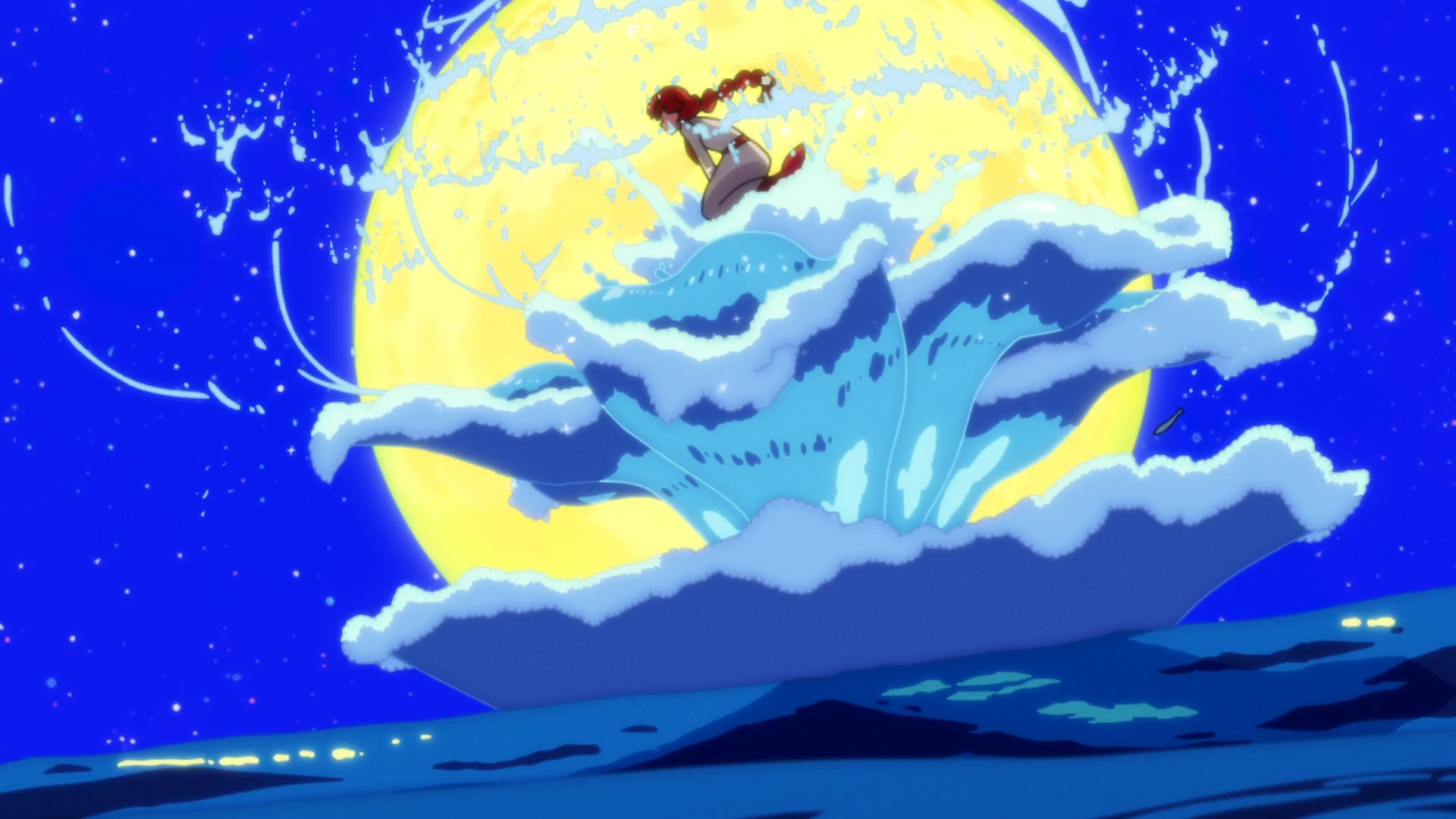
W/N: The way the main theme arrives in towards the end of “S.A.Y.O.N.A.R.A. (feat. Kaori Sakakibara)”…
Q) When closing my eyes and listening, many of the OST’s sounds like real objects, environments, and things I’ve seen and heard before, but can’t necessarily put a name to. How do sounds approximate objects, images, and experiences? And how do you, as a composer, perhaps take real things or approximations of real things and recreate that for the listener?
yuma yamaguchi: As I mentioned a little in Q8, I basically didn’t use pure synth sounds for this score. I created new sounds using recordings of real instruments as the source material. So even when you can’t immediately tell what a sound actually is, I think that might be why it still feels somehow real or physical. For example, there’s a synth‑like sound in the middle of “SaYoNaRa (feat. Ohzora Kimishima).” That’s actually sampled from the string part of “voice of the deep” and then processed through a granular synth. I wrote “voice of the deep” quite early in the process, while I was still imagining what the soundtrack as a whole might sound like. Because it was used in the trailer, we recorded the orchestra for that piece earlier than anything else. That gave me a lot of time to play around with the recorded material and create other sounds from it. On “born twice over” and “tide harmonics,” Tadashi Machida, who plays violin with the Japan Philharmonic Orchestra and also knows club music really well, helped me with some of the sound design and timbres. And the strange flute sound you hear in “tide pulse” came from lots of small bits of material I had jazz flutist Shun Katayama record. I then put those recordings into a granular synth and processed them further. So even with sounds that seem quite electronic, if you trace them back, almost all of them started as real instruments.
Q) The soundtrack makes extensive use of Tatiana Parra’s wordless vocals – ‘Dum di di dum de dum de de de dum ha~s’, for example. There are times when her vocals mesh into the overall sound, almost becoming an instrument. Gekiban described the vocals as adding ‘texture,’ with ‘Parra’s voice swaying/shimmering like the surface of water,’ which was really profound. In your words, what dimensions do the vocals add to the instrumental?
yuma yamaguchi: Because this is music written for a score, it can be difficult to use songs with actual lyrics, so I often end up using scat or wordless vocals. And when you do that, the sound of the voice itself—the timbre and the vowels—becomes much more important than the meaning of the words. I was already a fan of Tatiana, and I especially loved her performance on “Luz da Terra” from Antonio Loureiro’s album Só. The first verse is sung in Portuguese, but the chorus becomes wordless scat. There’s something really distinctive about the vowels in the way she sings it. Maybe it comes from Portuguese, but it sounds different from both English‑speaking singers and Japanese singers, and that always stayed with me. From the beginning of Goodbye, Lara, I wanted to use the voice less as a “song” and more as another instrument or timbre. So I thought Tatiana’s unique vowels and the texture of her voice would fit the world of the series really well.
Q) Tatiana Parra is from Brazil. You regularly collaborate with overseas artists. How did you two connect, and how did your respective life experiences help you both come together to create these songs despite, on paper, being from opposite parts of the world?
yuma yamaguchi: As I mentioned, I was already a fan of Tatiana, and I was convinced that her voice would fit this project, so I just took a chance and sent her a demo. She replied saying she’d love to do it, and that’s how we started working together. The recording itself was remote, but they connected me to the studio, so we could talk and try different things while she was recording. Her first take was closer to a more typical kind of scat singing. But I told her how much I loved the particular nuance of her singing on “Luz da Terra,” and she immediately recorded the take that you hear now. I actually moved to the US when I was 18 without being able to speak English at all. (laughs) So even if something is a little challenging, I just find it fun to work with musicians who I find really exciting, or who have a different musical sense from mine, because I get to discover things I didn’t know before. I always want to find something new that excites me.
Q) Do you have a final message for readers curious about the soundtrack?
yuma yamaguchi: Thank you for reading all the way to the end! I remember Koide‑san saying at one of the voice recording sessions that he didn’t want to make something complicated just for the sake of it. He wanted people to finish the series and simply think, “That was a really good anime.” That really stayed with me. When I heard that, I thought I wanted to do the same thing with the music. When I write soundtracks, I often go in a pretty avant‑garde direction, and sometimes that’s exactly what people ask me to do. I put a lot of detail into my music and try new techniques, but I didn’t want any of that to make the music leave the audience behind. In the end, I just wanted people to listen to it and think, “That was really good music.” I put pretty much everything I can do right now into this soundtrack. So if any of the music caught your attention while watching the anime, I’d love for you to listen to the soundtrack as well. I think you might find some different things in the music when you hear it away from the visuals. And more than anything, I hope you enjoy Goodbye, Lara all the way to the end!
Thank you so much to yuma yamaguchi for doing this interview. I hope peeling back the layers of the creation of this soundtrack was informative and adds to the depth of the music. Music is worldbuilding, and the inputs to create even one track is a universe in and of itself.
You can listen to the Goodbye, Lara soundtrack by yuma yamaguchi here:
ALSO READ:
Kinema Citrus Announces Ninja Skooler and Goodbye, Lara Original Anime Projects
Baca juga Anime lainnya di Info Anime & manga terbaru.
terimakasih sudah mengunjungi thecuy. 🙂

Saya adalah penulis di thecuy.com, sebuah website yang berfokus membagikan tips keuangan, investasi, dan cara mengelola uang dengan bijak, khususnya untuk pemula yang ingin belajar dari nol.
Melalui thecuy.com, saya ingin membantu pembaca memahami dunia finansial tanpa ribet, dengan bahasa yang sederhana.