
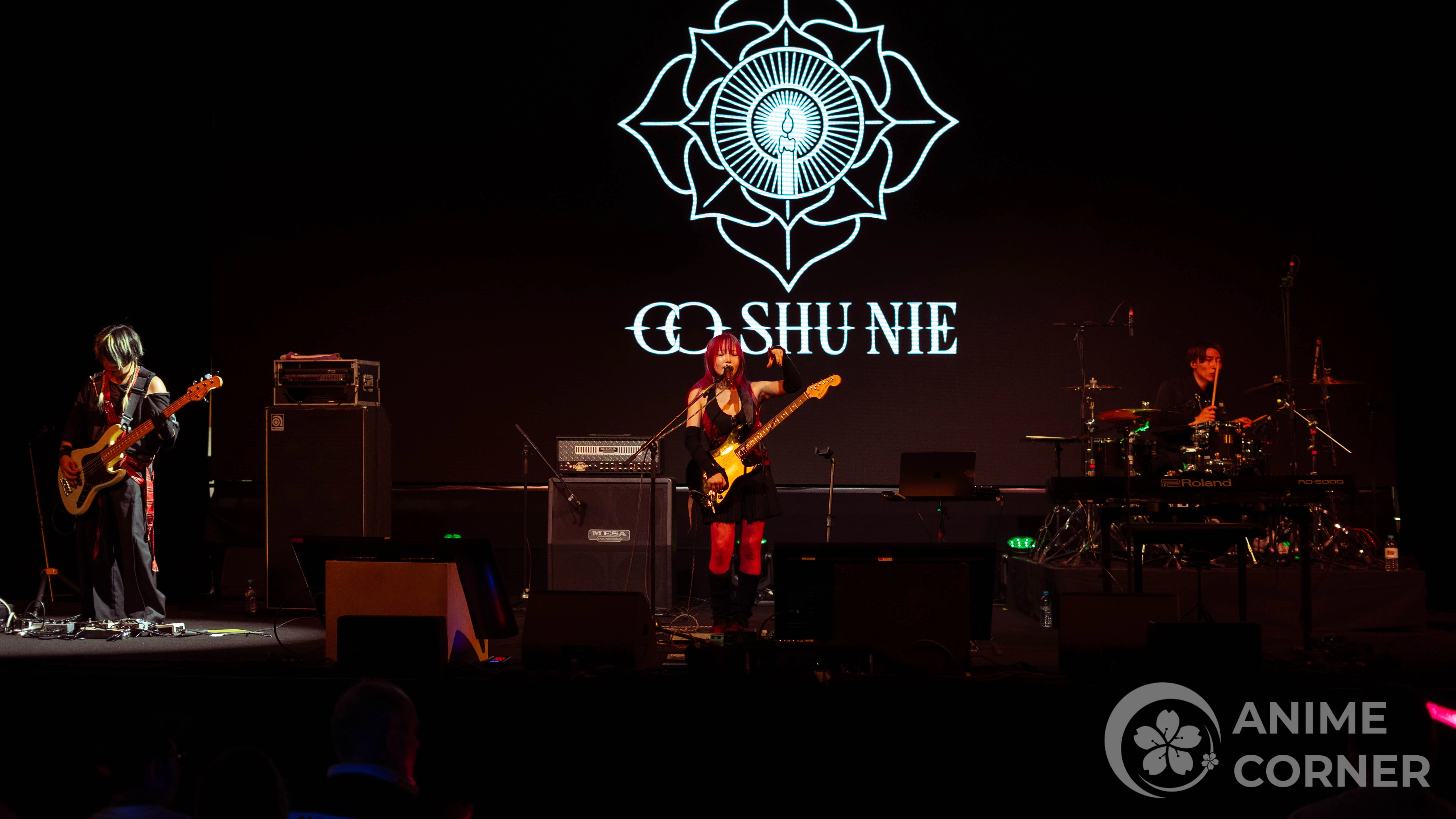
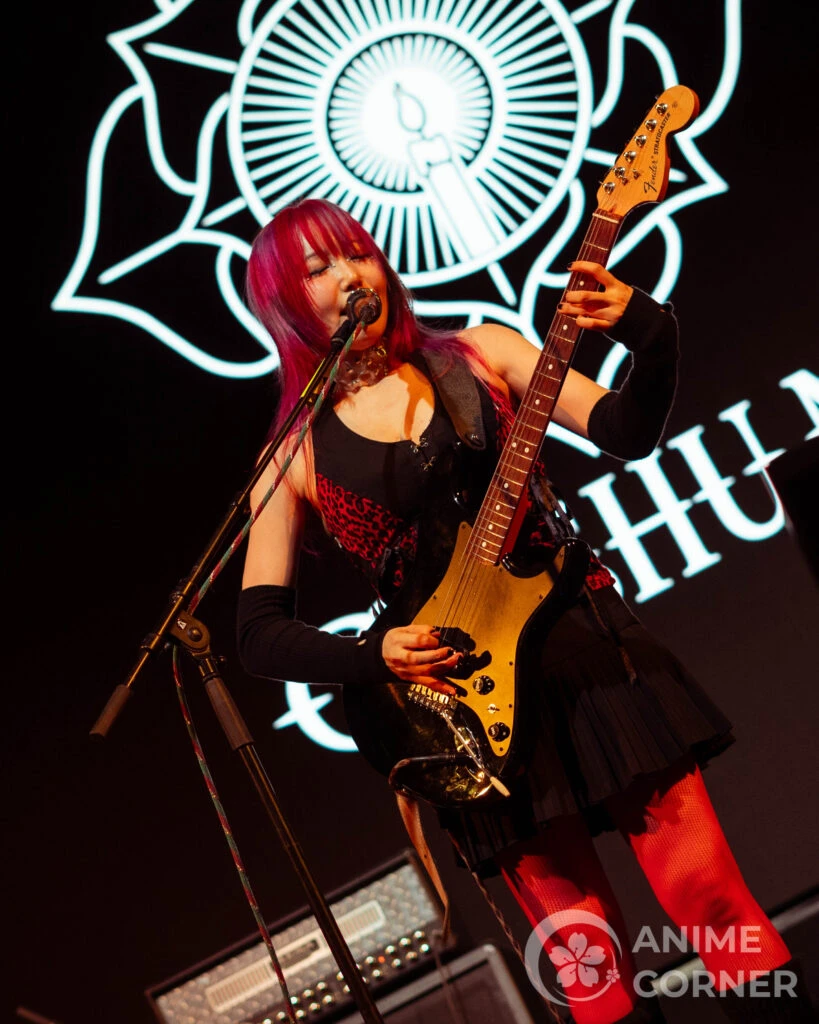
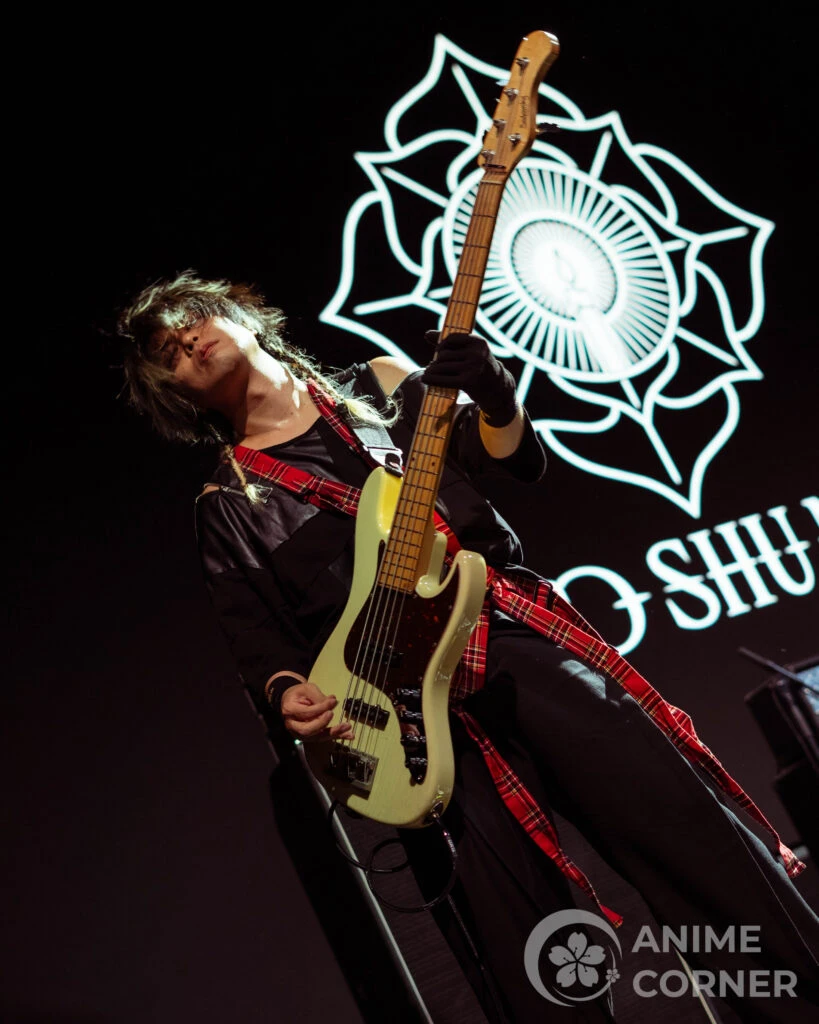
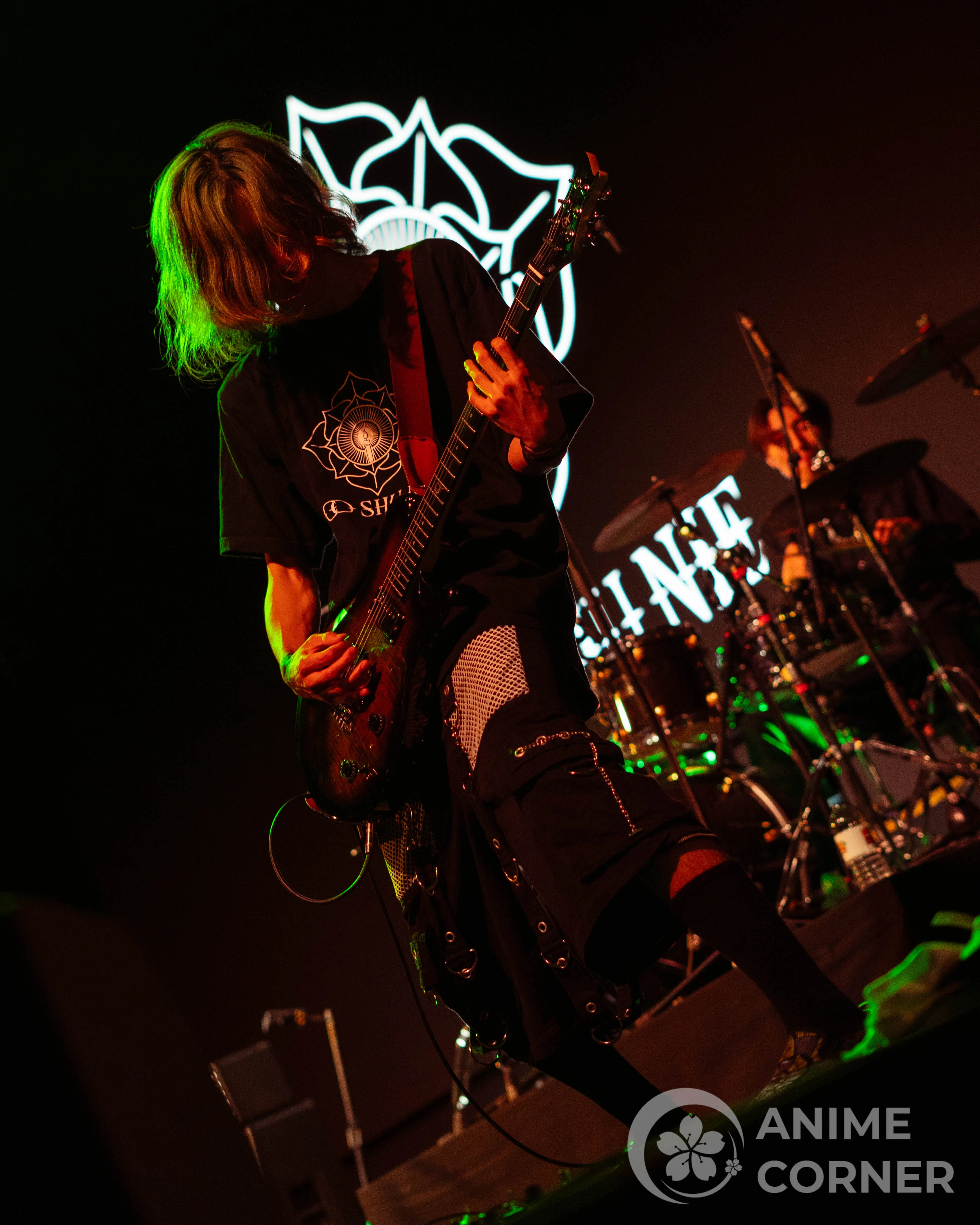
While they were attending the French gathering Japan Expo Paris, we secured a chat with the rock act Cö shu Nie. Moreover, the previous day we experienced their distinctive sound when they headlined Anisong Festa, the event’s primary musical showcase.
Within fandom circles, Cö shu Nie is recognized for the track “asphyxia,” which serves as the opening theme for Tokyo Ghoul: re. The ensemble has also contributed songs for series including Jujutsu Kaisen, The Promised Neverland, Psycho-Pass, and Black Butler. Beyond the anime sphere, they have just launched their newest record titled “SATURATED (in monochrome),” now accessible on digital services. Those attending Anisong Festa were treated to a live rendition of “Hollow,” a composition from that album.
During this sit‑down we conversed with band members Miku Nakamura and Shunsuke Matsumoto about what fuels their artistry, the backstories of several of their well‑known anime tracks, and how they bring songs to life.
Parts of this conversation were shortened for conciseness and clarified with the aid of an interpreter.
Q: Should you be allowed to write a manga, what would its theme be and would it have a somber tone?
Nakamura-san: If I were able to write a manga, it would center on a dark storyline. Much of what inspires me comes from personal experiences. At the same time, I also like to sketch adorable characters reminiscent of Sanrio illustrations. The result would be a gloomy tale featuring charming figures.
Matsumoto-san: If I were to craft a manga, it would prominently include katanas. I enjoy battle stories that incorporate varied specialized elements. The narrative and illustrations would have a twisted aesthetic, echoing the unconventional style of Cö shu Nie.
Q: Your latest track “Hollow” deals with existential themes, which you performed the day before at Anisong Festa. Do you draw inspiration from specific readings, or do you tend to be inspired by daily life?
Nakamura-san: The core inspiration for “Hollow” stemmed from personal life events. I never felt like I truly belonged at home or at school. Through my music and lyrics I try to locate that feeling of belonging. Many individuals share this experience, and by sharing my perspective I hope everyone can discover their own sense of belonging.
Q: Since Ishida-sensei played a role in selecting music for Tokyo Ghoul:re, could you explain why he reached out to your band?
Nakamura-san: When we first met, he explained that he had discovered us via low‑view independent music videos. Seeing those, he wondered why such a promising group wasn’t more widely known and felt they deserved greater exposure. Additionally, he was looking for an up‑and‑coming, talented artist.
Q: Your track incorporates the German term “schadenfreude,” describing the feeling of delight derived from someone else’s misfortune. How did you decide to include this word, and are you thinking about using other non‑English, non‑German languages in future works?
Nakamura-san: This is very interesting because there is a Japanese saying that means “other people’s misery tastes like honey.” Only one word, “schadenfreude,” conveyed the meaning of the full phrase, so I decided to use that.
Words come from culture and how people live in that culture. I also want to understand more about other cultures and ways of living and use other languages. Right now, Cö shu Nie is traveling around the world and meeting fans eye to eye, which gives me inspiration to use these words in my music. There will be more languages coming. Maybe Spanish will be next! [the interviewer commented earlier that he lives in Spain].
Q: What elements of the essence of Cö shu Nie can be found in “asphyxia”? Do you remember any anecdotes from the production process?
Nakamura-san: One of the most distinctive traits of Cö shu Nie’s music is its use of irregular time signatures. Most tracks follow a standard 4/4 beat, but our songs often employ bizarre meters. “Asphyxia” is not a conventional 4/4 piece; it shifts between 6/8, 5/8, and 6/8, creating a hectic rhythm that’s hard to keep count of.
[Nakamura-san starts marking “asphyxia” rhythm and humming the song]
Nakamura-san: Many listeners miss it, but a close look at our music reveals progressive elements rarely seen in anime songs. Anime tracks are often straightforward, but we aimed for something more unusual. “Asphyxia” showcases our love for odd‑metered compositions, with time signatures changing every bar. These aspects capture the core of Cö shu Nie. When writing the lyrics, Ishida-sensei told me not to imagine them for Tokyo Ghoul, but for myself. I felt deeply connected to the process and found it emotionally draining. The personal nature of the lyrics made it hard to keep writing, so I stepped back and created a fictional character experiencing suffering, seeing myself in a third‑person perspective.
At a certain point, I altered my approach. Rather than treating the song as a personal confession, I crafted a new persona struggling within the lyrics’ world, observing my own life from an outsider’s view.
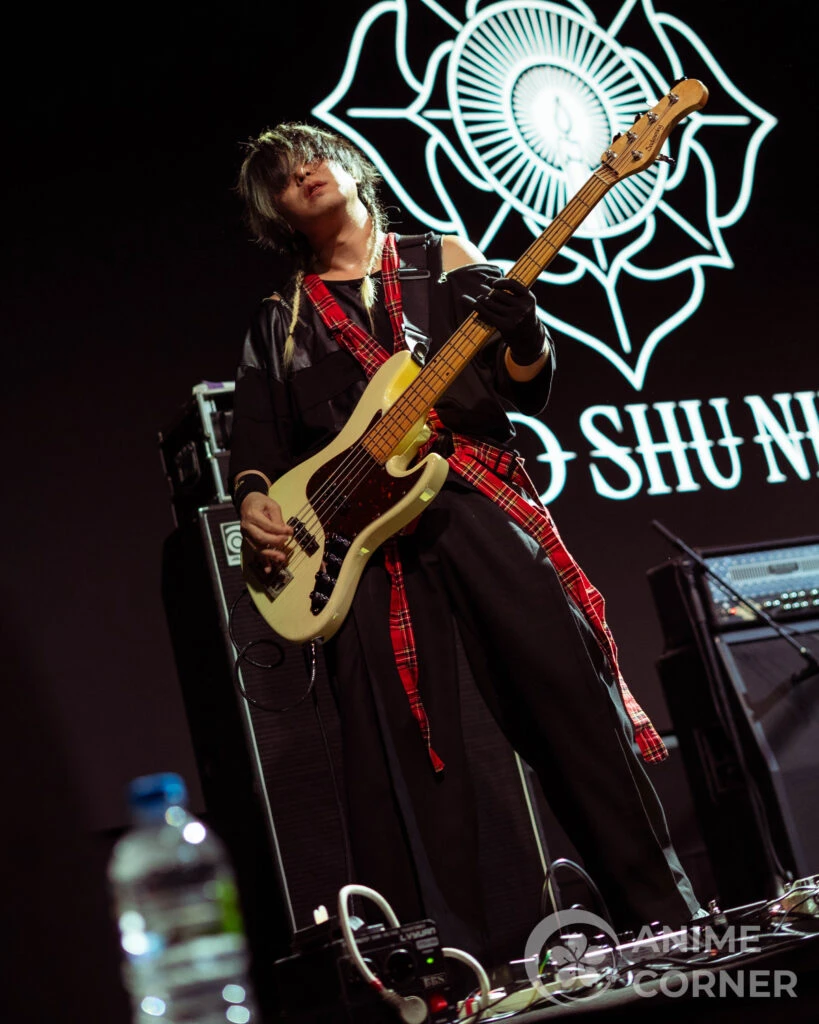
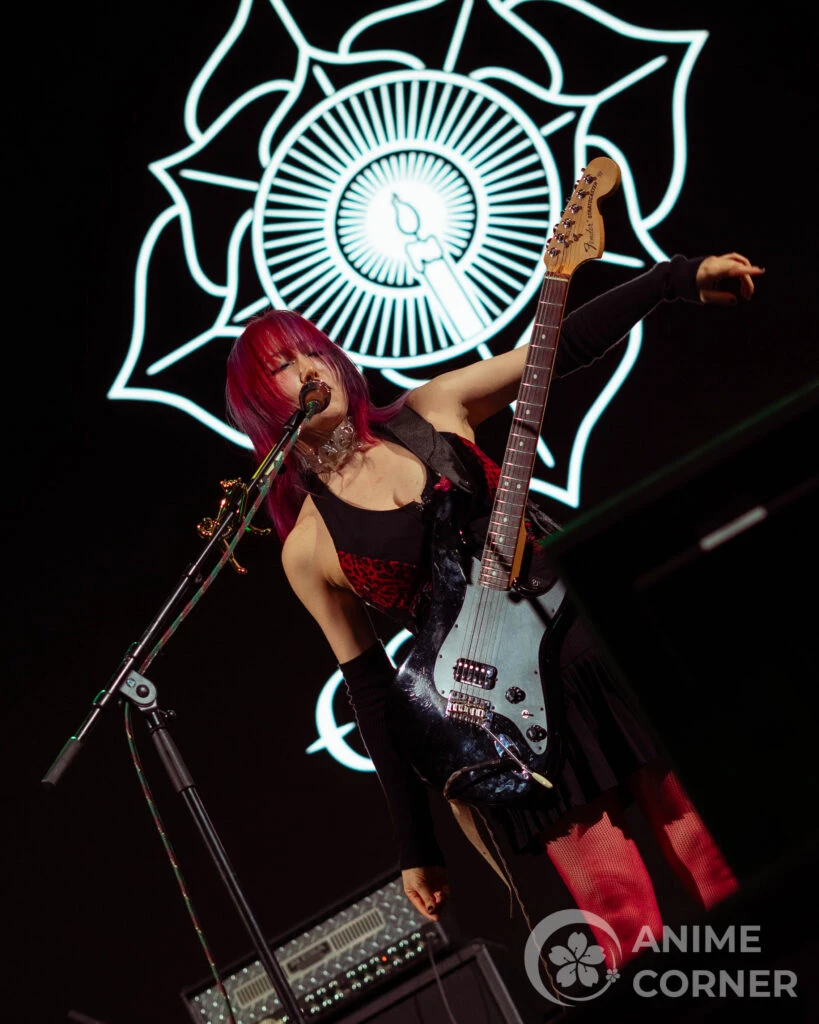
Our gratitude goes to Cö shu Nie and Japan Expo Paris for granting us the chance to explore in depth how they craft music that captivates anime enthusiasts. We anticipate seeing them return for upcoming European gatherings.
Be sure to hear “SATURATED (in monochrome)” and view the official video for the record’s fifth song, titled “ANAAKI ANANKE.”
Explore more anime at Info Anime & manga terbaru.
terimakasih sudah mengunjungi thecuy. 🙂

Saya adalah penulis di thecuy.com, sebuah website yang berfokus membagikan tips keuangan, investasi, dan cara mengelola uang dengan bijak, khususnya untuk pemula yang ingin belajar dari nol.
Melalui thecuy.com, saya ingin membantu pembaca memahami dunia finansial tanpa ribet, dengan bahasa yang sederhana.