
On our recent trip to DoKomi, we sat down with Light (@spoiler_of_light) of “Hana no Machi,” a collective that runs Japanese cultural events in a special area at the German convention. Hana no Machi is celebrated for its distinctive, warm ambience and a diverse program mixing traditional and contemporary Japanese arts.
This interview covers Hana no Machi’s origins, its evolution over time, and the feelings they aim to share with attendees.

Parts of this interview have been slightly refined for better clarity.
Q: How did Hana no Machi come about? Why did you choose the “hanamachi” geisha concept?
A: German conventions focus heavily on anime and manga. Founders Ruby and Hikari have been to many events and noticed a gap in Japanese traditional culture offerings. They especially missed the serene vibe of classic Kyoto tea houses, where tea, shows, and peace blend—values rooted in Japanese philosophy.
They wanted that tranquil setting as the foundation for a new convention zone: a place to step into a different world amid the busy event, to relax and be immersed. The name “Hana no Machi” isn’t really tied to the geisha district term but was a happy accident. It means “city of flowers,” suggesting a varied, beautiful spot.
Q: What does your range of activities cover? What criteria do you use to select the performances and themes?
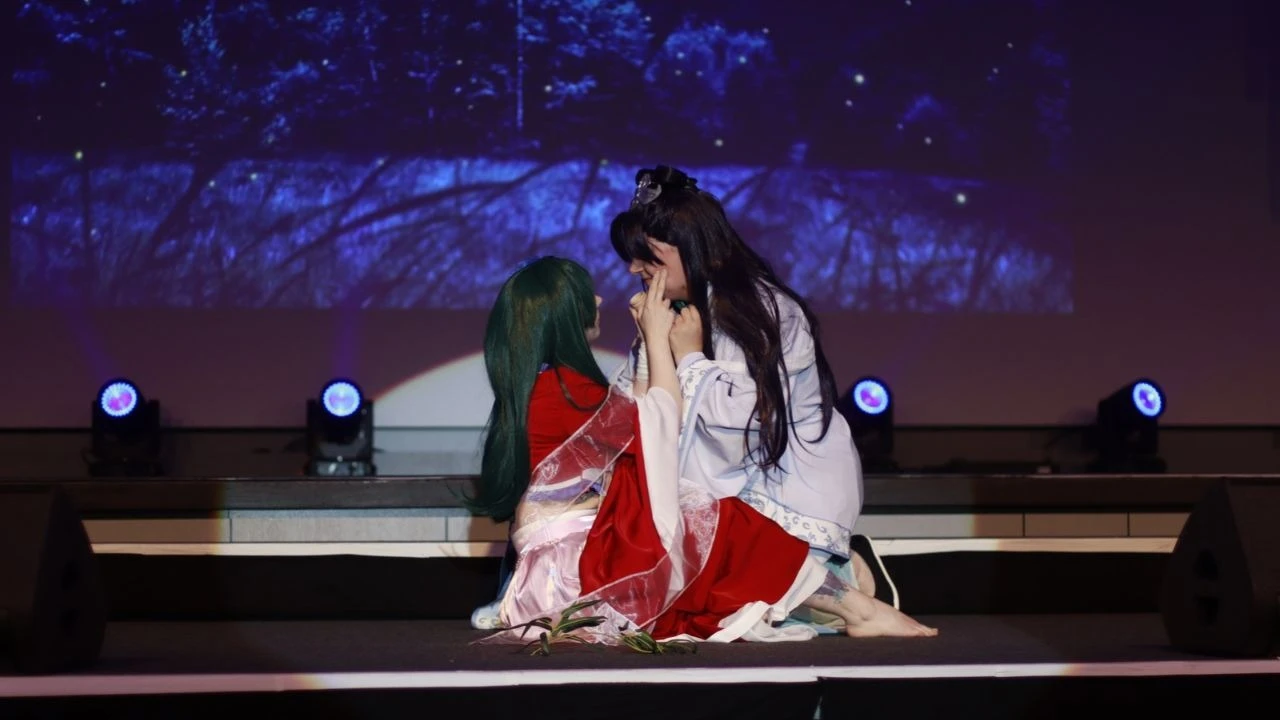
A: Our program strives for maximum diversity. Our enthusiastic, multi‑talented team offers everything from ikebana and origami to koto, acting, and Japanese song. Each year we pick a central theme—like geisha & maiko, modern twists, or myths such as the sunrise goddess—and shape our acts to match it tightly.
Q: What kind of atmosphere do you want visitors to experience at a ‘Hana no Machi’ event?
A: We aim for a snug, uplifting vibe that lets guests unwind body and mind. While conventions can be loud and crowded, our Hana no Machi area feels bright, calm, and welcoming. A lively show lineup complements the setting, with colorful light cubes and cushioned floor seating.
The setting stays authentically Japanese—spider lilies, wisteria, cherry blossoms, and a new wooden shrine offering omamori and omikuji—making the culture irresistible.
Q: What did you do at your first event at DoKomi? When was that?
A: Our debut at DoKomi was in 2021. The launch was nerve‑racking, with COVID‑19 limits, fewer seats, and a tiny crew of seven. We presented fight choreography, a kamishibai storytelling of Momotaro, idol group dances, ikebana, singing, and more.
Q: How has Hana no Machi changed over the years?
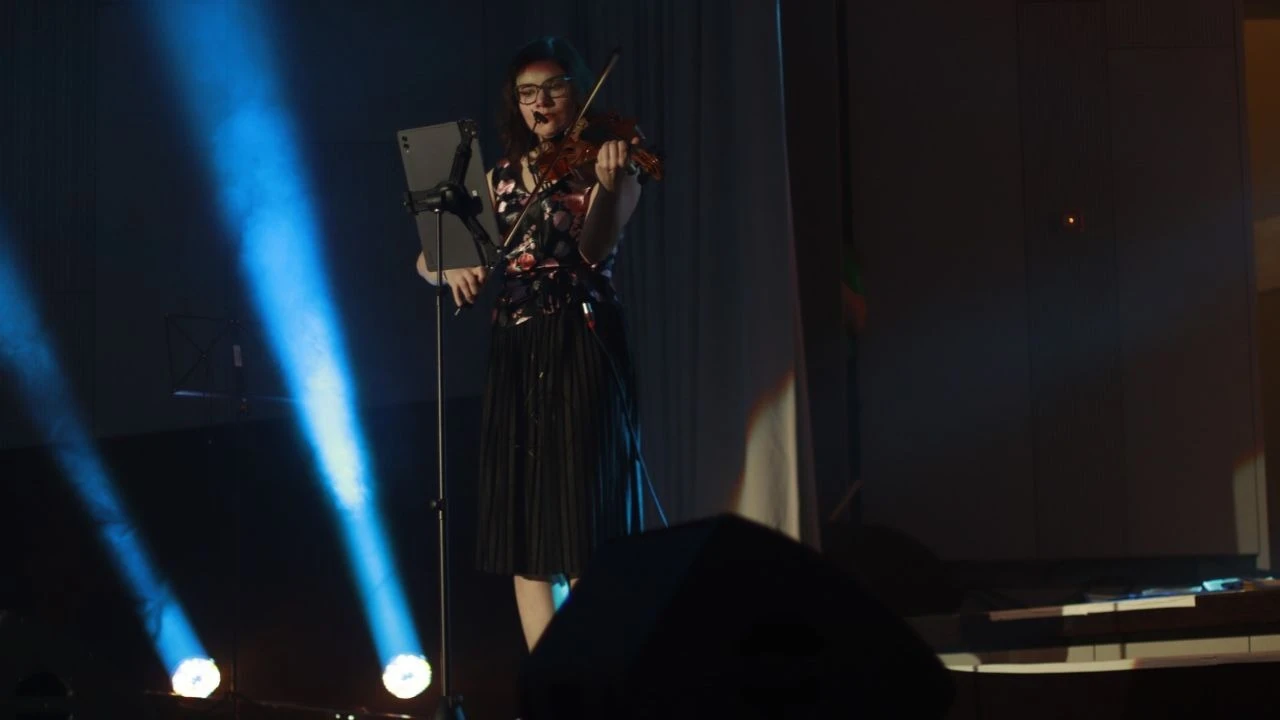
A: Hana no Machi has expanded steadily, constantly trying new ideas and tailoring content to members’ talents. Over the years we’ve offered ikebana, origami, shadow plays, talks on Japanese cats/festivals, geisha, oiran, mythic creatures like Yamata no Orochi, even an Edo‑period crime thriller, interactive geisha games with the audience, and rakugo storytelling. Music spans traditional koto, shamisen, shinobue to anime‑inspired pieces on viola, guitar, keyboard. Each year brings fresh experiences, earning us praise as a DoKomi highlight. When not staging our shows, we host events like the Kimono Catwalk Contest and idol concerts.
Q: You’ve organised “Akuma no Mori” for this year’s DoKomi 2026. How did you come up with this idea?
A: We introduced Akuma no Mori (roughly “Devil’s Forest”) in 2025 and 2026. After a 2024 ghost story sparked member enthusiasm, many ideas emerged but felt too frightening for our gentle vibe and under‑18 audiences. This led to a dedicated horror showcase—held late Saturday with its own ticket—focusing this year on “The Ring” (Ringu). We even recruited helpers to clear the “bodies” after each act; it was a blast.
We even needed our own helpers to carry out of the hall all the “corpses” that accumulated during the acts. It was a very fun experience.
Q: What difficulties do you face when organising activities? Is the focus on anime/manga a limitation or an advantage when planning an activity and/or performance?
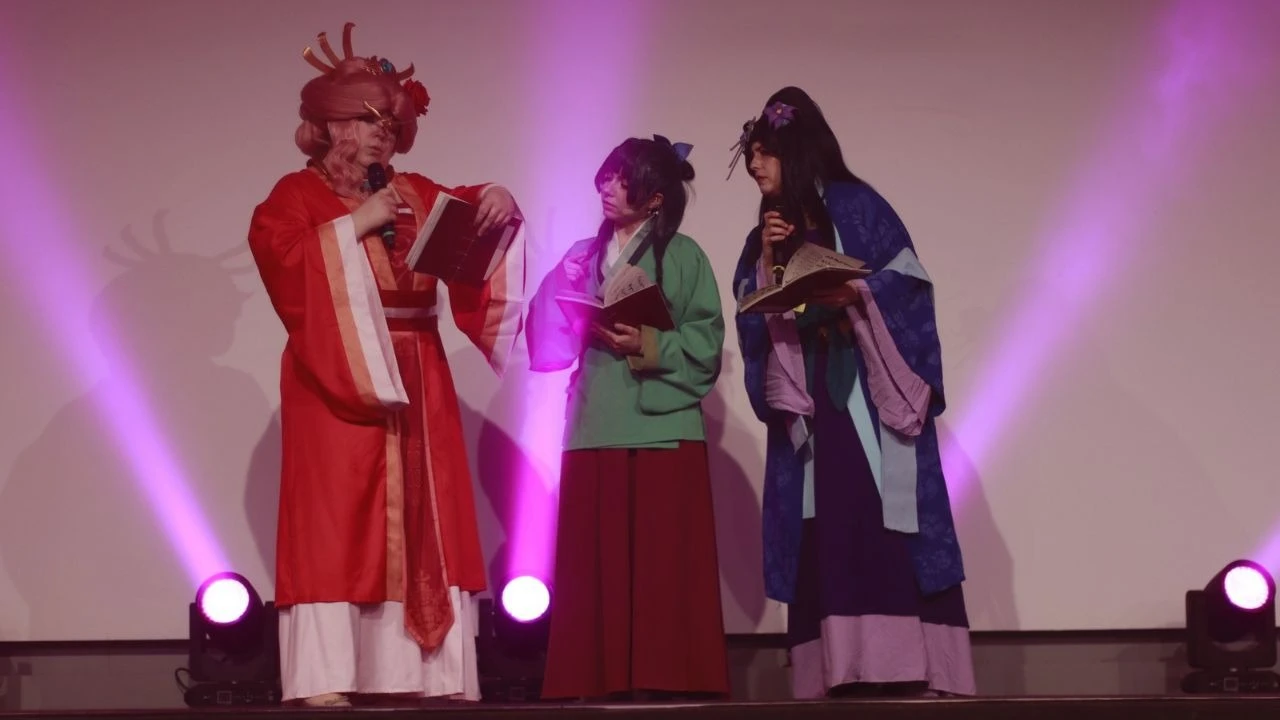
A: We face few constraints; we blend classical arts with modern manga/anime inspiration. Initially we centered on tradition, then added contemporary acts like idol performances and anime music under a “modern” label. In 2026 we debuted a full‑length anime production—a 45‑minute, themed show based on The Apothecary Diaries—mixing singing, acting, dancing, and quirky vocals. We keep things spontaneous, letting creativity flow, and that energy spreads to the crowd.
Q: What do you like best about welcoming visitors?
A: I cherish the calm, welcoming feel we create at Hana no Machi, a stark contrast to the convention’s frenzy. Our admission mirrors a Japanese welcome: a smiling host greets you, asks group size, guides you to your seat, and radiates genuine happiness. We aim to make visitors feel instantly at home—a hospitality many other booths can’t match.
Q: If you were to meet someone who knew nothing about Hana no Machi, how would you invite them to take part in an activity?
A: Hana no Machi offers a tranquil refuge at the convention, where you can settle in, unwind, and enjoy a diverse lineup of Japanese arts. If you have any curiosity about Japan’s traditions or modern culture, this is the spot for you.
Q: Do you have a memorable moment from your time with Hana no Machi?
A: A highlight was our closing show where we performed a Japanese‑style version of “Country Roads,” swapping “Ano machi ni tsuzuiteru Ki ga suru” for “Hana no Machi ni…” Everyone joined on stage, saying goodbye with the song together—an moment that truly displayed our teamwork, on‑stage and off.
Q: Do you have a favourite manga and/or anime?
A: Among today’s releases I admire many, yet timeless classics top my list: Angel Sanctuary shines with art and narrative, Shaman King impresses with its philosophical depth, and Cowboy Bebop stands out in anime for its music and overall concept.
Q: Could you send a message to the fans of Hana no Machi?
A: We adore you and can’t wait to welcome you back! Thanks for making Hana no Machi a triumph and for sharing in our love of Japanese culture.
We’re grateful to Light and Hana no Machi for this interview; their unique corner at the convention has always intrigued us. If you get the chance, be sure to experience their upcoming events!
Simak anime-anime lain di Info Anime & manga terbaru. Terima kasih sudah mengunjungi thecuy. 🙂
terimakasih sudah mengunjungi thecuy. 🙂

Saya adalah penulis di thecuy.com, sebuah website yang berfokus membagikan tips keuangan, investasi, dan cara mengelola uang dengan bijak, khususnya untuk pemula yang ingin belajar dari nol.
Melalui thecuy.com, saya ingin membantu pembaca memahami dunia finansial tanpa ribet, dengan bahasa yang sederhana.