
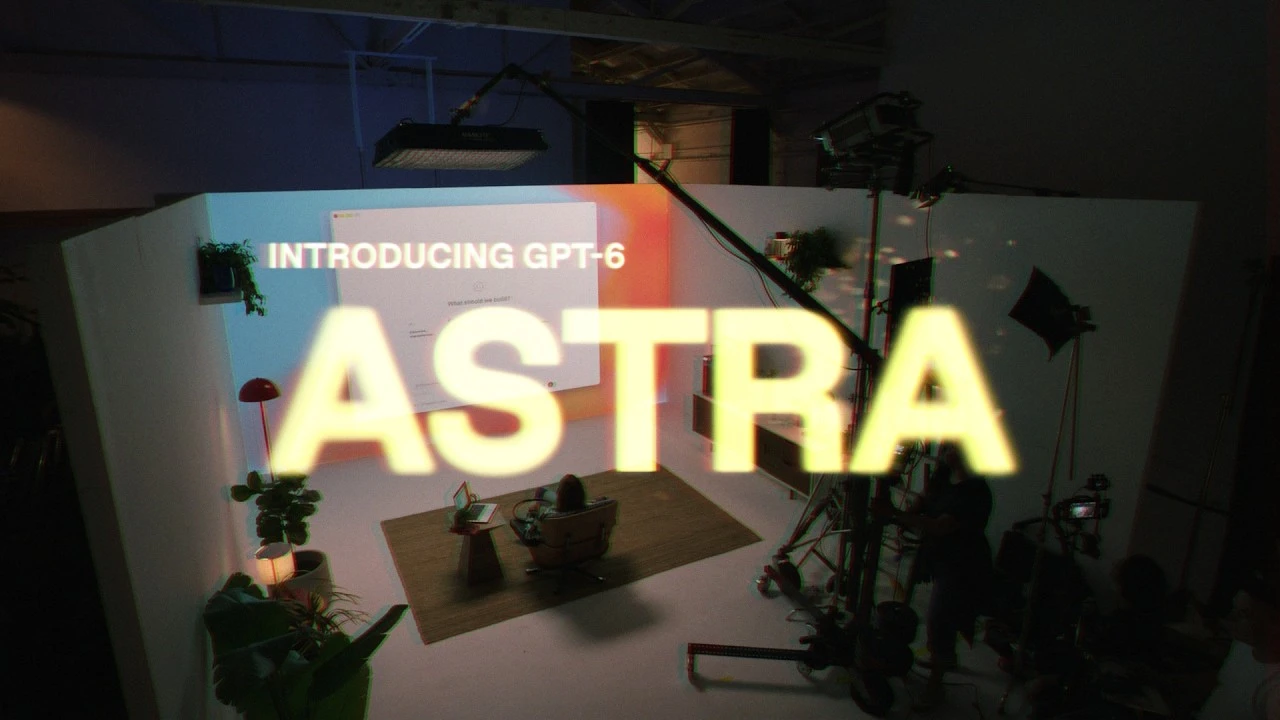

OpenAI has officially launched GPT‑6 Astra, the latest AI model that was previously showcased to the public in early August.
The rollout of GPT‑6 Astra is touted as the most advanced and user‑aligned AI system ever created by the company behind the ChatGPT chatbot.

Despite its remarkable computational leap, GPT‑6 Astra has drawn sharp criticism as one of the most controversial models, leading to a temporary development halt over serious security concerns.
How advanced is this autonomous agent in aiding everyday digital tasks?

[embedded content]
Kemampuan Computer Use Otonom yang Mirip dengan Manusia
The main attraction of GPT‑6 Astra is its computer‑use feature, an advanced capability that lets the AI take control of a computer and run various applications just like a human operator would.
Users are no longer burdened with long‑winded instructions or rigid step‑by‑step guides.
The operating concept is simple: users just describe the desired outcome, and GPT‑6 Astra will independently assemble and execute all necessary steps to complete the task.
The scope of computer‑use functionality in GPT‑6 Astra is very broad and crosses multiple sectors.
The software can fill out online forms, update CRM database entries, manage calendar schedules, search for information on the web, and summarize findings into formal emails or documents.
It doesn’t stop there—GPT‑6 Astra can also handle spreadsheets, analyze scientific data using Python notebooks, operate Power BI analytics software, build and test websites, and run precision engineering software such as KiCad and FreeCAD.
Moreover, the system can install and troubleshoot applications on its own.
During an official demo, OpenAI showed GPT‑6 Astra taking a voice command to turn a simple circle sketch into a 3‑D rocket model in Blender, design a digital game, and automatically create product listings on an e‑commerce platform.
In quantitative performance, GPT‑6 Astra significantly outperforms its predecessor, GPT‑5.6 Sol.
According to the OSWorld 2.0 autonomous agent benchmark, GPT‑6 Astra achieved an impressive 72.6 % score with an average task time of 40 minutes—47 % faster than its predecessor, which required about 75 minutes.
This performance leap was achieved through a combination of massive pre‑training on the Stargate data‑center infrastructure and the use of advanced reinforcement‑learning techniques.
Dominasi Skor Benchmark Global
Beyond its desktop autonomous capabilities, GPT‑6 Astra also posted impressive scores in various industry‑standard technology tests:
- FrontierMath Tier 4 v2
- Achieved a score of 97.6 % in solving advanced mathematical problems.
- DeepSWE v1.1
- Recorded a 74.1 % score in software engineering evaluations.
- BenchCAD
- Earned a 95.9 % score in computer‑aided design assessments.
- GPQA Diamond
- Secured a 96 % score on advanced science questioning.
- ExploitBench
- Achieved a perfect 100 % score in detecting and exploiting software vulnerabilities.
- ARC-AGI-3
- Recorded a 98.6 % score in adapting to solve previously unseen novel problems.
Teknologi Opaque Recurrence yang Menuai Sorotan
Behind its impressive academic and functional achievements, GPT‑6 Astra harbors a potential controversy stemming from an internal reasoning technique called opaque recurrence.
This mechanism causes most thought processes within the artificial neural network to become increasingly difficult to observe through a transparent chain of thought.
Being able to monitor the reasoning chain is crucial for researchers to audit the rationale behind an AI model’s decisions.
OpenAI’s Chief Scientist, Jakub Pachocki, acknowledged that monitoring reasoning processes becomes more complex as AI models grow smarter, since modern systems can solve intricate tasks using very few language tokens.
The issue is critical because GPT‑6 Astra is equipped with advanced cyber capabilities, including the ability to help identify zero‑day security vulnerabilities.
While the feature is intended to speed up vulnerability patching by cybersecurity teams, the potential for misuse demands extra stringent security measures. As a mitigation step, OpenAI adopted a phased distribution system.
Initially, the model was offered exclusively to participants in the Daybreak cybersecurity program, then gradually expanded to commercial ChatGPT users, API access, and partner cloud platforms, according to reports from Venture Beat and the official developer page.
This new era of autonomous computing ushered in by cutting‑edge innovation requires developers and institutions to establish stricter technology governance standards.
To stay updated with the global AI ecosystem, the latest software feature releases, and in‑depth analysis of future technology trends, be sure to explore more informative articles only on TheCuy Tekno.
FAQ
1. Apa keunggulan utama yang ditawarkan oleh GPT-6 Astra?
GPT‑6 Astra surpasses its predecessor with an autonomous computer‑use capability that can run multiple applications, fill forms, process data, and design independently based on high‑level instructions.
2. Seberapa cepat kinerja GPT-6 Astra dibandingkan model sebelumnya?
According to OSWorld 2.0 testing, this model solves computer‑based tasks about 47 % faster, with an average duration of 40 minutes per task, compared to the GPT‑5.6 Sol model.
3. Apa yang menyebabkan GPT-6 Astra dianggap kontroversial?
The model employs an opaque recurrence reasoning technique that obscures its internal thought process, combined with advanced cyber capabilities that require tighter security oversight.
4. Siapa saja yang saat ini bisa mengakses layanan GPT-6 Astra?
Initially, the model was offered exclusively to participants in the Daybreak cybersecurity program, then gradually expanded to commercial ChatGPT users, API access, and partner cloud platforms.
Terima kasih sudah mampir ke thecuy. 🙂

Penulis Berpengalaman 5 tahun.