TASIKMALAYA, Thecuy.com – Public awareness regarding the fulfillment of tax obligations is continuously promoted as a strategy to boost Local Revenue (PAD) and enhance regional fiscal autonomy.
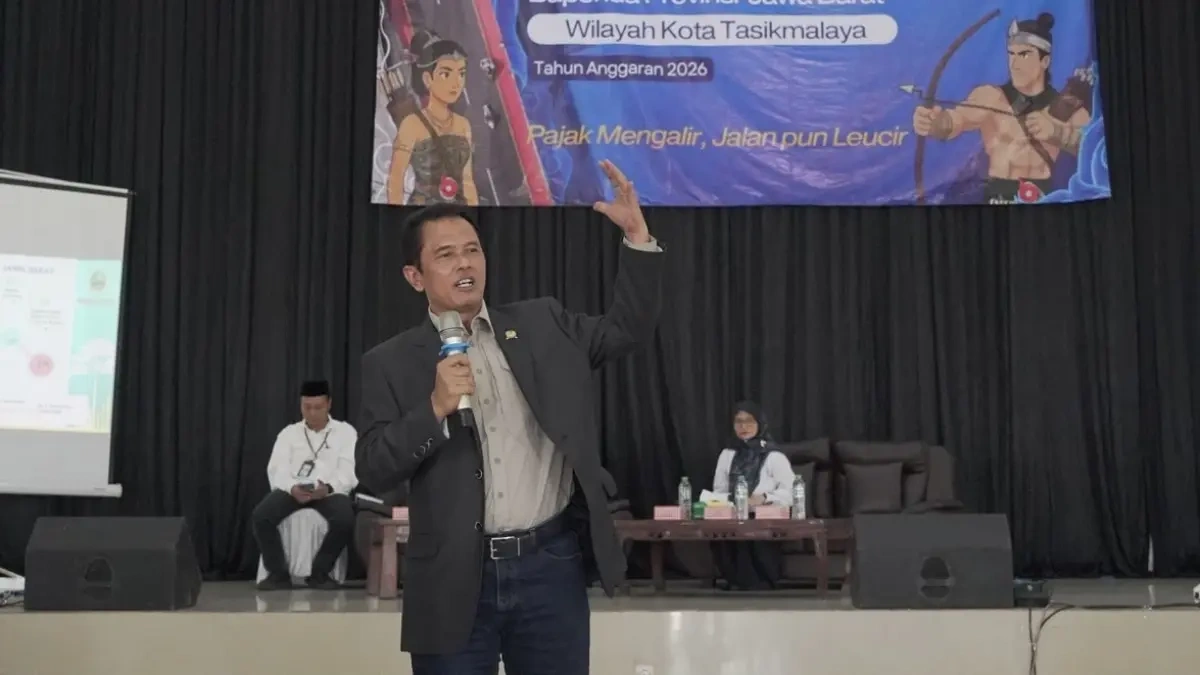
The issue was raised at the Regional Tax Socialization event organized by the West Java Provincial Regional Revenue Agency (Bapenda) for Tasikmalaya City, held at the Aulia Hall Center in Bungursari District on Monday (7/9/2026).

H Budi Mahmud Saputra SE MM, a member of the West Java Provincial DPRD from the PAN faction, emphasized that public tax compliance is vital for supporting regional development. He noted that citizens should realize that the taxes they pay are reinvested for community welfare through various development initiatives and public services.
Tasikmalaya’s city administration plans to restructure the Dadaha market even with street vendors still present. Due to the lack of a fuel station in Langkap, Pertamina suggests fueling at designated spots in the Pangandaran area.

“Tax contributions serve as a collective effort by the community to finance development projects. Consequently, public awareness and compliance are essential,” he stated.
Budi explained that regional taxes are mandatory contributions from citizens intended for public welfare. Examples include the Rural and Urban Land and Building Tax (PBB-P2), Specific Goods and Services Tax (PBJT), and Motor Vehicle Tax (PKB). Meanwhile, PAD originates from regional taxes, regional levies, proceeds from the management of separated regional assets, and other lawful regional revenues.
He clarified that the larger the PAD’s share in the regional budget, the stronger the region’s capacity to independently finance development needs. Dependence on central government transfer funds can also be minimized.
“PAD serves as a key indicator of regional fiscal autonomy. When PAD rises, the region’s ability to fund development projects also strengthens,” he remarked.
According to Budi, tax revenues ultimately support various community needs, ranging from infrastructure development and maintenance, health services, education, sanitation, to administrative government services.
Nevertheless, PAD growth encounters several challenges, including low public awareness and compliance, suboptimal tax object registration, fluctuating economic conditions, and the need to continually improve the tax collection administrative system.
Therefore, enhancing PAD, as added by the PAN City Tasikmalaya Regional Chairman, requires collaboration between the government and the public. The government must provide easy and transparent tax services, while citizens are expected to be disciplined in reporting and fulfilling their obligations.
Read more news on the News Page
Thanks for visiting thecuy . 🙂

Saya adalah jurnalis di thecuy.com yang fokus menghadirkan berita terkini, analisis mendalam, dan informasi terpercaya seputar perkembangan dunia finansial, bisnis, teknologi, dan isu-isu terkini yang relevan bagi pembaca Indonesia.
Sebagai jurnalis, saya berkomitmen untuk:
Menyajikan berita yang akurasi dan faktanya terverifikasi.
Menulis dengan bahasa yang mudah dipahami, namun tetap menjaga integritas jurnalistik.
Menghadirkan laporan mendalam yang memberi perspektif baru bagi pembaca.
Di thecuy.com, saya tidak hanya melaporkan berita, tetapi juga berupaya menganalisis tren agar pembaca dapat memahami konteks di balik setiap peristiwa.
📌 Bidang Liputan Utama:
Berita Terbaru & ekonomi, keuangan.
Perkembangan teknologi dan inovasi digital.
Tren bisnis dan investasi.
Misi saya adalah membantu pembaca mendapatkan informasi yang cepat, akurat, dan dapat dipercaya, sehingga mereka bisa membuat keputusan yang lebih cerdas dalam kehidupan sehari-hari maupun dunia usaha.
📞 Kontak
Untuk kerja sama media atau wawancara, silakan hubungi melalui halaman Kontak thecuy.com atau email langsung ke [email protected].