
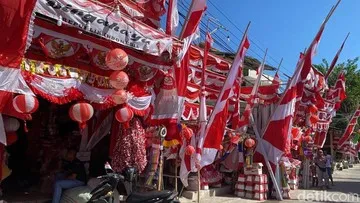
In addition to the flag‑raising ceremony that stands as a symbol of nationalism, a variety of distinctive regional customs also lend color to Indonesia’s Independence Day festivities. These practices do more than entertain—they mirror the depth of local heritage, the spirit of community, and the reverence for those who fought for freedom.
Daftar berikut menampilkan sepuluh perayaan khas tanggal 17 Agustus yang berasal dari assorted regions throughout Indonesia, as reported by laman detikNews.

                                                                                                                                                                                            <section id="section-detail-2" class="multi-card " data-page="2" data-page-title="1. Lomba Dayung Jukung – Banjarmasin" dtr-evt="halaman selanjutnya" dtr-sec="halaman selanjutnya" dtr-act="tombol halaman selanjutnya" dtr-id="323076" dtr-ttl="1. Lomba Dayung Jukung – Banjarmasin" onclick="_pt(this)" readability="22">
                            <h2 class="fw-bold fs-5">1. Traditional Jukung Canoe Competition – Banjarmasin</h2>
                            <div readability="7">
                                <img src="https://akcdn.detik.net.id/visual/2026/08/05/lomba-dayung-jukung-foto-dok-media-centre-provinsi-kalimantan-selatan-1786778524749.png?w=700&q=90" alt title/>
                                <p>Jukung Canoe Race/ Photo: Media Centre of South Kalimantan Province</p>
                            </div>
                            <p>Banjarmasin, known as 'The City of a Thousand Rivers', naturally embraces a jukung canoe race as part of its August‑17 celebrations. This well‑known event occurs annually throughout August, unfolding along the waters of the Martapura River.</p>
Evidence shows that this paddling contest dates back to 1924, and it has evolved into a popular draw for both domestic and international tourists.
Competitors are typically individuals with strong rowing abilities and swimming prowess. Besides vying for the Governor of South Kalimantan’s rolling trophy, victors often catch the eye of scouts looking for professional rowing athletes.
Beyond being a mere race, this display of speed also embodies the region’s ancestral knowledge and makes use of the river’s abundant resources—key features that define Banjarmasin.
2. Traditional Sasak Combat Game – Lombok
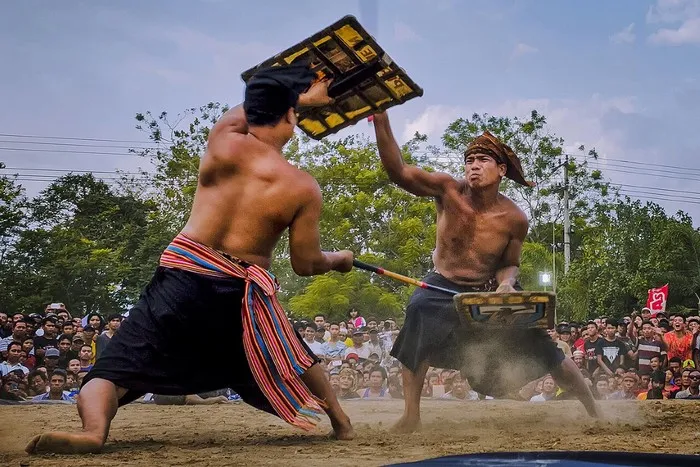
Traditional combat demonstration/ Photo: Focusfeel
On Lombok Island, West Nusa Tenggara, peresean stands out as a defining element of the August‑17 festivities. Peresean is a unique folk combat tradition of the Sasak community, featuring two male fighters (known as padu) who clash using rattan rods and shields (ende) crafted from thick bovine leather.
The bout is set to the rhythm of gendang beleq drums, with each beat energizing the combatants and coordinating their dance steps and strikes.
Rooted in generations, this practice embodies courage, fair play, and communal solidarity. Despite its fierce appearance, peresean holds profound cultural significance and is eagerly awaited as a festive spectacle by residents year after year.
3. Traditional Sail‑Borne Boat Race – Batam
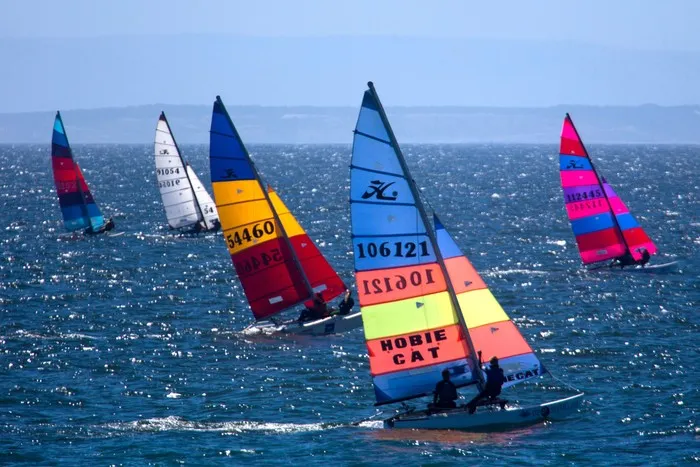
Sailboat race illustration/ Photo: Unsplash.com/Dirk Erasmus
The sailboat race, locally referred to as perahu kolek, is a distinctive custom observed by the coastal Malay community of Batam, Riau Islands, to mark Indonesia’s Independence Day.
Occurring each August, the event is anchored in Belakang Padang sub‑district. Numerous vividly painted wooden vessels cut through the water propelled by expansive, brightly hued sails, producing a visually striking panorama.
With roots stretching back many years, the practice began as a means of transporting fishermen. Today it functions both as a competitive spectacle and as a safeguard for coastal Malay heritage, ensuring it endures against the erosion of time.
4. Communal Feast Tradition – Malang

Barikan ceremony/ Photo: detikCom/Esti Widiyana
In Malang, East Java, the barikan ritual offers a community‑based way to honor Indonesia’s Independence Day. Taking place on the evening of August 16, the custom revolves around a shared feast prepared from dishes brought from individual homes.
Families contribute items like mini tumpengs, pastries, or seasonal fruit, which are gathered and laid out along banana leaves before being savored collectively.
Beyond the shared meal, the ceremony includes group prayers, rendition of the national anthem, and moments of reflection on independence. This age‑old practice provides an occasion to express gratitude for freedom and honor the heroism of the past, while fostering closer ties within the neighborhood.
5. Red Egg Tradition – Palembang

Red egg display/ Photo: detikCom/Prima Syahbana
Palembang residents observe a distinctive custom named telok abang to commemorate Indonesia’s Independence Day. The phrase originates from the local Palembang dialect, with ‘telok’ denoting egg and ‘abang’ signifying red.
The practice derives from a long‑standing local habit of painting boiled eggs bright red and inserting them into cork‑based toy replicas of ships, planes, or cars.
Documented back to the Dutch colonial period, the custom was initially observed to mark the Dutch queen’s birthday. With the passage of time, it has been reimagined as a patriotic emblem for August‑17 celebrations, embodying the fighting spirit and courage of the nation.
6. Traditional Horse Racing – Aceh

Illustration of traditional horse race/ Photo: Unsplash.com/Geoff Oliver
Beyond mere amusement, the pacu kude—commonly known as a horse race—serves as both a cultural showcase and a sporting event cherished by the community of Central Aceh Regency, notably the Gayo ethnic group, as part of the Independence Day festivities.
A distinctive feature of this event is its jockeys: young children or teenagers who gallop bare‑back, without saddles. The steeds employed are specially selected—either purebred Gayo horses or hybrids with Australian stock—renowned for their swiftness and robust stamina.
Tracing its origins to the Dutch colonial period, the practice now stands as both a testament to the Acehnese people’s historical resilience and a unifying emblem for the local populace.
7. Traditional Jampana Parade – Bandung

Jampana parade/ Photo: detikCom/Whisnu Pradana
In Bandung and its surrounding areas, an annual cultural procession known as pawai jampana is organized to commemorate Indonesia’s Independence Day celebrations. The term ‘jampana’ in Sundanese refers to a wooden palanquin employed to transport miniature items and farm produce in a cooperative manner.
Within the jampana, participants often display scaled‑down house models, an assortment of produce, tumpeng cones, local sweets, and handmade crafts. The towering palanquin is then carried through urban thoroughfares, synchronized with Sundanese musical rhythms and dance performances.
Once the procession concludes, the contents of the jampana are competitively seized by locals and shared in a communal feast, underscoring the themes of unity and thankfulness.
8. Torch Relay Run – Semarang
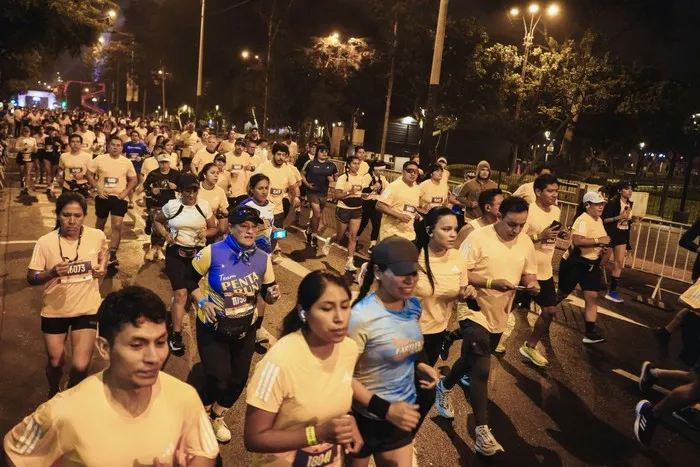
Illustration of torch relay run/ Photo: Unsplash.com/Kenneth Schipper
Semarang, Central Java, hosts an annual cultural event that takes place on the eve of or on Indonesia’s Independence Day, celebrated through a torch relay race.
Distinct from typical August festivities, this race features seasoned athletes or dedicated community members competing in a relay format. Runners carry illuminated bamboo torches across a hilly course spanning several kilometers.
The blazing bamboo torches serve as a metaphor for the heroic fire that fueled the nation’s quest for freedom. Typically staged at around 8:00–9:00 p.m. WIB, the spectacle consistently attracts thousands of onlookers who cheer from the sidelines.
9. Durian‑Themed Football Match – Kebumen

Durian‑themed football match/ Photo: detikCom/Rinto Heksantoro
In contrast to standard soccer contests, the residents of Kebumen, Central Java, observe a distinctive durian‑themed football event as part of their August‑17 festivities. The practice is deemed highly vigorous because it employs actual durian fruit, complete with sharp spines, as the ball.
Given its inherent dangers, participation is limited to seasoned adults, often affiliated with spiritual groups, who possess the requisite strength and bravery to meet the challenge.
The arduous contest is seen as a metaphor for the grave difficulties endured by independence fighters. Despite—or because of—its daring nature, the event captivates onlookers and stands out as an eagerly anticipated spectacle.
10. Nationwide Traditional Games
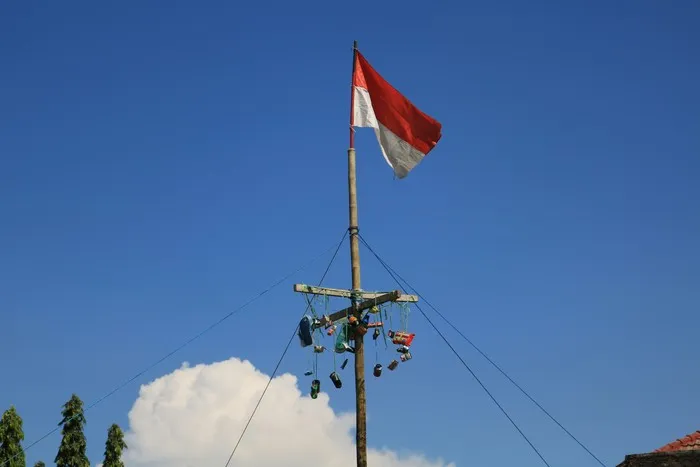
Tree‑climbing contest illustration/ Photo: Unsplash.com/Zoraya Project
Beyond region‑specific customs, staple contests like tree‑climbing (panjat pinang), sack races, tug of war, and egg‑eating form a core component of Indonesia’s August‑17 observances.
These events provide both amusement and a connection to the nation’s history and the virtues of perseverance. Engaging in diverse traditional games also nurtures solidarity and a sense of collective spirit.
In summary, these are several distinctive ways different Indonesian regions honor August 17. How does your area commemorate the day, dear reader?
***
Eager to join the Buzznesia Community, where you can take part in a range of engaging online and offline activities organized by Buzznesia/Beautynesia? Membership is open to everyone, regardless of gender, and we also offer a dedicated hub for students. Don’t hesitate—sign up today! Just click REGISTER HERE!
<p>(ria/ria)</p>
terimakasih sudah mengunjungi thecuy. 🙂

Saya adalah penulis di thecuy.com, sebuah website yang berfokus membagikan tips keuangan, investasi, dan cara mengelola uang dengan bijak, khususnya untuk pemula yang ingin belajar dari nol.
Melalui thecuy.com, saya ingin membantu pembaca memahami dunia finansial tanpa ribet, dengan bahasa yang sederhana.