
Kyoto Animation’s Sparks of Tomorrow presents a fresh venture for the studio, introducing an alternate‑history romance in a world where electricity never took root. The story centers on invention, human connection, and the bond between its protagonists, Kihachi and Inako.
In the lead‑up to the show’s debut, Anime Corner sat down with Director Minoru Ota and Producer Satori Senami to discuss how they brought this world to animation, including input from ABC Animation. Their conversation covered re‑imagining everyday technology with a new twist, establishing background art as the visual focus, preserving the narrative’s emotional core, and delivering Kyoto Animation’s latest creation to viewers worldwide via Netflix.
Read on for the full interview.
Q: Sparks of Tomorrow imagines a world built on an alternate history where electricity never developed. In what ways did this setting present new creative opportunities or challenges for you as a director?

Director Ota: The electrical gadgets seen in Sparks of Tomorrow—like lamps and phones—are objects that also exist in our everyday reality. Because they’re instantly recognizable, I found it especially satisfying to reinterpret them with a fresh, imaginative twist.
Director Ota: Another hallmark of the project is its alternate‑history setting. This gave us the liberty to relax strict realism, granting us more creative leeway. It enabled us to broaden the narrative, deepen character emotions, and pursue more ambitious creative ideas.
Q: At the outset, Sparks of Tomorrow feels more like an aspiration than a daily necessity in this world. How did you convey that feeling of “almost having it” visually before it actually appears on screen?
Director Ota: Kihachi spends most of his time inventing electrical gadgets and testing them out. Yet, showing the true dawn of an “electrical age” would shift the plot toward practical concerns like manufacturing, infrastructure, and commerce. To avoid a direct portrayal of such industrial expansion, we chose to symbolise the arrival of electricity through the personal growth of Kihachi and Inako. Their evolution as individuals drives the world toward that new era.
Q: The official materials call this work “Kyoto Animation’s new frontier.” What felt genuinely new or difficult for you personally, compared to the kind of work you’d done at the studio before?
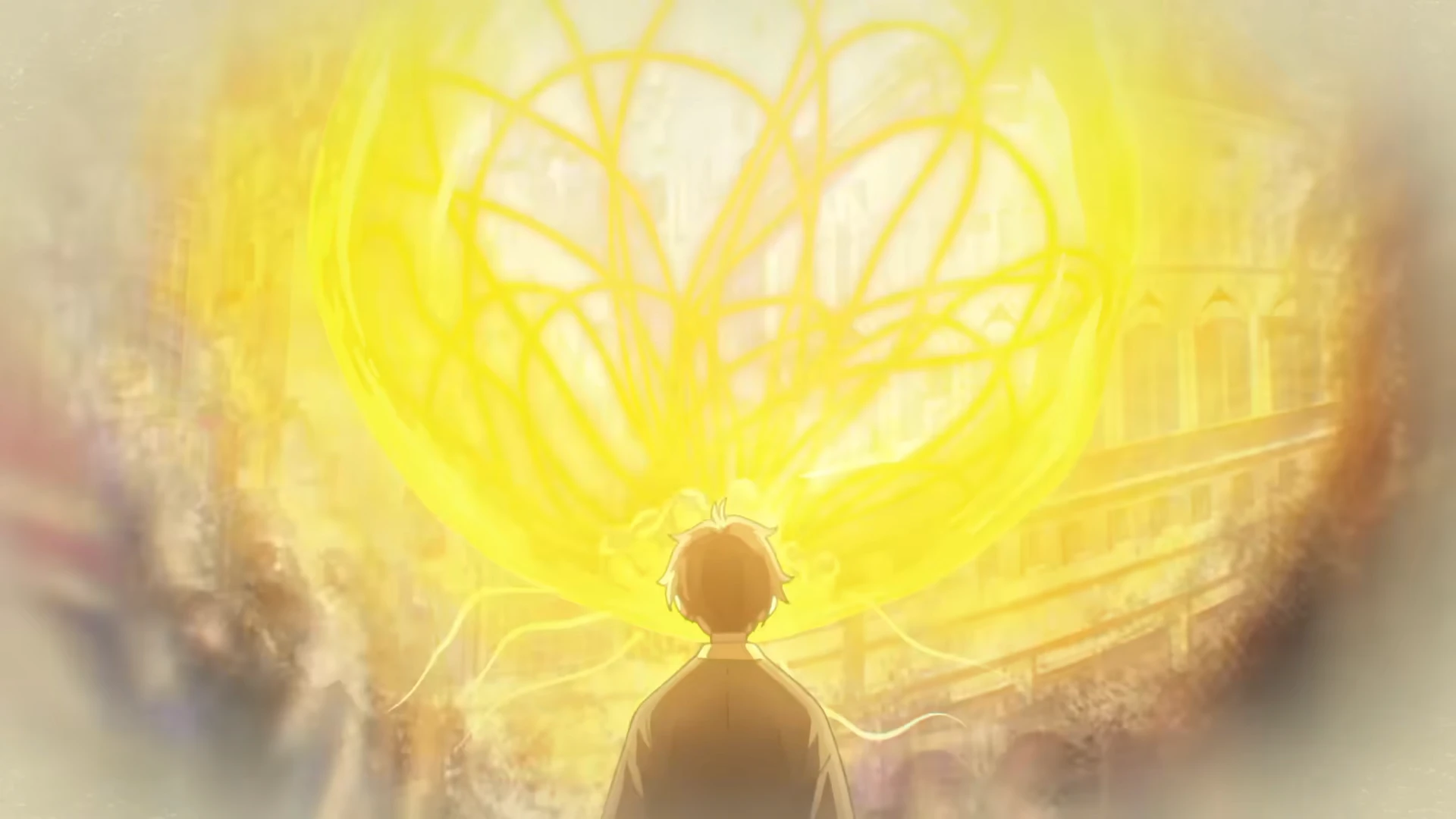
Director Ota: I consider one of the biggest fresh hurdles—both for me and the studio—to be making background art the central visual element of the series. Applying this concept across an entire season added considerable difficulty.
Director Ota: Consequently, many of the production techniques we’d relied on before lost their usefulness. Each novel scene forced us to devise fresh methods and test their viability. We hadn’t foreseen that our standard post‑production lighting would clash with the show’s background art. The hand‑painted textures, evident in the brushstrokes, simply didn’t merge smoothly with the soft gradients produced by compositing.
Director Ota: When we realised that our usual lighting approach wouldn’t work, it became quite a problem. Eventually, we decided to embed the light directly into the background paintings. This not only fixed the issue but also let us achieve a more unique and vivid lighting effect than would have been possible with compositing alone.
Q: If a viewer walks in expecting “steampunk KyoAni” and nothing else, what do you most want them to walk away understanding instead?
Director Ota: The steampunk aesthetic—steam‑filled streets, soot‑blackened air, a society where technology has stalled—creates a heavy environment for the characters. Most importantly, I want audiences to witness Kihachi, Inako, and the rest keep striving, no matter how impossible the odds may seem.
Director Ota: Had Kihachi and Inako never crossed paths, each might have abandoned their aspirations over time. However, their meeting mattered to them, and they never brushed aside each other’s thoughts, even when those thoughts were challenging. I hope the story conveys the power of never giving up on dialogue and sincerely pursuing one’s own dreams.
Q: If audiences remember only one thing from Episode 1, should it be the world, the central pair, or the idea of electricity itself?
Director Ota: I’d most like the audience to recall the core pair and their dynamic above all. While I also value the world‑building and the notion of electricity, I feel the series’ strongest point is its emotional storytelling. The environment and the technology mainly serve to deepen the human narrative. By concentrating on Kihachi, Inako, and the other characters, viewers can connect more intimately and enjoy the work even more.
Q: This is your first time directing a TV series. What’s one instinct from your years as an animator that you found yourself relying on most as a director?
Director Ota: My solid grasp of each animator’s talents and quirks allowed me to allocate crew to episodes and scenes with remarkable accuracy. I also intuitively knew what drives animators and how to bring out their best performances.
Director Ota: Through ongoing dialogue, I felt I could naturally lift their spirits and spur them on.
Q: This title has had a Japanese title, a coined subtitle, and now an English title for international release. How was that title strategy built to work across both audiences?
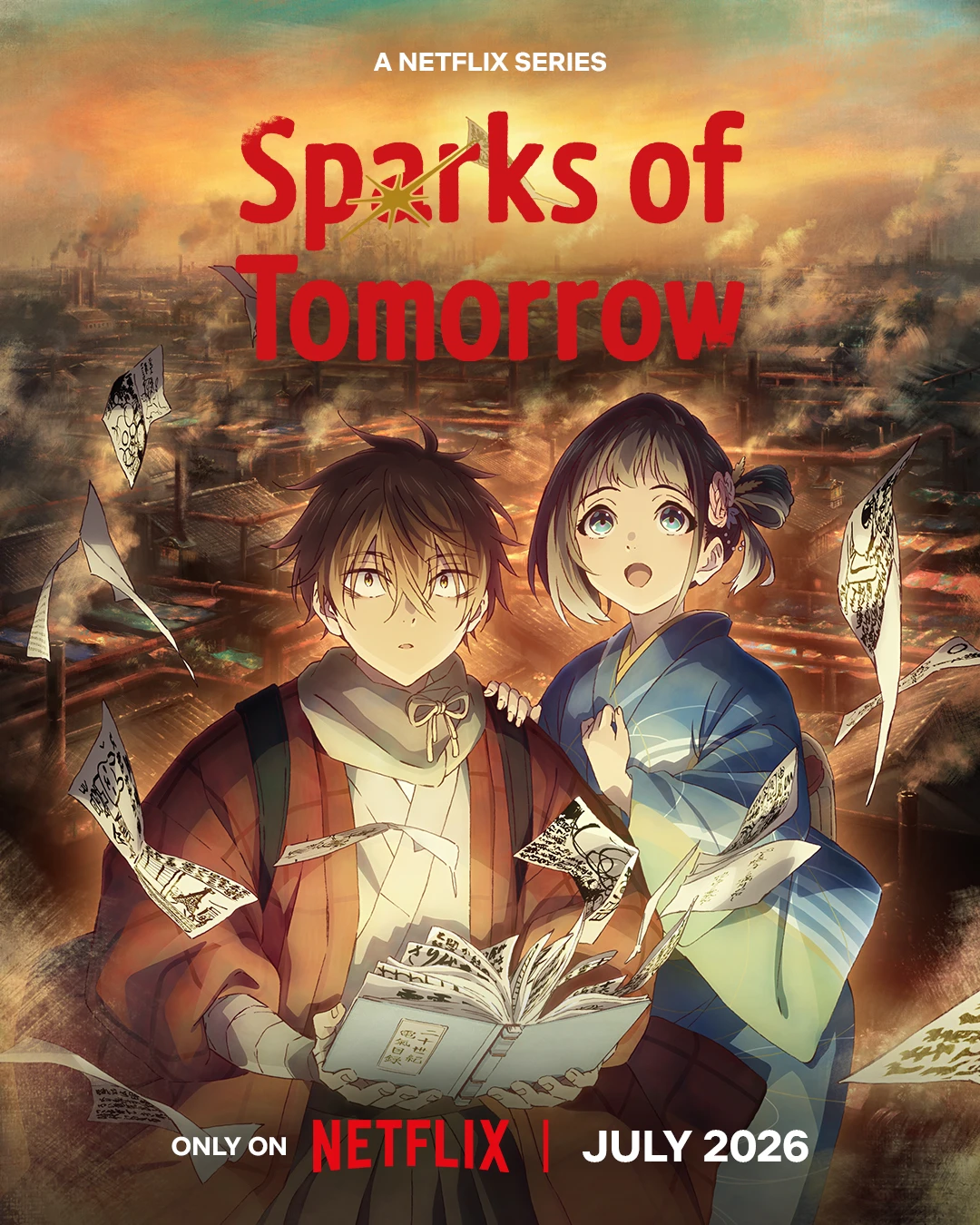
ABC Animation: We settled on the English title Sparks of Tomorrow. Rather than a literal translation, we aimed to capture the core ideas—like electricity and a forward‑thinking, challenge‑driven mindset—to make the series more approachable for a global audience. The final title emerged from talks with Netflix, our worldwide exclusive streaming partner.
Q: This is KyoAni’s first time going out as a worldwide Netflix exclusive, day-and-date with Japan. What did that partnership change about how you planned the release?
ABC Animation: We were already intent on bringing this project to fans everywhere from the project’s start, and we had prepared several global activities, such as world premieres. The Netflix distribution didn’t materially alter our launch schedule or broader worldwide plan.
ABC Animation: Nevertheless, Netflix assisted with promotional actions both domestically and abroad, covering out‑of‑home advertising and the Annecy International Animation Film Festival nomination. Thanks to this cooperation, we are confident the series will reach an even larger viewership.
Q: With same-day worldwide streaming now standard, has that changed how you think about a title’s very first impression, compared to the rollout of the studio’s earlier shows?
Producer Senami: From the start, we aimed to present this story to a worldwide audience while staying true to the values we always cherish. Sharing this series’ unique world with viewers everywhere at once feels incredibly rewarding. We hope global audiences will relish watching it as it unfolds in real time.
Q: Sparks of Tomorrow was selected for the official competition at Annecy, a first for Kyoto Animation. What did that recognition mean from a producer’s standpoint, and did the festival audience’s reaction tell you anything about how the show lands internationally?
Producer Senami: In my role as producer, I’m profoundly thankful for the acknowledgment, which also served as a strong validation.
Producer Senami: During production, we embraced fresh and daring methods with a global audience in mind, influencing everything from our depiction of historical elements to the visual composition that builds the series’ world.
Producer Senami: Because we deliberately pursued a visual language distinct from Kyoto Animation’s previous projects, the recognition of these choices represented a major triumph for the entire crew.
Q: You’ve also produced Liz and the Blue Bird, A Silent Voice, and Miss Kobayashi’s Dragon Maid. All very different tones and genres. What carries over from those experiences into something like Sparks of Tomorrow?
Producer Senami: A hallmark of Kyoto Animation is our collaborative culture, where the same core team often moves from one project to the next, naturally transferring techniques and know‑how. This continuity gives our productions a recognizable “KyoAni” feel, while we also strive for a fresh concept and visual style for each title. In Sparks of Tomorrow we built on that legacy and pushed into unexplored artistic territory, blending the studio’s signature qualities with a brand‑new approach.
Q: Looking back, what was the earliest conversation the two of you had about something that absolutely had to survive the adaptation?
Producer Senami: Right from the start, we made it a priority to keep the fundamental “boy meets girl” feel, the dynamic between Kihachi and Inako, and the characters’ personal development intact.
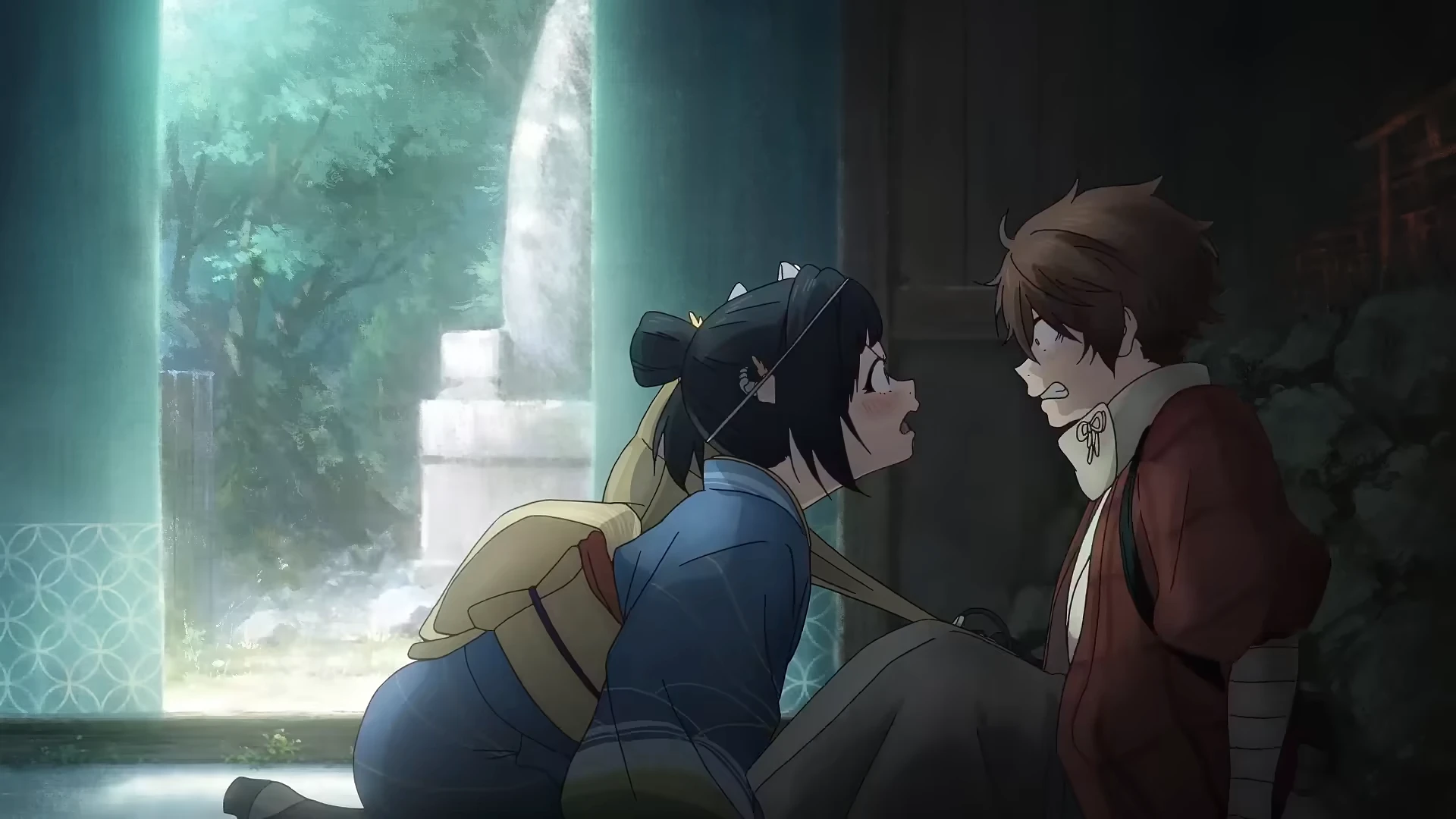
Director Ota: We also agreed on the desired mood: a story that viewers could enjoy without feeling overwhelmed, yet one that would still grab their attention.
Q: How did you decide which parts of this world needed to be explained to the audience, and which could stay embedded in the visuals? Like in the smoke, the architecture, the machines, rather than through dialogue?
Director Ota: Because mystery attracts people, we believed that over‑explaining could reduce curiosity. When unfamiliar elements appeared in the background, we wanted viewers to feel wonder and intrigue. Therefore, we deliberately kept world‑building exposition to the bare essentials.
Q: What part of KyoAni’s identity do you think translates across cultures without needing any explanation at all, is it the performance, the color, the timing, or something else?
Producer Senami: I think it’s our deep commitment to the craft of animation itself. Our refusal to compromise and our drive to deliver top‑quality work shine through in the careful character performances and visual storytelling.
Director Ota: I share that view. The enthusiasm creators pour into their work can exceed the director’s original vision, generating a charm that’s hard to map or plan. It’s always astonishing how magical it can become.
We extend our gratitude to Director Minoru Ota, Producer Satori Senami, and ABC Animation for their time and assistance in making this interview possible. The series is available exclusively on Netflix.
Sparks of Tomorrow Official Website
©Hiro Yuki, Kyoto Animation/Sparks of Tomorrow Production Committee
Explore more anime at Latest Anime & manga info.

Saya adalah penulis di thecuy.com, sebuah website yang berfokus membagikan tips keuangan, investasi, dan cara mengelola uang dengan bijak, khususnya untuk pemula yang ingin belajar dari nol.
Melalui thecuy.com, saya ingin membantu pembaca memahami dunia finansial tanpa ribet, dengan bahasa yang sederhana.