
Sentenced to Be a Hero is, in my view, underappreciated enough to be called a hidden gem of its season. Although the show placed fairly well in several lists of anticipated and popular anime, it never reached a level of sustained buzz compared to its season’s other titles. It definitely deserved greater recognition. Starting with a lengthy, action‑filled, in‑media‑res episode, the show instantly showcased its animation, art, and combat style. The story’s premise is intriguing as well; many typical assumptions about character types are upended, and there is extensive world‑building to explore as those deliberate contradictions unfold for viewers.
This year’s Anime Expo offered us the opportunity to interview key members of the production team, among them pivotal figures for the series. It featured Sentenced to Be a Hero staff such as Yoshiki Nakakoji, who took on duties as director and creature designer, Yasutaka Kimura, chief animation director at Studio Kai, and Takeru Noda, the series’ character designer also from Studio Kai.
Parts of this interview were gently revised for clarity. The conversation was carried out with the help of an interpreter.
Q: The premiere episode is thrilling, opening in media res and swiftly highlighting the animation quality while delivering a quick look at the design and characters. What motivated this approach to the first episode and how was the process?
Nakakoji-san: Director Takashima (Hiroyuki Takashima) aimed to immerse viewers from the get‑go, and with a full hour to work with we had more flexibility to shape the episode exactly as we envisioned.
Q: Viewers discover midway through episode one that the world’s roles are reversed: heroes are incarcerated and goddesses wield weapons. How did you personally react when you first learned about this twist?
Kimura-san: The narrative is essentially a dark fantasy, yet the team wanted to introduce an unconventional angle and a distinctive flavor to it.
Noda-san: The combination of a dark fantasy setting with the idea that heroes are actually criminals struck me as a rich concept to explore. It reminded me of something like Suicide Squad, where a group of outcasts unite to achieve a larger objective.
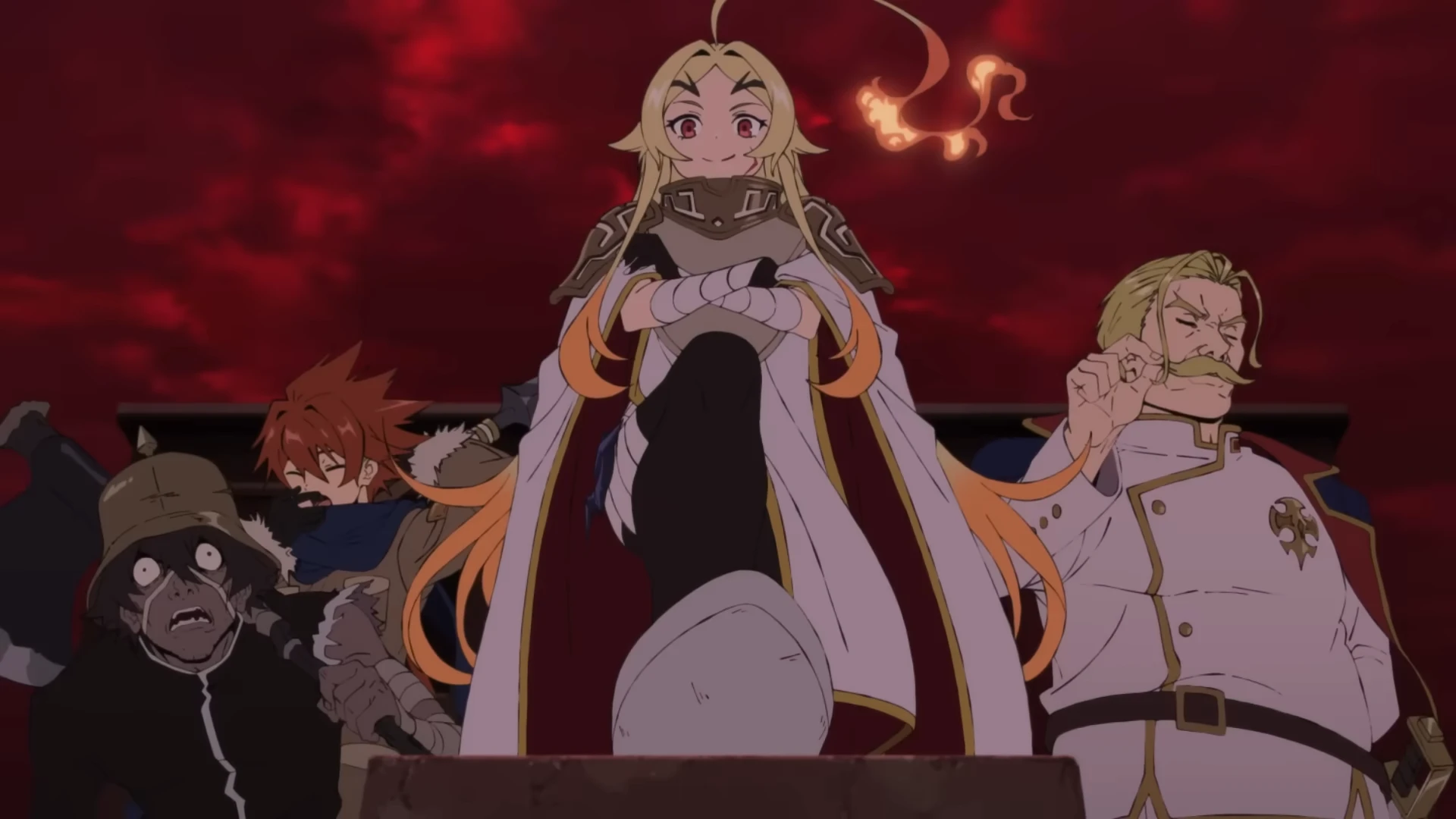
Q: Several team members have called this series “experimental.” What aspects allowed you to experiment during production?
Nakakoji-san: Animation‑wise, we deliberately minimized shadows—a rare and challenging choice in anime that required a large team and precise color control. We also integrated a single theme song into each episode rather than placing it at the start and end, which added another layer of experimentation. Our color work was meticulously tailored to each scene, presenting another experimental facet of the production.
Q: You joined the project first as a creature designer before taking on directorial duties. How did that shift feel, and does your design background influence your directing style?
Nakakoji-san: In most projects, only the director and producer review the script together. Here, however, the entire team participated from the start, letting me contribute to story planning and early meetings. I gradually became a go‑to resource, and the director later invited me to serve as assistant director.
Q: Noda-san, could you describe your character‑design workflow? How much did you rely on the original novel illustrations, and where did you choose to diverge from them?
Noda-san: As an illustrator, I focused heavily on the source material, especially the character outlines. We also emphasized clothing, armor, and the overall line density of the designs because there were many details. Our goal was to ensure the assets translated cleanly to the animation team while simplifying excessive lines from the originals so they wouldn’t need to redraw everything.
Q: What difficulties did you face when turning the series into an anime?
Nakakoji-san: Creating completely original creature designs—that is, envisioning something from nothing—was exceptionally hard.
Kimura-san: We needed extensive research into the fantasy genre and its established elements, covering everything from currency and language to the animals that populate the world.
Nakakoji-san: My knowledge of animals grew dramatically because I had to study them thoroughly to build the world convincingly.
Thank you to Yoshiki Nakakoji, Yasutaka Kimura, and Takeru Noda for sharing their time and to Crunchyroll for arranging the interview. You can stream Sentenced to Be a Hero on Crunchyroll. A second season has been confirmed, and you can view the official trailer beneath.
©2024 Rocket Shokai/KADOKAWA/Project Sentenced to Be a Hero
Be sure to check out more anime at Latest Anime & manga info.

Saya adalah penulis di thecuy.com, sebuah website yang berfokus membagikan tips keuangan, investasi, dan cara mengelola uang dengan bijak, khususnya untuk pemula yang ingin belajar dari nol.
Melalui thecuy.com, saya ingin membantu pembaca memahami dunia finansial tanpa ribet, dengan bahasa yang sederhana.