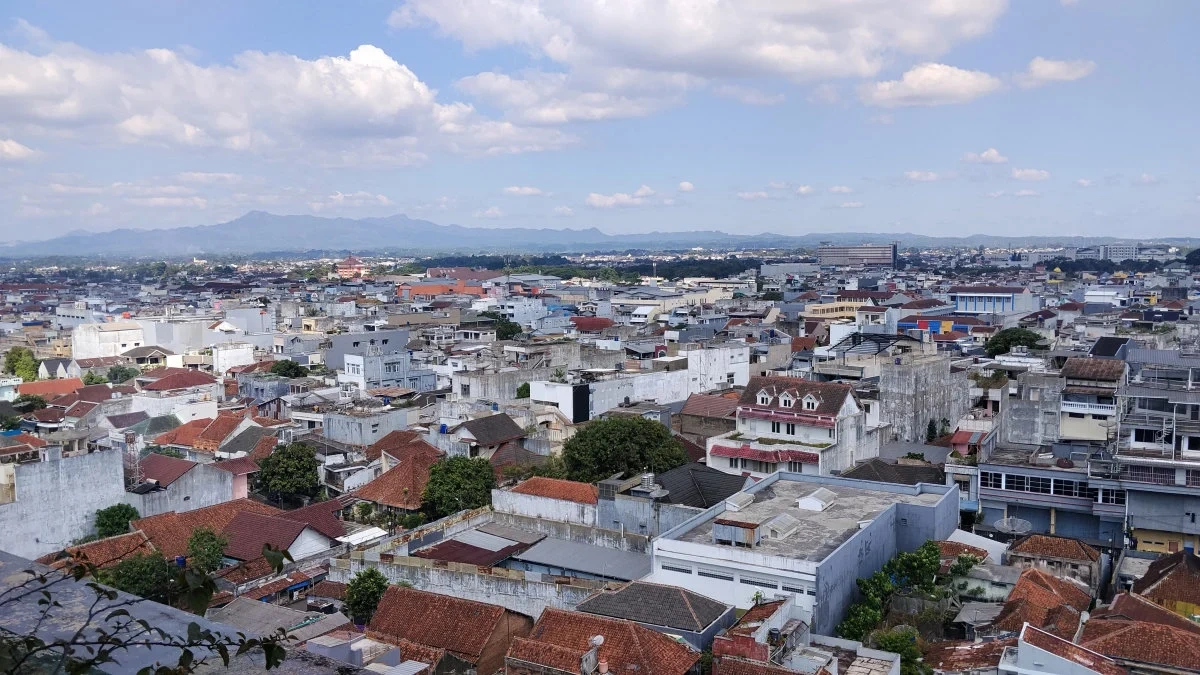
TASIKMALAYA, Thecuy.com – Handling domestic waste in Tasikmalaya City is not limited to dealing with household fecal waste alone.
Fat waste from restaurants, hotels, and culinary businesses also requires special handling so as not to exacerbate environmental pollution problems.

The Tasikmalaya City Public Works and Spatial Planning Agency (PUTR) has started preparing to optimize the fecal sludge treatment facility (IPLT), including operating a fat and liquid separator device, which is targeted to be functional by 2027.
Spatial Planning Permitting Is Faster, PUTR Tasikmalaya Prepares Field Supervision; RDTR Tasikmalaya Targeted to be Completed in 2027, Making Business Licensing Process Faster

The Head of the Residential Sector at the Tasikmalaya City PUTR Service, H Yayan Nurpatoni ST MM, stated that the facility is one of the potentials for developing domestic wastewater management services.
Up until now, waste management services have largely focused on household fecal waste.
However, restaurant and hotel activities also generate fat waste that requires different handling.
“The potential lies in restaurants, hotels, and others. We can collaborate if the existing treatment site is truly representative and does not endanger the environment,” he said.
Yayan explained that domestic waste and waste containing fat need to be separated during the processing stage.
Therefore, the presence of this fat separator is expected to expand the service functions of waste treatment facilities.
Interestingly, the device has actually been available since late 2024. However, its utilization still needs to be optimized to support a broader waste processing service.
The Draft RTRW in Tasikmalaya City Enters Final Stage, Long-Awaited Solution Since 2016 Is Near; Rice Thresher Theft in Padaherang Pangandaran, Suspect Escapes to Cipari Forest until Mobbed by Residents
“The device has existed since late 2024. It is planned to be operated in 2027 as a separator between fat and other liquids,” he explained.
In addition to facility development, PUTR continues to implement a safe sanitation program through the construction of individual and communal septic tanks.
The program is part of fulfilling the regional government’s minimum service standards (SPM) in domestic wastewater management.
Yayan said that a number of sanitation activities that have not been completed in 2026 will be attempted to be included again in the 2027 planning.
Its implementation is also synergized with Posyandu programs related to fulfilling six SPM areas.
In his opinion, sanitation is often regarded as a simple issue because it is not always visible on the surface.
However, unsafe septic tank management can potentially pollute the environment and impact the community.
Baca juga Berita lainnya di News Page. Terimakasih sudah mengunjungi thecuy . 🙂

Saya adalah jurnalis di thecuy.com yang fokus menghadirkan berita terkini, analisis mendalam, dan informasi terpercaya seputar perkembangan dunia finansial, bisnis, teknologi, dan isu-isu terkini yang relevan bagi pembaca Indonesia.
Sebagai jurnalis, saya berkomitmen untuk:
Menyajikan berita yang akurasi dan faktanya terverifikasi.
Menulis dengan bahasa yang mudah dipahami, namun tetap menjaga integritas jurnalistik.
Menghadirkan laporan mendalam yang memberi perspektif baru bagi pembaca.
Di thecuy.com, saya tidak hanya melaporkan berita, tetapi juga berupaya menganalisis tren agar pembaca dapat memahami konteks di balik setiap peristiwa.
📌 Bidang Liputan Utama:
Berita Terbaru & ekonomi, keuangan.
Perkembangan teknologi dan inovasi digital.
Tren bisnis dan investasi.
Misi saya adalah membantu pembaca mendapatkan informasi yang cepat, akurat, dan dapat dipercaya, sehingga mereka bisa membuat keputusan yang lebih cerdas dalam kehidupan sehari-hari maupun dunia usaha.
📞 Kontak
Untuk kerja sama media atau wawancara, silakan hubungi melalui halaman Kontak thecuy.com atau email langsung ke [email protected].