TASIKMALAYA, Thecuy.com–Even as the government pours massive funds into school revitalization, many children are unable to benefit. This is because concrete actions to address out‑of‑school children (ATS) are still not evident.
Education is a crucial factor in shaping a nation’s direction and future. It is also a right for every child, regardless of economic status.

This is stipulated in Article 31 of the 1945 Constitution and Law Number 20 of 2003 concerning the National Education System, especially Articles 5, 6, 11, and 34, which assign the state the responsibility to guarantee citizens’ rights to education and to ensure that quality and affordable education is provided.
Jabatan pimpinan Baznas Kota Tasikmalaya sedang „dilelang“, generasi Z masih belum bisa masuk. Langkah besar SOG Tasikmalaya, now beyond just being a Vespa lovers’ community.

In regulatory terms, this is realized through a 12‑year compulsory education policy, under which every child is expected to complete at least secondary education equivalent. Nonetheless, that commitment is not yet fully effective, as data show 7,520 out‑of‑school children (ATS) according to the Department of Education up to 3 September 2026, with 4,470 of them already verified.
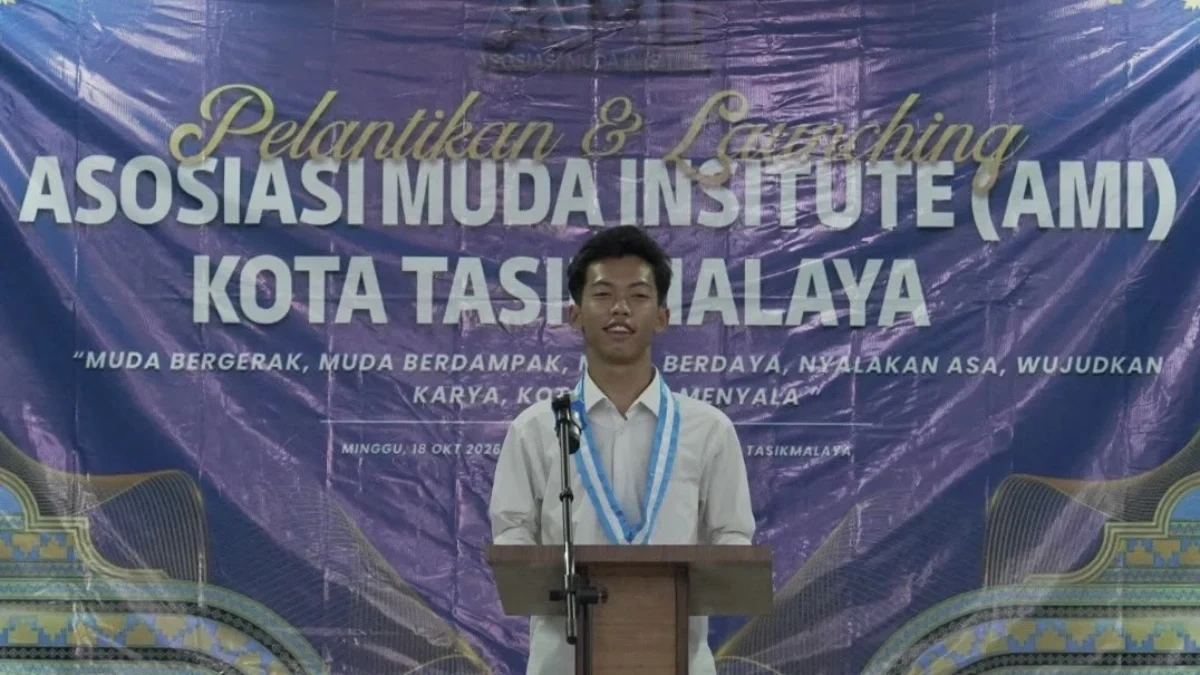
Muhammad Jausan Kamil, chairman of the Muda Institute (AMI) Tasikmalaya, said the verified data could indeed decrease. However, that is already sufficient to illustrate the reality of how many children are not attending school. “It serves as a warning of the need for serious attention and measurable handling,” he said.
Given that the government is now intensively improving school infrastructure through a revitalization program, he did not deny that this is one of the needs. But the ATS issue must not be ignored, because those children will not be able to enjoy the program’s results. “We must not let school buildings become even more magnificent while thousands of children still lack access to education,” he said.
Moreover, the school revitalization program also carries the risk of violations simply because it is project‑oriented. As a result, the infrastructure built and repaired does not match what the students actually need. “The public has the right to know how the selection of implementers is carried out, how the supervision mechanism works, and whether there is potential for conflict of interest between program organizers and those who obtain the work,” he said.
Jausan continued that the ATS problem is not only about the future of education in Tasikmalaya, but also relates to the nation’s grand vision of achieving Golden Indonesia 2045. If this situation continues unchecked, the dream of a golden generation will remain only an aspiration. “How can this nation build quality human resources if the issue of out‑of‑school children is not addressed seriously?” he explained.
Baca juga Berita lainnya di News Page
Terimakasih sudah mengunjungi thecuy . 🙂

Saya adalah jurnalis di thecuy.com yang fokus menghadirkan berita terkini, analisis mendalam, dan informasi terpercaya seputar perkembangan dunia finansial, bisnis, teknologi, dan isu-isu terkini yang relevan bagi pembaca Indonesia.
Sebagai jurnalis, saya berkomitmen untuk:
Menyajikan berita yang akurasi dan faktanya terverifikasi.
Menulis dengan bahasa yang mudah dipahami, namun tetap menjaga integritas jurnalistik.
Menghadirkan laporan mendalam yang memberi perspektif baru bagi pembaca.
Di thecuy.com, saya tidak hanya melaporkan berita, tetapi juga berupaya menganalisis tren agar pembaca dapat memahami konteks di balik setiap peristiwa.
📌 Bidang Liputan Utama:
Berita Terbaru & ekonomi, keuangan.
Perkembangan teknologi dan inovasi digital.
Tren bisnis dan investasi.
Misi saya adalah membantu pembaca mendapatkan informasi yang cepat, akurat, dan dapat dipercaya, sehingga mereka bisa membuat keputusan yang lebih cerdas dalam kehidupan sehari-hari maupun dunia usaha.
📞 Kontak
Untuk kerja sama media atau wawancara, silakan hubungi melalui halaman Kontak thecuy.com atau email langsung ke [email protected].