The future is already present, but not distributed evenly.
Skill di Era AI: 4 Kemampuan yang Bikin Kariermu Tetap Dibutuhkan👤 Jurnalis Berita • 11/10/2026
— William Gibson
You are preparing a report for an important meeting, but new data has shifted the discussion direction.

AI can tidy up numbers and generate several options, while you need to assess the situation, choose a path, then explain the impact to your team.
In moments like this, what makes you hard to replace isn’t outrunning the machine, but directing its output.
Kadika notices that concerns about AI often lead to a single question: “If my routine tasks can be automated, what’s the value of my expertise?”
That question is natural, but the answer doesn’t require learning every new tool at once.
What matters more is strengthening human abilities that decide whether AI results are relevant, safe, and truly helpful.
Alasan AI Sulit Digantikan Bukanlah Karena Kecepatan Kerja
AI excels at recognizing patterns and generating answers from available information, but those results still need to be aligned with real goals and circumstances.
For example, AI might propose a steep discount to boost sales, but you must verify whether profit margins remain healthy and whether customers will return after the promotion ends.
If you only look at order volume, the recommendation may seem successful.
If you factor in profit, team capacity, and customer habits, the final decision could change.
The value of human work appears when tasks need interpretation, not just execution.
The World Economic Forum, in its Future of Jobs Report 2025, lists analytical thinking as one of the core skills most sought after by employers.
That makes sense because companies don’t just need answers; they need people who can check whether the original question was the right one.
“But isn’t AI getting better at reading context?”
True, its capabilities keep improving, yet organizational context often lives in conversations, customer habits, leaders’ priorities, and things that aren’t neatly recorded.
Understanding context means recognizing what’s happening, who is affected, and what limits must be respected before acting.
Membaca Makna Tersembunyi yang Tak Tertulis dalam Dokumen

Imagine you are a customer service manager and you notice the same complaint appearing repeatedly.
AI can group those complaints into themes, such as slow delivery or confusing product instructions.
Your job is to find the underlying cause, for example an overpromising marketing message or a warehouse process that changed without informing the service team.
Data helps you see the symptoms, but conversations with the team and customers can reveal the hidden reasons.
People who are context‑aware don’t rush to accept the first answer, because they know the apparent problem isn’t always the root cause.
This skill applies to many jobs, from HR professionals who need to understand why employees resign to analysts who must explain why sales figures drop.
Start by asking, “What changed before this problem appeared?” then “Who is most affected by it?”
Those simple questions make your analysis sharper than simply asking AI to generate a list of possibilities.
Sometimes the answer isn’t new technology, but a policy that confuses customers or an approval workflow that’s too long.
If you get into the habit of recording the background of decisions and their impacts, you also help the team learn from past incidents.
Contextual reading isn’t a mysterious intuition; it’s the habit of gathering clues before drawing conclusions.
Menilai Risiko dan Bersedia Bertanggung Jawab

AI can provide recommendations that sound convincing, but a person must still decide whether to act on them.
For instance, a recruitment team uses an AI tool to screen job applications quickly.
If the system misinterprets career gaps as a sign of incompetence, an automated choice could eliminate a genuinely suitable candidate.
A responsible person will check the criteria, request additional evidence, and ensure there is room for human review of the outcome.
Good judgment involves weighing benefits, risks, and who will bear the consequences.
This isn’t an invitation to distrust all technology or reject efficiency.
It’s about recognizing that work decisions can affect revenue, reputation, safety, and even the trust people place in one another.
You can develop this skill by separating facts, assumptions, and unknowns before endorsing a recommendation.
Ask, “What is the worst risk if we’re wrong?” and “Who needs to be involved before a decision is made?”
Kadika has seen that a decision that seems small can trigger major rework when no one checks its impact on other processes.
This is where responsibility becomes visible—not through a high title, but through a willingness to follow up on the results of a decision.
Hehehe, the “send” button is easy to press, but explaining why the result was sent is a more important part of the job.
When mistakes occur, people who can admit them, fix them, and set up future safeguards are far more trusted.
Kreativitas yang Dimulai dari Masalah Nyata di Sekitar Kita
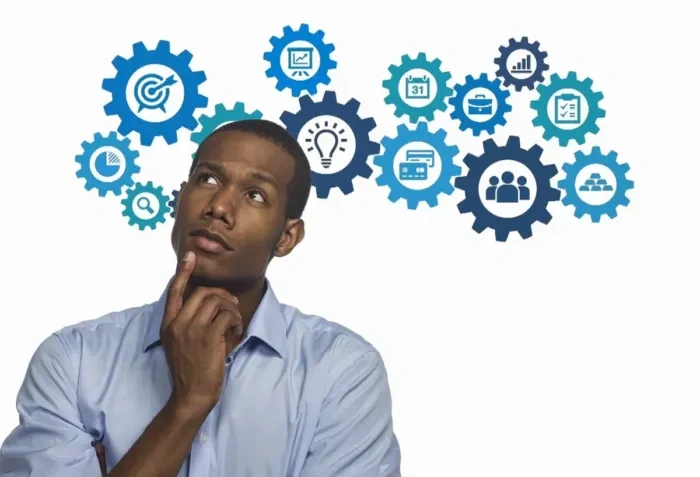
AI can propose dozens of ideas in seconds, but having many ideas doesn’t automatically make any of them suitable for customer needs.
Workplace creativity isn’t only about creating something that has never existed before.
Creativity also means combining available resources to tackle problems that have been considered ordinary.
For example, a small team doesn’t have the budget to hire more staff, yet customer messages pile up every Monday.
AI can help sort the messages and draft replies, and then you design a priority flow so urgent cases are handled by humans first.
The solution emerges from a blend of tools, customer understanding, and knowledge of team capacity.
“Valuable ideas aren’t the most sophisticated ones; they are the ones that solve real obstacles in a doable way.”
You can start by noticing small frictions that colleagues or customers often complain about.
Ask which part consumes time, when mistakes happen most often, and what change is easiest to test.
After that, use AI to generate options or create initial drafts, not to take over the whole thinking process.
Test one idea on a small scale, such as for two weeks, then measure work time, errors, and user responses.
In this way, your creativity connects with results instead of ending as a list of interesting ideas in a document.
Menyatukan Berbagai Bidang untuk Menciptakan Solusi Terpadu

Work problems rarely stay confined to a single area of expertise.
A product launch, for example, touches design, marketing, customer service, operations, and finance all at once.
AI can help summarize information from each part, but a person still needs to link those pieces into a consistent decision.
If the marketing team promises same‑day delivery, the operations team must verify that capacity exists.
If conversion numbers rise but complaints also increase, the product team needs to see whether promotional messaging set customer expectations too high.
Someone who can communicate across functions doesn’t have to be the deepest expert in every area.
What matters is having enough understanding to ask the right questions, spot dependencies, and translate one team’s needs to another.
For example, you could explain to the technical team that a feature change is needed because customers often fail to complete payments, not just because a button looks unappealing.
That information helps the technical team grasp the user issue and assists the business team in agreeing on success metrics.
Being able to connect disciplines also makes it easier to foresee downstream effects before a change is implemented.
If you want to practice, join a project outside your primary function or invite a colleague from a different team to review your plan.
Then get into the habit of turning specialized terminology into language that people without that background can understand.
Demonstrating Your Value in Daily Work
Hard‑to‑replace abilities become evident when you can provide proof rather than merely list them on a résumé.
Instead of writing “capable of strategic thinking,” describe how you uncovered the cause of a delay, agreed on a process change, and measured the outcome.
Document the initial situation, the actions you took, who you collaborated with, and the observable impact.
The numbers don’t have to be dramatic; reducing work time from five hours to three hours per week still offers a clear picture.
If the effect is hard to quantify with numbers, use other evidence such as fewer complaints, fewer revisions, or faster decision‑making.
You can also showcase thoughtful AI use by explaining which parts were machine‑assisted and which parts you reviewed yourself.
That demonstrates you’re not just using a tool, but you understand its limits and take responsibility for the final result.
During meetings, try to present not only the answer but also the reasoning, potential risks, and the next steps you recommend.
In this way, colleagues see your thinking process rather than just the final file appearing in their inbox.
If it still feels challenging, pick one project this month to practice reading context, assessing impact, or linking two teams.
You don’t need to outrun AI in speed, because your contribution shines when work requires judgment and accountability.
After finishing this reading, reflect on the tasks you perform most often and identify which parts benefit most from deeper human understanding.
Kadika hopes that question helps you see not only which duties can be automated, but also the value you can build through interpretation, selection, and connecting work.
Free to read. If it helped, consider buying me a coffee.
Terima kasih banyak, kawan
Even a small support helps the next article appear faster.
Feel free to leave a comment after supporting, so I can say thanks. ^^
Enjoy this writing? Get the next one via email
One email per week. It contains notes I don’t put on the blog.
No spam. Unsubscribe anytime.
Thanks! Check your inbox (also the Promotions/Spam folder).
Also read other news from News Page Thanks for visiting thecuy. 🙂

Saya adalah jurnalis di thecuy.com yang fokus menghadirkan berita terkini, analisis mendalam, dan informasi terpercaya seputar perkembangan dunia finansial, bisnis, teknologi, dan isu-isu terkini yang relevan bagi pembaca Indonesia.
Sebagai jurnalis, saya berkomitmen untuk:
Menyajikan berita yang akurasi dan faktanya terverifikasi.
Menulis dengan bahasa yang mudah dipahami, namun tetap menjaga integritas jurnalistik.
Menghadirkan laporan mendalam yang memberi perspektif baru bagi pembaca.
Di thecuy.com, saya tidak hanya melaporkan berita, tetapi juga berupaya menganalisis tren agar pembaca dapat memahami konteks di balik setiap peristiwa.
📌 Bidang Liputan Utama:
Berita Terbaru & ekonomi, keuangan.
Perkembangan teknologi dan inovasi digital.
Tren bisnis dan investasi.
Misi saya adalah membantu pembaca mendapatkan informasi yang cepat, akurat, dan dapat dipercaya, sehingga mereka bisa membuat keputusan yang lebih cerdas dalam kehidupan sehari-hari maupun dunia usaha.
📞 Kontak
Untuk kerja sama media atau wawancara, silakan hubungi melalui halaman Kontak thecuy.com atau email langsung ke [email protected].