Ide baru selalu terasa ringan sampai kamu harus memilih mana yang benar-benar akan kamu kerjakan.
Cara Menemukan Passion lewat Eksperimen Kecil, Bukan Menunggu Yakin👤 Jurnalis Berita • 02/10/2026
If you often wonder why people with many ideas struggle to focus, the answer might not be that you’re lacking discipline, but that every idea feels like a missed opportunity.
You might think about creating a new portfolio in the morning, sign up for a class at noon, and then draft a side‑business plan on your phone at night.

The next day, all of those ideas are still open tabs and an ever‑growing to‑do list, while your main work continues to wait.
I have many ideas, so I’m creative, right? Maybe, but creativity doesn’t automatically turn into results if your attention keeps shifting to the next possibility.
I once thought the problem was my time‑management skill, so I tried to make a more detailed schedule where every hour had a specific task.
But the schedule ended up overloaded with tasks for several projects whose priorities were still unclear, hehehe.
What needs to be fixed isn’t just the calendar, but how you choose ideas and protect time to execute them.
Mengapa Orang dengan Banyak Ide Kesulitan Fokus pada Satu Hal

New ideas give a quick feeling of progress, even though there is no risk, rejection, revision, or repetitive work that usually appears when execution begins.
You can picture a cool product in five minutes, but creating its first version might take several weeks and require feedback that could be uncomfortable.
At this point, the mind often compares two unbalanced things: a perfect new idea in your head and an old project that has already revealed all of its difficulties.
Consequently, the new idea appears more interesting not because it is more important, but because it has not yet been tested by reality.
There is also the habit of treating every idea as a commitment that must be pursued immediately.
“If you don’t try it now, it’ll be taken by someone else.” That argument sounds sensible, but many ideas don’t lose their value just because you keep them for a month.
The problem is, when all ideas become a priority list, that list stops being helpful and becomes a source of guilt.
Bedakan Ide, Pilihan, dan Komitmen
An idea is a possibility, an option is something you decide to test, while a commitment is work that you give real time and energy to.
The three often get mixed up, so just thinking about taking a certification makes you feel you must sign up this week.
Try giving different names to your notes: a bank of ideas for all possibilities, a list of experiments for active options, and a work list for ongoing commitments.
This simple separation helps you store ideas without needing to work on them immediately.
When Ideas Feel More Intriguing Than Execution
Notice the moment when you start abandoning the work you are doing.
There is usually a fairly concrete trigger, such as a part of the project feeling boring, you not knowing the next step, or your work just receiving criticism.
Instead of immediately opening a new project, write one sentence about why you want to switch: is the new idea really more important, or are you trying to avoid the part that makes you uncomfortable?
I once used that question when wanting to change direction in the middle of a task: ‘What is the smallest action that can make this work move again?’
The answer is often not a big decision, but sending a draft for review, asking for data that doesn’t exist yet, or completing one pending part.
Those small steps turn the fog in your head into work you can touch.
Teresa Amabile and Steven Kramer’s research on progress in meaningful work, discussed in The Power of Small Wins, includes how small progress can support work motivation.
So, if execution feels heavy, you don’t have to wait for motivation to come big, you can design small progress that is visible.
How to Choose Ideas Worth Executing This Week
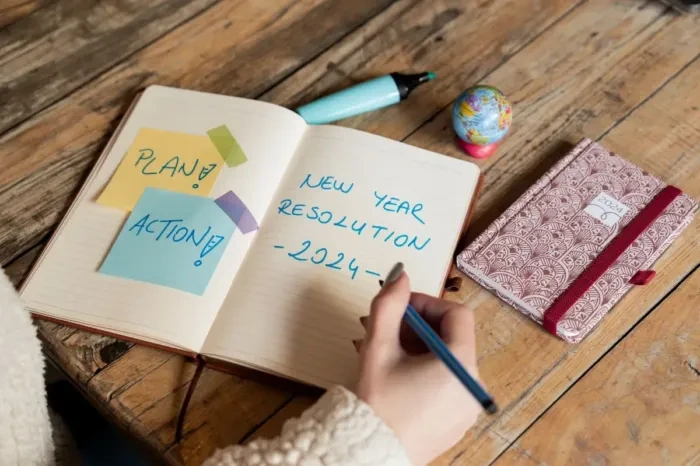
Don’t choose ideas just because they are the most exciting or the newest, because both haven’t answered whether the idea fits your current goals and capacity.
Evaluate each idea using the following four practical questions, then give a score from 1 to 5 for each aspect.
- Impact: if successful, how much will it benefit your career, customers, or team?
- Alignment: does this idea support the goals you are pursuing in the next three to six months?
- Time cost: how many hours per week are required, including research, revision, and coordination?
- Ease of testing: can you test the initial version in two weeks without a large cost?
For example, you have three ideas: learning data analysis, creating a career newsletter, and opening an online store.
If your goal is to move up to an analyst position within six months, learning data analysis probably has high alignment and can be tested through one small project, while the online store requires a bigger commitment that may not support that goal.
The score is not a magic formula for determining the future, but a way to compare ideas against the same criteria.
Choose one idea to test for 14 days, then define an observable result, such as completing a simple dashboard or sending the first newsletter edition to ten readers.
Don’t set vague targets like becoming better or getting serious, because you’ll find it hard to know whether the experiment succeeded.
Set Limits Before You Start
Experiments need limits so they don’t turn into endless projects.
Determine from the start the duration, weekly working time, maximum cost, and the sign that you will continue, change, or stop.
For example, for two weeks you allocate three sessions of 45 minutes each to create a portfolio, with a cost limit of zero rupiah and a target of one case study finished.
After that, evaluate the result based on evidence, not just the feeling of enthusiasm on the first day.
Create a System so Ideas Don’t Disturb Focus
You don’t have to force yourself to stop having ideas, but you need a place to store them so new ideas don’t constantly demand attention.
Create a single bank of ideas in a note app or notebook, then write each idea in a short format: the problem you want to solve, who benefits, and the smallest test step.
Limit the time you review the idea bank, for example 20 minutes every Friday afternoon, so you don’t turn every inspiration into a sudden agenda.
When a new idea appears in the middle of work, note it in one minute and go back to the task you are doing.
To keep focus, choose a maximum of one personal development project outside of your main work responsibilities for a period of two to four weeks.
If your job involves many projects, limit the number of active projects based on actual capacity, not based on how interesting they feel.
I also find it helpful with a simple rule: before adding a new project, there must be one old project that is finished, stopped, or moved to a waiting list.
This rule may feel rigid, but the empty space in a calendar is not laziness, it’s capacity to do something well.
Measure Progress, Not the Number of Plans

A growing list of ideas can give a sense of productivity, but what you need to measure is evidence of work that has been finished.
Every weekend, note three things: what you have created, what is blocking you, and the next smallest step.
Use checkable indicators, such as the number of portfolio pages completed, one presentation tested to colleagues, or three applications sent with relevant adjustments.
Avoid measuring success by how long you sit or how many productivity tools you try.
If for two weeks you have not produced any evidence, don’t rush to conclude that you are untalented.
Check first whether the target was too big, the time was too short, or you hadn’t broken the task into steps you could start.
For example, the goal of finishing a portfolio can be broken down into choosing one project, tidying up data, writing a summary, then asking one person for feedback.
One step completed provides more useful information than ten plans still stored in your head.
When You Need to Change Direction, Not Give Up
Focus doesn’t mean you have to stick to an idea that proves unsuitable.
If an experiment has been run according to the set limits and user response is weak or its benefits aren’t worth the effort, changing direction can be a wise decision.
Distinguish between stopping because you have evidence and stopping because you just encountered a difficult part.
Before closing a project, ask: what have I learned, what evidence supports this decision, and is there a smaller version that is still worth testing?
If the answer shows the problem is just in the way of working, you can change the approach without discarding the goal entirely.
If the answer shows the idea no longer supports your priorities, store the lesson and let go of the commitment.
This evening, choose one idea that is most relevant to your career goal, then write a 30‑minute action you can do within the next 48 hours.
After that, let the other ideas stay alive in the idea bank, not competing for space in your schedule.
When looking at the remaining list, ask yourself: ‘Do I want to be known for the many things I’ve planned, or for one important thing I’ve actually completed?’
Referensi
Read for free. If it helped, you can treat me to coffee.
Thank you
Even a small support helps the next article come out faster.

You can leave a comment after sending support so I can say thank you. ^^
Read other news as well on the News Page.
Thank you for visiting thecuy. 🙂

Saya adalah jurnalis di thecuy.com yang fokus menghadirkan berita terkini, analisis mendalam, dan informasi terpercaya seputar perkembangan dunia finansial, bisnis, teknologi, dan isu-isu terkini yang relevan bagi pembaca Indonesia.
Sebagai jurnalis, saya berkomitmen untuk:
Menyajikan berita yang akurasi dan faktanya terverifikasi.
Menulis dengan bahasa yang mudah dipahami, namun tetap menjaga integritas jurnalistik.
Menghadirkan laporan mendalam yang memberi perspektif baru bagi pembaca.
Di thecuy.com, saya tidak hanya melaporkan berita, tetapi juga berupaya menganalisis tren agar pembaca dapat memahami konteks di balik setiap peristiwa.
📌 Bidang Liputan Utama:
Berita Terbaru & ekonomi, keuangan.
Perkembangan teknologi dan inovasi digital.
Tren bisnis dan investasi.
Misi saya adalah membantu pembaca mendapatkan informasi yang cepat, akurat, dan dapat dipercaya, sehingga mereka bisa membuat keputusan yang lebih cerdas dalam kehidupan sehari-hari maupun dunia usaha.
📞 Kontak
Untuk kerja sama media atau wawancara, silakan hubungi melalui halaman Kontak thecuy.com atau email langsung ke [email protected].