“You can only win by learning faster than anyone else.”
Cara Menemukan Passion lewat Eksperimen Kecil, Bukan Menunggu Yakin👤 Jurnalis Berita • 02/10/2026
On Monday morning, you came up with the idea to create a knowledge‑sharing session at the office, but back‑to‑back meetings keep pushing the idea into your phone notes.
If you want to turn ideas into projects, you don’t need to draft a massive proposal right away or wait for the perfect free time.

What you need is a way to test an idea on a small scale, with a clear deadline and measurable success indicators.
I’ve seen simple ideas change direction after being tried on a few people, while ideas that looked polished stopped because they were never tested.
That’s what small experiments are for: not to prove that your idea is brilliant, but to find out the next step based on real responses.
Transform Ideas into Projects with Small Experiments

Ideas are usually still just assumptions.
For example, “The team needs a more concise onboarding guide,” sounds reasonable, but doesn’t answer who benefits most, which parts are confusing, or whether the new guide will actually be used.
Turn that assumption into a testable question.
You could phrase it as, “Will new hires complete their first task faster with a one‑page guide?” Such a question narrows the focus and makes the outcome easier to observe.
In a Harvard Business Review article on Lean Startup, Steve Blank talks about the importance of testing assumptions and learning from user responses before scaling up.
Distinguish Ideas, Assumptions, and Evidence
Write the idea in one sentence, then list the assumptions that must be true for the idea to succeed.
For the onboarding example, the assumption might be that new hires have trouble finding information, not that they lack explanatory sessions from colleagues.
After that, identify observable evidence.
Did they find answers without asking?
Did task completion time decrease?
Avoid relying on comments like “it seems good,” because praise may not indicate actual behavioral change.
Select the Most Worthwhile Work Problems to Test

Don’t start with the most exciting solution.
Begin with a problem that occurs frequently, impacts the work, and you can access without layered approvals.
For example, you feel weekly meetings are too long.
Before suggesting a replacement system for the entire division, find out if the excess duration is due to unclear agendas, unrecorded decisions, or too many participants.
To choose a problem, rate three things from 1 to 5: how often it occurs, how big the impact, and how easy it is to try a small change.
Problems with the highest total score are usually the best to test first.
- Frequency: appears at least a few times per month.
- Impactful: hinders time, quality, or team coordination.
- Accessible: can be tested with the resources and authority you have.
If the scores are balanced, choose the problem closest to your work.
You can more easily observe changes and solicit feedback from those directly experiencing it.
Design Experiments with Clear Boundaries
A small experiment is not a large project given a new name.
You need to define who will participate, how long the trial will last, what will be changed, and what results you will record.
Example: For one week, send the agenda and meeting objectives the day before to five team members.
Measure the meeting duration and the number of decisions with a clear owner.
Don’t change the agenda, number of participants, and report format all at once, because you’ll find it difficult to know which change had an impact.
Apply the One Problem, One Change Formula
Record the experiment in a simple format: “If I do X for group Y for Z days, I expect outcome A to shift to B.” This sentence forces you to define limits and results that can be checked.
If the issue is onboarding guidance, you could test a one‑page FAQ with three new hires over five work days.
Record how many times they ask about the listed topics and whether the first task is completed without extra assistance.
Start with a version that can be made in one or two hours.
A simple document, a short form, or a directed conversation is often enough to test initial interest.
You don’t need to build an app before knowing if people actually need the solution.
Run a 7‑Day Experiment Without Waiting for Perfection
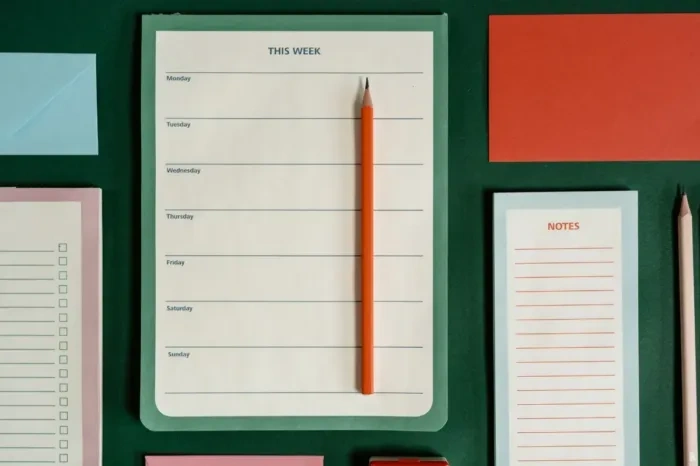
Seven days isn’t a strict rule, but a short enough limit to prevent an idea from getting lost in daily work.
If the test needs a longer response time, set a realistic period from the start and schedule an evaluation date.
- Day 1: select one problem and write down the assumption you want to test.
- Day 2: identify participants, the small change, and the outcome indicators.
- Day 3: prepare the simplest tools, such as a document or form.
- Days 4 to 6: run the experiment and record responses without rushing to change the plan.
- Day 7: compare the results with the initial assumption and decide the next step.
Schedule a short time in your calendar, for example 30 minutes to prepare the trial and 15 minutes each day to record results.
If you need boss approval, explain that this is a limited trial, not a permanent change.
You could say, “I want to try a new agenda format for one week to see if meeting decisions are easier to follow up on.” This sentence is clear, measurable, and doesn’t sound like you’re asking for a major change without evidence.
Measure Responses, Not Just Enthusiasm
Before you start, write down the success indicators.
For meetings, the indicator could be a duration drop from 60 to 45 minutes, while at least four out of five decisions have a clear owner.
Those numbers are not a guarantee that the project will succeed.
It helps you evaluate the results more clearly than relying on memory or momentary enthusiasm.
Pay attention to responses that don’t meet expectations.
If participants read the guide but still ask the same question, the problem might not be the guide’s content.
Maybe the information is difficult to find or the workflow isn’t clear.
After the trial, choose one of three decisions: continue because there’s a positive signal, change the approach because evidence is insufficient, or stop because the problem turns out to be unimportant.
Stopping the experiment doesn’t mean failure; rather, you avoid investing too much in a mistaken assumption.
Bring the Outcomes into Career Conversations

Small experiments can also demonstrate how you work: identifying a problem, taking initiative, gathering feedback, then adjusting your approach.
Keep a brief record of the initial problem, the action you tried, the results, and the lessons learned.
That record is useful during performance reviews or interviews.
Instead of saying “I had an idea to improve coordination,” you can explain that a week‑long agenda test cut meeting duration by an average of 12 minutes, but did not increase the number of decisions followed up on.
Sometimes the results are not impressive numbers.
That’s okay.
You still have a concrete story about how you investigate a problem and understand the team’s needs.
If you need encouragement to start taking one step, you can read the article on Acting and choosing the smallest action you can take today.
Now, look at one idea you still have stored.
What problem do you actually want to solve, and what 30‑minute experiment could give you the first clue this week?
Read for free. If it helped, consider buying me a coffee.
	<button type="button" class="dnpst__btn dnpst__btn--subtle" data-dnpst-open="dnpst-1" aria-haspopup="dialog">
						<svg class="dnpst__ico" viewBox="0 0 24 24" width="16" height="16" aria-hidden="true" focusable="false">
				<path fill="currentColor" d="M12 20.7s-7.6-4.6-9.6-8.9C.9 8.3 2.7 5 6 5c2 0 3.3 1.1 4 2.1.7-1 2-2.1 4-2.1 3.3 0 5.1 3.3 3.6 6.8-2 4.3-9.6 8.9-9.6 8.9z"></path>
			</svg>
					<span>Support this article</span>
	</button>
</div>

<div class="dnpst-modal" id="dnpst-1" role="dialog" aria-modal="true" aria-label="Terima kasih, ya" hidden>

	<div class="dnpst-modal__card" role="document">
		<button type="button" class="dnpst-modal__x" data-dnpst-close aria-label="Tutup">×</button>

		<h3 class="dnpst-modal__title">Terima kasih, ya</h3>
						<p class="dnpst-modal__desc">Even the smallest support helps the next article come out faster.</p>

						<figure class="dnpst-modal__qr">
				<img src="https://www.dwiandikapratama.com/wp-content/uploads/2026/08/IMG_20260828_055321_795.jpg" alt="QRIS code" loading="lazy"/>
										<figcaption>Scan using any bank or e‑wallet app.</figcaption>
								</figure>


						<p class="dnpst-modal__foot">Feel free to leave a comment after sending support, so I can say thank you. ^^</p>
				</div>
</div>
Also read other news on the News Page Thank you for visiting thecuy. 🙂

Saya adalah jurnalis di thecuy.com yang fokus menghadirkan berita terkini, analisis mendalam, dan informasi terpercaya seputar perkembangan dunia finansial, bisnis, teknologi, dan isu-isu terkini yang relevan bagi pembaca Indonesia.
Sebagai jurnalis, saya berkomitmen untuk:
Menyajikan berita yang akurasi dan faktanya terverifikasi.
Menulis dengan bahasa yang mudah dipahami, namun tetap menjaga integritas jurnalistik.
Menghadirkan laporan mendalam yang memberi perspektif baru bagi pembaca.
Di thecuy.com, saya tidak hanya melaporkan berita, tetapi juga berupaya menganalisis tren agar pembaca dapat memahami konteks di balik setiap peristiwa.
📌 Bidang Liputan Utama:
Berita Terbaru & ekonomi, keuangan.
Perkembangan teknologi dan inovasi digital.
Tren bisnis dan investasi.
Misi saya adalah membantu pembaca mendapatkan informasi yang cepat, akurat, dan dapat dipercaya, sehingga mereka bisa membuat keputusan yang lebih cerdas dalam kehidupan sehari-hari maupun dunia usaha.
📞 Kontak
Untuk kerja sama media atau wawancara, silakan hubungi melalui halaman Kontak thecuy.com atau email langsung ke [email protected].