
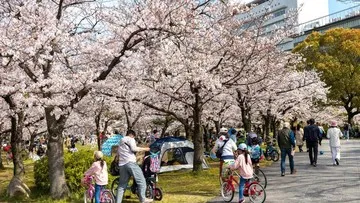
When you think of Japan and spring, what images spring to mind, Thecuy? Streets awash with pink blossoms, parks crowded with visitors, or perhaps a relaxed picnic beneath cherry trees? All these scenes form part of Japan’s Hanami tradition, a custom that makes spring feel especially wonderful.
Interestingly, Hanami isn’t just about watching cherry blossoms bloom and then snapping photos underneath. There’s a long history, customs of gathering, signature foods, and etiquette to observe. So, before adding Japan to your spring travel list, let’s dive deeper into the Hanami tradition that has become woven into everyday life there!

                                                                                                                                                                                            <section id="section-detail-2" class="multi-card " data-page="2" data-page-title="Apa Itu Budaya Hanami di Jepang?" dtr-evt="halaman selanjutnya" dtr-sec="halaman selanjutnya" dtr-act="tombol halaman selanjutnya" dtr-id="324674" dtr-ttl="Apa Itu Budaya Hanami di Jepang?" onclick="_pt(this)" readability="29">
                            <h2 class="fw-bold fs-5">What Is the Hanami Culture in Japan?</h2>
                            <div readability="7">
                                <img src="https://akcdn.detik.net.id/visual/2026/09/20/mengenal-hanami-di-jepangfoto-magnific-1790155960792.jpeg?w=700&q=90" alt title/>
                                <p>Exploring Hanami in Japan/Photo: Magnific</p>
                            </div>
                            <p>In simple terms, Hanami means to enjoy or observe flowers. According to <em>Advantour</em>, this practice has become ingrained in Japanese society and is most closely linked to the season when cherry blossoms bloom across the country.</p>
However, Hanami isn’t only about sakura. Early on, the Japanese preferred to admire plum (ume) blossoms. Over time, sakura emerged as the flower most strongly associated with the tradition.
Each spring, parks and public spaces in Japan can fill with locals and tourists alike. People come to take leisurely walks, capture scenery, or sit together while savoring food and drinks beneath the flowering trees.

Bloom times vary by region. In Okinawa, blossoms may appear as early as late January, while Tokyo typically enters its cherry‑season in late March. Kyushu and Shikoku follow around early April, and Hokkaido usually enjoys its cherry bloom from late April to early May.
The History of Hanami Culture in Japan
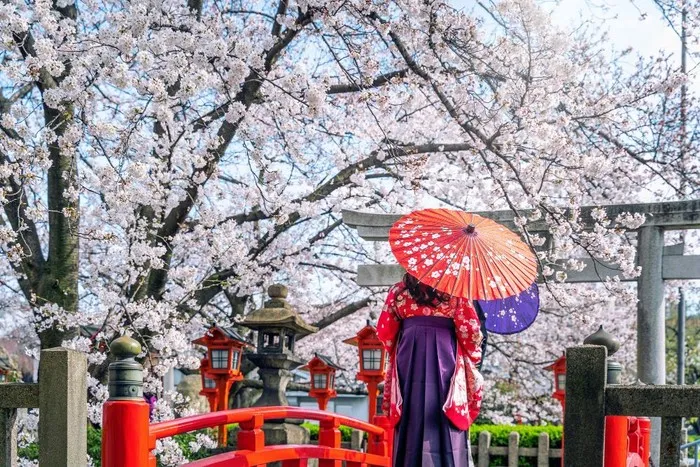
The History of Hanami/Photo: Magnific
The roots of Hanami in Japan stretch back to the Nara period, roughly 710–794 CE. During that era, flower appreciation focused chiefly on ume or plum blossoms.
Chinese cultural influence played a role, as plum trees were among the species introduced from China. As Japanese culture evolved, however, public interest gradually shifted from plum to cherry blossoms.
In the Kamakura period (≈1185–1333), cherry viewing was largely an activity for the imperial family and aristocracy. They would gather, compose poetry, and host banquets beneath the blooming trees.
Later, during the Edo period (1603–1868), Hanami broadened to include the general public. Sakura trees were planted along many streets and open spaces, giving more people the chance to enjoy spring’s beauty.
How Is Hanami Celebrated Today?
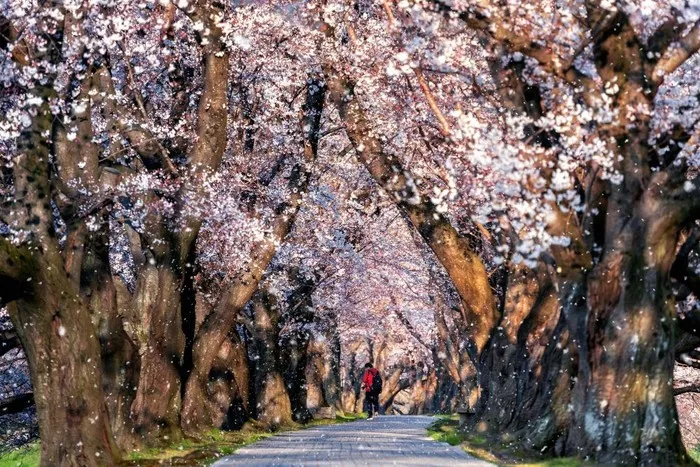
Hanami Nowadays/Photo: Magnific
If you picture Hanami as merely sitting in a park, you’d be missing a far livelier side. The modern Hanami culture in Japan also serves as an opportunity to gather with family, friends, and even co‑workers.
People often bring food and drinks to share under the cherry trees. Bento boxes are especially popular because they are easy to transport and look attractive.
A typical bento may contain rice, fish, meat, vegetables, and fruit. Traditional drinks include tea, while sake, plum wine, beer, and shōchū can also be enjoyed in moderation.
At some sites, Hanami is accompanied by festivals and bazaars. Visitors can find a variety of foods, souvenirs, and entertainment that further enliven the spring atmosphere.
Intriguingly, Japan’s flower‑viewing tradition isn’t limited to sakura. Tulips, sunflowers, and chrysanthemums can also be part of seasonal flower appreciation, depending on their bloom times.
Tips for Preparing Hanami
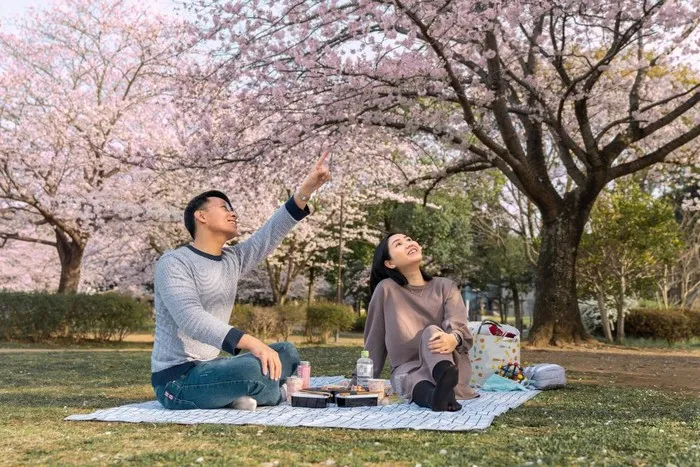
Tips for Doing Hanami in Japan/Photo: Magnific
Want to experience Hanami in Japan first‑hand? Don’t just focus on finding a pretty photo spot. Some small preparations can make your visit far more comfortable.
- Check bloom timing: Sakura bloom dates can shift each year and vary by region. Be sure to look up the latest information before fixing your travel dates.
- Observe park rules: Not all parks have the same guidelines concerning picnics, food, drinks, or specific areas.
- Bring your own provisions: You can pack your meals or purchase food from nearby festivals and stalls.
- Carry a seat: Arriving early is advisable if you want a comfortable spot for your picnic.
- Wear warm clothing: Early spring can still feel cool, especially when you’re sitting outdoors for a long time.
- Bring a trash bag: Waste bins may be limited, so it’s better to take a bag to carry your rubbish out.
n
n
When and Where Can You Join Hanami?
n
 n
n
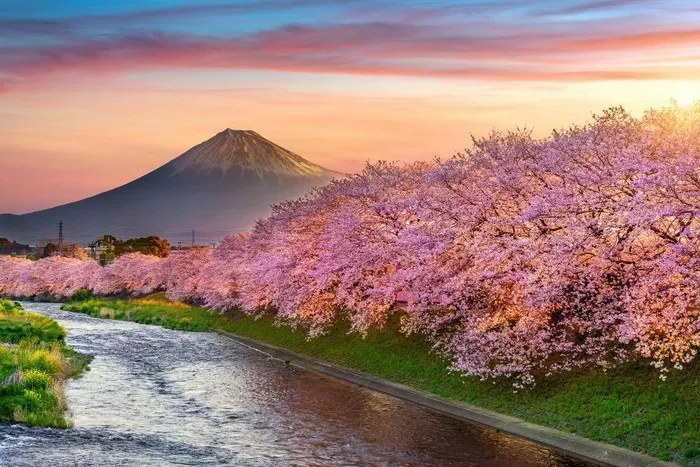
Hanami Locations in Japan/Photo: Magnific
n
n
If your goal is to see cherry blossoms at their peak, timing your trip becomes important. Generally, Hanami season runs from late March to early April, though exact dates can shift based on location and weather.
n
Here’s a typical schedule for planning:
n
- n
- Tokyo and Kyoto: late March to early April
- Osaka and Nara: early April
- Hokkaido: late April to early May
n
n
n
n
After you’ve set the dates, you can pick a spot that matches the atmosphere you want. Some popular Hanami sites include:
n
1. Ueno Park – Tokyo
n
Ueno Park is one of Tokyo’s oldest and most famous parks. In spring, the pathways fill with visitors eager to wander among the blooming cherry trees.
n
The area boasts almost 1,000 sakura trees, some of which can flower earlier than others. The bustling crowds are part of the experience if you want a vibrant Hanami feeling.
n
2. Shinjuku Gyoen – Tokyo
n
For a spacious green setting, Shinjuku Gyoen is a good choice. The park contains roughly 1,500 cherry trees representing about 75 varieties, scattered around a pond and open meadows.
n
Each year a Hanami Festival is held here, featuring Japanese public figures. Nonetheless, the park remains open throughout the Hanami period, allowing a more relaxed stroll.
n
3. Osaka Castle Park – Osaka
n
If you’d like to combine Hanami with a historic landmark, Osaka Castle Park fits the bill.
n
The grounds around Osaka Castle host over 4,000 cherry trees. When they bloom, the pink and white petals contrast nicely with the castle’s iconic architecture.
n
4. Kiyomizu‑dera – Kyoto
n
Kiyomizu‑dera is a renowned temple in Kyoto surrounded by cherry blossoms. From the temple’s hillside veranda, visitors can take in both the flowers and a sweeping view of the city.
n
If you arrive in the late afternoon, you can also enjoy the atmosphere as night falls. Special lighting around the temple creates a different, magical look for the blossoms.
n
5. Matsumae Park – Hokkaido
n
Should your schedule not line up with late March, don’t give up on Japan just yet. Matsumae Park in Hokkaido offers a longer cherry‑blossom window, especially from April to May.
n
There are more than 10,000 cherry trees representing about 250 varieties on the site. In addition to the blooms, the surrounding area includes historic attractions such as old temples.
n
Etiquette for Observing Hanami
n
 n
n
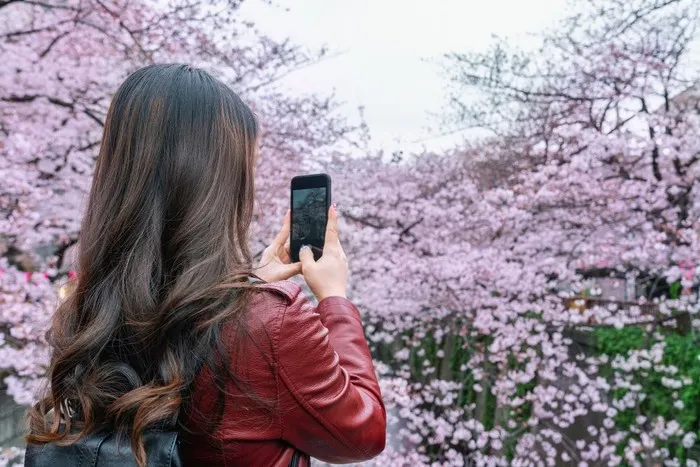
Hanami Etiquette/Photo: Magnific
n
n
Enjoying Hanami in Japan is fun, but it doesn’t give you carte blanche to act however you like in the park. Because many people gather in one place, a few simple etiquette rules are worth keeping in mind.
n
- n
- Don’t damage the cherry trees: Breaking branches or pulling them is prohibited. If you want a souvenir, consider buying one from a festival stall or local shop.
- Stay clean: Don’t leave food wrappers or trash behind. Bring your own trash bag if bins are scarce.
- Respect others’ space: Avoid claiming too large an area or disturbing fellow Hanami participants.
- Keep the mood comfortable: If you drink alcohol, do so responsibly and stay aware of your surroundings.
n
n
n
n
n
Cherry blossoms last only a short while, which may be why Hanami feels so special. It’s a chance to pause, enjoy a fleeting sight, and store the moment as a memory.
n
So, the next time you have the chance to visit Japan in spring, don’t rush straight to the best photo spot. Take a moment to sit beneath the trees, savor the food you brought, and experience the atmosphere that has kept Hanami alive to this day!
n
***
n
Want to be part of the Buzznesia Community, where you can join exciting online and offline events organized by Buzznesia/Beautynesia? This community is open to everyone, both women and men, and we also have a special group for current students. Join the Buzznesia Community. To sign up, CLICK HERE!
n
n n n
(naq/naq)
nn
Terima kasih telah mengunjungi thecuy. 🙂

Saya adalah penulis di thecuy.com, sebuah website yang berfokus membagikan tips keuangan, investasi, dan cara mengelola uang dengan bijak, khususnya untuk pemula yang ingin belajar dari nol.
Melalui thecuy.com, saya ingin membantu pembaca memahami dunia finansial tanpa ribet, dengan bahasa yang sederhana.