
After the CYBERPUNK: EDGERUNNERS 2 panel at Lucca Comics & Games, we sat down with showrunner Bartosz Sztybor for a deeper dive into Season backing its ties to the broader franchise. We explored the creative collaboration with Studio TRIGGER, his approach to the Cyberpunk lore, and his perspectives on characters such as Roman, D, Capri, and others. Bartosz, who also co‑writes the manga Cyberpunk: Edgerunners MADNESS with artist Asano, shared thoughts on how the various Cyberpunk media interconnect.
Much like our earlier chat about Season 1, we enjoyed a lively discussion with Sztybor about the logic behind his narrative choices. Thanks to his distinctive wit, he’s always willing to reveal his thoughts, even if it means spilling some spoilers.

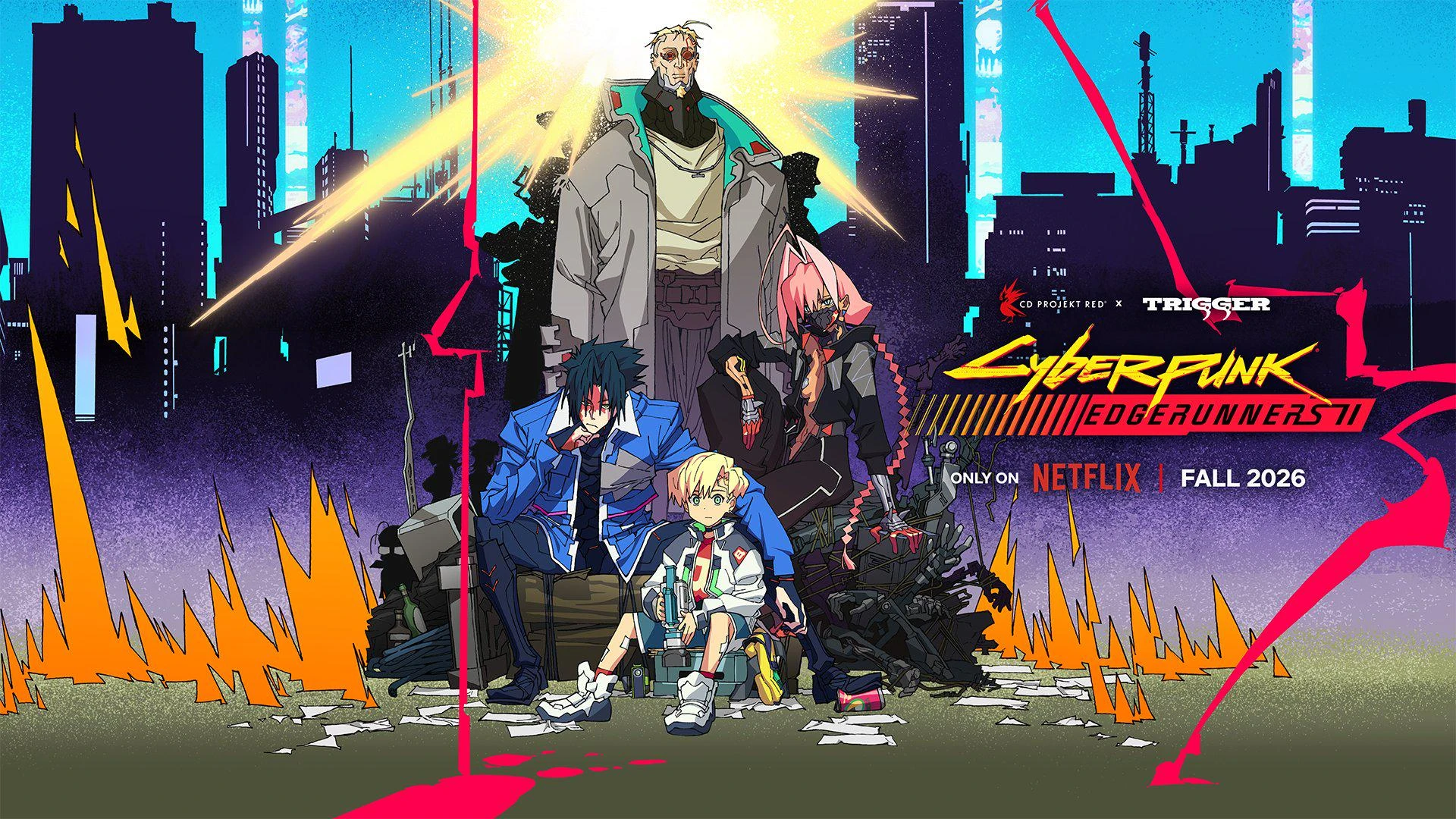
Parts of this roundtable were trimmed for readability. Be warned of CYBERPUNK: EDGERUNNERS 1 and 2 plot spoilers ahead.
IGN: Based on what you discussed at the panel today, how do you currently feel about the possibility of a Season 3?
Bartosz: During the writing of Season 1, I was already brainstorming about future seasons and other narrative ideas, since there are many stories left to tell. In my creative process, I’m constantly looking for answers to questions I haven’t yet figured out.
After Season 1, I realized many questions remained unanswered. I harbored a wish to produce additional seasons, yet—as is typical with CDPR—this would only happen if there were a flawless story and the right team to bring it to life.
Following Season 1, Studio TRIGGER claimed they were too exhausted to continue. However, shortly after Season 1’s 2022 release at Lucca Comics & Games, we revisited the topic with them, and they admitted they were no longer that tired and might consider another season. I already had some concepts, so I submitted a pitch two months later. Neither they, CD Projekt Red, nor I wanted a conventional follow‑up, which is why we aimed for something unconventional in the scene you referenced. When I presented my Season 2 proposal, they were highly impressed, leading to the creation of the second season.
I suspect the same criteria would apply to a potential third season. I have a few ideas, but it remains to be seen. Without a studio or director who shares Ikarashi‑san’s vision, it wouldn’t be worthwhile. We have no interest in delivering something mediocre or sub‑par. I’m also pleased with how Season 2 wraps up Season 1; they feel like a cohesive whole that functions well together.
CGMagazine: Earlier you touched on how anime writing differs from live‑action or game writing. Could you describe the back‑and‑forth process you had with Studio TRIGGER?
Bartosz: For Season 1, our workflow was: we drafted scripts and sent them to Studio TRIGGER, assuming they’d simply adapt them. However, they explained that adaptation isn’t straightforward because we weren’t familiar with anime‑specific conventions. They felt our scripts read more like live‑action. While that’s part of it, the aim for both seasons was to craft an HBO‑style narrative for anime. We managed to keep that tone, but there was a lot of back‑and‑forth. Eventually they sent us their own scripts, sharing their storytelling and narrative ideas.
Thanks to that earlier collaboration, Season 2’s process was smoother and distinct. I prepared a 20‑page treatment outlining the story’s development. Over the following year and a half we held weekly meetings.
I flew to Japan for scene‑by‑scene discussions. Occasionally we debated the nuances between live‑action and anime scripts, but more often we encountered cultural gaps. A scene that made perfect sense to me would sometimes be interpreted in a completely opposite way by the team.
Anime Corner: Season 2 clearly showcases David’s lasting impact. In your view, what kind of legacy will these new characters imprint on Night City after the season’s final episode?
Bartosz: [laughs] I can’t reveal the details. However, I’m certain a legacy will emerge. That’s what I meant earlier— there are concepts not just for further seasons but also for other media, such as upcoming comic books that will explore what follows after Season 2.
I appreciate that you noticed it. Even though David Martinez is gone, the fallout from his actions persists. That reflects a core principle of the EDGERUNNERS franchise: every decision carries consequences. Even after death, the repercussions can affect others years later, regardless of intent. It underscores the moral ambiguity of the entire universe.
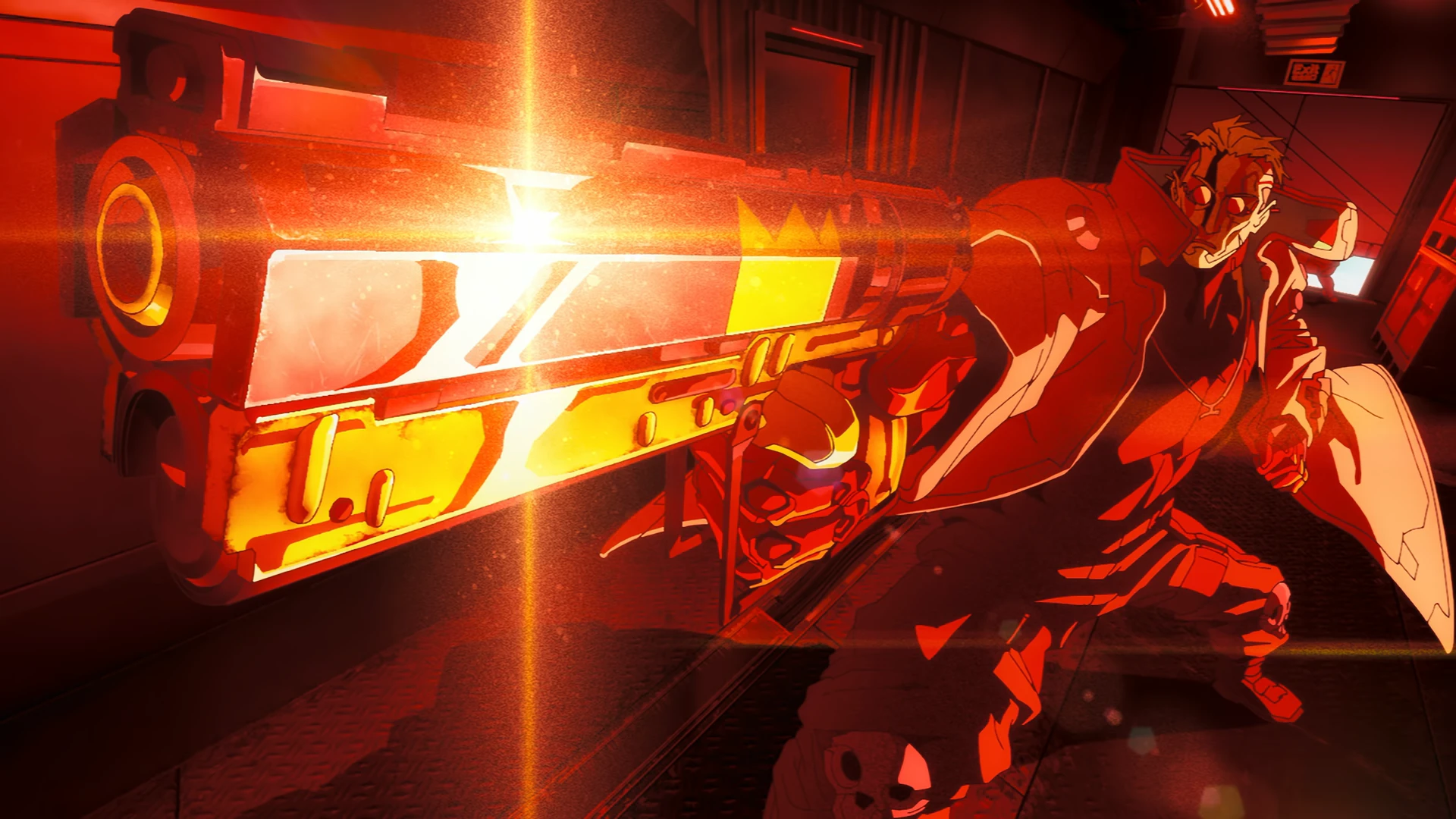
IGN: Many observant fans have spotted details in the data archive within EDGERUNNERS 2. There’s a wall of images, and one appears to resemble “female V.” Was that a deliberate choice or is it meant to be open to interpretation?
Bartosz: It’s meant to be ambiguous. Although the surrounding dialogue is significant, ultimately the image remains open to interpretation.
IGN: Do you consider it important to embed Easter eggs referencing the game?
Bartosz: I’m not concerned about that at all. I wouldn’t label them “Easter eggs.” Our goal with the Cyberpunk franchise is to craft self‑contained narratives that can be enjoyed independently—think of a single comic that delivers its own catharsis without requiring knowledge of other media. We include references not as fan service but to make the world feel alive. We aim for stories where viewers or readers can grasp everything without needing to have consumed multiple shows or books just to figure out why a character is the villain [laughs].
I do enjoy sprinkling in small cameos like Sal Bigelow in EDGERUNNERS 2, who appeared five years earlier in the comic Cyberpunk 2077: Big City Dreams. We only include such references when they serve a purpose. Our focus isn’t on gratifying fans; it’s about constructing a broader narrative.
CGMagazine: In the games, V can load up on cyberware without any consequences, yet other characters in the universe can’t do the same. How do you handle the narrative gap between V’s unique status and the events of EDGERUNNERS?
Bartosz: I don’t necessarily think V is that exceptional, though I’m not entirely sure. The character does have flaws, and Johnny Silverhand’s influence clearly affects him. Regarding cyberpsychosis, I don’t see it as a simple cause‑and‑effect of loading 25 pieces of cyberware at once. Instead, I compare it to drug addiction or alcoholism. Some people can implant a single piece of chrome and develop cyberpsychosis, while others—like Adam Smasher—can have many mods without any issues. Specialness isn’t the sole factor.
Bleeding Cool: The Witcher is an older IP with books, games and a TV series, making it a different kind of startup franchise. How much creative freedom do you have in terms of what you can do?
Bartosz: There is certainly some leeway. When we develop Cyberpunk stories, we don’t feel overly constrained; the focus is always on maintaining internal logic. It would be incoherent to abruptly jump to 2099 for a tale that has no ties to other media. That’s why most current comics are set in 2076‑2077, the era fans already know. We’ve been exploring other facets of Night City, and with EDGERUNNERS 2 we’re entering a new chapter for the franchise. In terms of narrative possibilities, I think the freedom is extensive.
IGN: When you place stories after Cyberpunk 2077, do you discuss with CD Projekt Red about establishing a canonical ending for the game, or is the approach more abstract?
Bartosz: It’s a mix of both approaches. While the topic isn’t completely abstract, we deliberately avoid defining a single canonical ending. We hold extensive talks with the lore team to balance the various possible outcomes and envision the world’s post‑game state. That’s why the scene you referenced isn’t literal; we’re offering hints instead. We likely will flesh out the world’s condition through additional comics and other releases. Discussions are ongoing, but we’re not committing to one definitive ending.
Anime Corner: I saw an interview with Ikarashi‑san where he mentioned that D and Capri developed their bond early on. How do the dynamics between D and Capri compare to those of David and Lucy? Are there notable similarities or differences? Also, does Capri’s full name, Capricorn, carry a special significance due to her dual nature?
Bartosz: Capri’s name is a nod to my own zodiac sign—Capricorn. Regarding the relationships, they’re not identical to David and Lucy’s, but there are parallels. Season 2 mirrors Season 1, retracing the events and influences that shaped David’s journey, just from a different angle.
The dynamic of a child with a mother is portrayed differently in Season 2, now seen through both a mother’s and a father’s eyes. David and Lucy’s bond is revisited, though not solely through D and Capri. There are also echoes in characters like Weak and Avida; Weak symbolizes what might have become of David (and Lucy) had they survived. Despite occasional parallels, Weak and Avida aren’t together, underscoring the varied outcomes.
IGN: When you write, do you adhere to a strict canonical framework, or is it more fluid?
Bartosz: Of course, there is a canon, but it’s not rigid. During the development of EDGERUNNERS 1 and related comics and games, the established lore predated the video game, giving us a clear baseline. For post‑game elements, the canon is looser; the only firm detail I can mention is that Arasaka’s power has been diminished, which opens up fresh ways to portray the city. However, none of the game’s possible endings are officially set as canonical.
IGN: Are you consciously avoiding overly specific details that could lock in new canonical elements?
Bartosz: Indeed, I’m cautious about pinning down specifics that could constrain future storytelling—much like how I approached character development. While I won’t name the IPs, the philosophy at CDPR for both The Witcher and Cyberpunk is to craft self‑contained narratives. A graphic novel should stand on its own, allowing readers to dive straight in without prior knowledge. Yet we weave subtle connections that enrich the world’s texture. This approach lets fans discover Easter eggs and piece together the lore on their own.
Take the comic Cyberpunk 2077: You Have My Word, which features a fixer also glimpsed in EDGERUNNERS 1 and referenced in other comics. That encourages fans to weave their own narratives and link the pieces. This is the ideal franchise model: keep readers engaged, pondering the story without handing them every answer. We provide questions, letting the audience draw connections.
CGMagazine: Do you feel that narratives within the Cyberpunk universe may lack conventional happy endings, instead offering catharsis through other means?
Bartosz: Honestly, I can’t say for sure—it varies [laughs]. What I strive for is authenticity, both to myself and the audience. I aim to portray characters’ emotions realistically, staying true to them without relying on contrived plot devices. I don’t fixate on delivering a specific ending; there’s no formula that guarantees success. In terms of catharsis, some of our Cyberpunk comics—and others—play with that concept. You might not experience a traditional catharsis; the story can end leaving you with an empty feeling [laughs]. It’s all about subverting expectations.
Anime Corner: You noted that Roman shares your love of cinema. In Season 1, you said your favorite character was Maine and that you see yourself in him. Beyond his fascination with film, did you also infuse Roman with your childhood memories or other personal experiences?
Bartosz: Absolutely. Roman’s love for cameras mirrors my own childhood hobby. When I was around eight or nine, I would wander the streets of Warsaw with friends, trying to emulate grand cinema techniques—even precursor to bullet time before The Matrix [laughs]—using a rope and a bullet to create slow‑motion effects. Roman embodies that same passion and innocence, not just my cinematic fascination. The character holds a special place in my heart.
Anime Corner: Did you anticipate that secondary characters such as Omi, Yuppie, or Kyoko would gain such a strong following among fans?
Bartosz: Absolutely—I’ve noticed Omi’s growing popularity, and it’s fantastic. I actually expected Kyoko to be a fan favorite thanks to her striking design. I’m surprised Omi has resonated so strongly. It’s always unexpected. After Season 1, I was astonished by the love for Becca, who only appears for less than ten minutes of screen time. Back then we wondered which characters—both main and secondary—would capture the audience’s hearts. Honestly, I never imagined Omi would become such a hit, although I can see why his cool design appeals to fans. My guess would still be Kyoko.
We extend our gratitude to Bartosz Sztybor and CD PROJEKT RED for carving out time to discuss the newest season despite his busy schedule—he departed the event that very afternoon. We’re hopeful about the possibility of future conversations regarding any upcoming seasons or projects.
You can also view our photo shoot featuring CD Projekt Red’s official cosplayer miciaglo, who portrayed Talia Yang from Season 2 at Lucca Comics & Games.
About Lucca Comics & Games
Lucca Comics & Games ranks among the planet’s largest gatherings, spanning five days within the historic heart of Italy’s medieval city of Lucca. The event showcases a diverse array of sectors—such as film, television, video games, tabletop gaming, comics, anime, manga, and cosplay—bringing together international creators and fans across these disciplines.
During the festival, the entire city is reimagined, with dedicated areas for each genre and company. Entire blocks are converted into comic districts, tabletop gaming zones, video game exhibition halls, and other specialized venues.
Images: ©Cyberpunk: Edgerunners © 2026 CD PROJEKT S.A.
Explore more anime titles at Info Anime & manga terbaru.
terimakasih sudah mengunjungi thecuy. 🙂

Saya adalah penulis di thecuy.com, sebuah website yang berfokus membagikan tips keuangan, investasi, dan cara mengelola uang dengan bijak, khususnya untuk pemula yang ingin belajar dari nol.
Melalui thecuy.com, saya ingin membantu pembaca memahami dunia finansial tanpa ribet, dengan bahasa yang sederhana.