
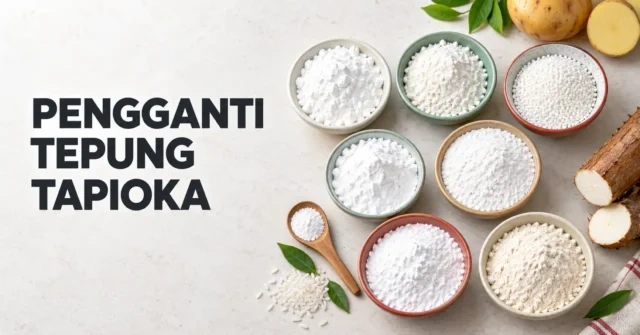
Paling praktis untuk menggantikan tapioka adalah tepung jagung (maizena), pati kentang, tepung sagu, arrowroot, tepung beras, tepung ketan, dan tepung terigu. Akan tetapi, pilihan terbaik tergantung pada peran tapioka di dalam resep. Tepung jagung sesuai untuk mengentalkan saus, sedangkan pati kentang dan tepung beras cocok digunakan untuk lapisan gorengan; tepung sagu atau tepung ketan paling mendekati teksturnya yang kenyal.
Perbandingan substitusinya tidak selalu 1 : 1 karena tiap jenis pati memiliki daya serap air, kekuatan pengentalan, dan tekstur gel yang berbeda. Gunakan tabel perbandingan di bawah ini sebagai titik awal, lalu sesuaikan sedikit demi sedikit berdasarkan kekentalan atau tekstur adonan yang diinginkan.
Fungsi utama tepung tapioka dalam masakan
Tapioca flour consists of finely milled starch extracted from cassava roots. The terms “tapioca flour” and “tapioca starch” usually describe the same product, as noted in Bob’s Red Mill’s explanation of tapioca flour versus tapioca starch.
In cooking, tapioca can serve several purposes at once:

- Thickening soups, sauces, puddings, and pie fillings.
- Binding ingredients together in meatballs, pempek, or gluten‑free dough.
- Creating a chewy texture in cilok, cireng, and various cakes.
- Helping fried coatings become crispier.
- Providing a relatively clear, glossy appearance to sauces.
Because its roles vary, a substitute that works well in sauces may not give the same texture to cilok or pempek. Therefore, the right alternative should be chosen according to the dish being prepared.
Perbandingan pengganti tepung tapioka
| Pilihan bahan pengganti | Takaran awal untuk 1 tbsp tapioka | Kegunaan utama | Hasil akhir yang diperoleh |
|---|---|---|---|
| Tepung jagung (maizena) | 2–3 sendok teh | Saus, sup, tumisan, makanan goreng | Hasilnya lebih kusam dan tidak terlalu kenyal |
| Pati kentang | 1 sendok makan | Makanan goreng, saus, kue tanpa gluten | Memberikan kerenyahan dan kelembutan, tetapi kurang elastis |
| Tepung sagu | 1 sendok makan (untuk uji awal) | Pempek, bakso, kue, adonan kenyal | Memberikan kekenyalan, tetapi karakter gel dapat berbeda |
| Arrowroot | 1 sendok makan | Saus bening, puding, hidangan asam | Smooth dan mengilap |
| Tepung beras | 1 ½ sendok makan | Makanan goreng, kue, pengental ringan | Hasilnya lebih kokoh, kering, dan tidak elastis |
| Tepung ketan | 1 sendok makan (untuk uji awal) | Kue dan adonan yang perlu lengket | Lebih padat, lengket, dan kenyal |
| Tepung terigu | 2 sendok makan | Saus, sup, dan gravy | Result is cloudier and contains gluten |
Pilihan terbaik untuk menggantikan tepung tapioka
1. Tepung jagung untuk saus dan tumisan
Tepung jagung (maizena) or corn starch is the easiest substitute when tapioca is called for as a thickener. Use roughly 2–3 teaspoons of maizena to replace 1 tablespoon of tapioca. Corn starch tends to thicken more strongly, so do not use a one‑to‑one ratio.
Mix the maizena with a small amount of cold water until it forms a smooth, lump‑free slurry. Pour it into the dish while stirring, then heat until the consistency thickens. The final sauce will be cloudier and less glossy than one thickened with tapioca.
2. Pati kentang untuk gorengan dan kue
Potato starch is one of the most versatile options. Start with a 1:1 ratio, especially for fried coatings or gluten‑free flour blends. It can create a crisp surface while keeping the interior tender.
In baked goods the potato starch usually yields a softer, less chewy texture than tapioca. If the dough becomes too thick, add a little liquid incrementally. Do not use potato flour (whole‑potato flour) because it behaves differently and absorbs liquid in another way.
3. Tepung sagu untuk pempek dan adonan kenyal
Sago flour works well as a substitute for pempek, meatballs, sago cakes, and other dishes that need a chewy texture. Begin with a 1:1 ratio in a small test, then adjust the moisture or flour amount until the desired texture is reached.
Check the product label to confirm its source. True sago is extracted from the pith of palm species such as Metroxylon; in some regions cassava starch is sold under the name “sago flour.” If the product contains cassava starch, its behavior will be very similar to tapioca.
4. Arrowroot untuk saus bening
Arrowroot (or garut starch) is ideal for fruit sauces, glazes, puddings, and dishes where a clear appearance is desired. A 1:1 ratio can be used as a starting point. Dissolve it in cold water before adding to the cooking liquid to prevent clumps.
It thickens at relatively low temperatures and produces a smooth, glossy texture. Add it near the end of cooking because prolonged heat can reduce its thickening ability. For foods that will be reheated several times, corn starch is generally more reliable.
5. Tepung beras untuk gorengan renyah
Rice flour works well for rempeyek, bakwan, fried chicken, and coating mixes. Use about 1½ tablespoons of rice flour to replace 1 tablespoon of tapioca, then adjust the batter consistency as needed.
The resulting coating is crisp, light, and somewhat brittle. Rice flour does not provide the same chewiness or stickiness as tapioca. For a more balanced fried texture, combine rice flour with corn starch or potato starch.
6. Tepung ketan untuk kue yang lengket dan kenyal
When a recipe needs strong binding and a sticky, chewy texture—as in steamed cakes, onde‑onde, mochi, or similar snacks—use glutinous rice flour. Begin with the same amount as tapioca and have a little extra liquid ready in case the dough becomes too thick.
Although it also creates chewiness, glutinous rice flour behaves differently. The final product is stickier, denser, and tends to harden quickly when cooled. It must be fully cooked and is not recommended as a primary substitute for clear sauces.
7. Tepung terigu untuk pengental sederhana
Plain flour can substitute tapioca when it is used only to thicken soups, sauces or gravies. Use roughly 2 tablespoons of all‑purpose flour for every 1 tablespoon of tapioca. Cook the mixture for a few minutes to eliminate any raw‑flour taste.
Sauces thickened with flour tend to be cloudier and have a heavier body. Flour also contains gluten, making it unsuitable for people with coeliac disease or those who must follow a gluten‑free diet.
Substitusi terbaik berdasarkan jenis masakan
- Untuk mengentalkan saus atau sup: tepung jagung (maizena), arrowroot, atau pati kentang.
- Untuk ayam dan gorengan yang renyah: pati kentang, tepung beras, atau tepung jagung (maizena).
- Untuk cilok dan cireng: tepung sagu murni boleh dicoba, tetapi hasilnya tidak selalu persis sama.
- Untuk pempek dan bakso: tepung sagu atau pati kentang, gunakan dengan takaran yang terkontrol.
- Untuk kue yang kenyal: tepung ketan, tepung sagu, atau campuran pati kentang dan tepung beras.
- Untuk roti bebas gluten: gunakan pati kentang atau arrowroot sebagai bagian dari campuran tepung, bukan sebagai satu-satunya bahan.
In gluten‑free baking, tapioca contributes elasticity, structure, and chewiness. Replacing it with a single type of starch can make the product brittle or dense. Therefore, starch substitutes should be combined with rice, sorghum, almond, or other flours used in the recipe.
Cara mengganti tapioka tanpa merusak tekstur
- Kenali fungsi tapioka dalam resep.
- Lakukan uji coba dalam jumlah kecil.
- Tambahkan cairan sedikit demi sedikit.
- Buat larutan pengental untuk saus.
- Periksa hasil setelah dingin.
Mengatasi hasil substitusi yang gagal
Saus menggumpal
Jangan menuangkan pati kering langsung ke dalam cairan panas. Larutkan pati dalam air dingin hingga benar-benar larut, lalu tuangkan perlahan sambil terus diaduk.
Adonan yang terlalu kaku
Tambahkan satu sendok teh cairan setiap kali hingga adonan menjadi lentur kembali. Jangan menuangkan terlalu banyak air sekaligus because adonan bisa menjadi terlalu basah and sulit dibentuk.
Makanan goreng yang kurang renyah
Gunakan pati kentang, tepung jagung (maizena), or tepung beras as the main coating ingredient. Ensure the food to be fried is not too wet and that the oil is hot enough before starting the frying process.
Cilok atau pempek kurang kenyal
Tepung jagung (maizena) and tepung beras cannot fully imitate tapioca’s chewiness. If chewiness is a priority, use sago flour or a small amount of glutinous rice flour, but test in small quantities because too much glutinous rice flour can make the dough overly sticky.
Pertanyaan yang sering diajukan tentang pengganti tepung tapioka
Bisakah maizena menggantikan tapioka?
Ya, terutama for sauces, soups, stir‑fries, and fried coatings. Use roughly 2–3 teaspoons of maizena for each 1 tablespoon of tapioka. Corn starch is less suitable for recipes that rely heavily on a chewy texture.
Apakah tapioka sama dengan tepung sagu?
Tidak selalu. Tapioka is derived from cassava starch, while true sago comes from the pith of palm trees. Nonetheless, some cassava‑starch products are marketed as “sago flour.” Check the ingredient list on the package to confirm the starch source.
Bisakah tepung singkong replace tapioka?
Not directly. Cassava flour or MOCAF contains more of the whole tuber, whereas tapioca is the extracted starch. The different processing leads to variations in water absorption, texture, and behavior in dough. The FAO distinguishes between cassava‑flour processing and starch extraction.
What are gluten‑free substitutes for tapioca?
Corn starch, potato starch, arrowroot, rice flour, glutinous rice flour, and sago are naturally gluten‑free. If a gluten‑free diet is medically required, choose products labeled gluten‑free to minimize cross‑contamination risk during manufacturing.
Kesimpulan
The best tapioca substitute depends on the dish’s purpose. Choose corn starch or arrowroot for sauces, potato starch or rice flour for fried foods, and sago flour or glutinous rice flour for doughs that need chewiness.
Use substitution ratios as a starting point, not as strict rules. Test in small batches, add liquid gradually, and evaluate texture after cooking or cooling. For recipes that heavily depend on tapioca’s elasticity, a substitute may still be palatable but will not be an exact replica.
Baca panduan lainnya di Halaman Tutorial Seputar
Terima kasih telah mengunjungi thecuy. 🙂

Penulis Berpengalaman 5 tahun.