“We learn what we need to know by doing it.”
Skill Menulis Bisa Buka Peluang Karier Apa Saja?👤 Jurnalis Berita • 06/10/2026
Aristotle, Nicomachean Ethics, Book II
When you’re asked to share how to write a report, mentor new teammates, or start a small class, you immediately think: “I’m not an expert yet—am I really qualified to teach others?”

Kadika once felt they needed a certificate and years of experience before feeling brave enough to explain something, even though there were many things already mastered through daily work.
The simple answer is, you don’t need to be the greatest expert to teach, but you do need to be honest about your experience, abilities, and knowledge limits.
Kamu tidak perlu jadi ahli dahulu untuk bisa mulai mengajar

If you wait until you feel you know everything, you’ll likely keep putting it off, because the more you learn, the more you realize what you still don’t understand.
That doesn’t mean anyone can instantly teach any topic.
You can start with one specific thing you’ve already done and can explain step‑by‑step, such as preparing a client presentation or organizing a work schedule.
For example, you’ve already run the onboarding process for new employees three times and know which documents often confuse them.
You can share the workflow that worked, show examples, and then mention parts that still need adjustment in each workplace.
Position yourself as someone who shares experience, not as the owner of all the answers.
That distinction keeps you useful without having to project an image of knowing everything.
Pengalaman, kompetensi, dan transparansi adalah hal yang berbeda

Experience is something you’ve undergone or worked on, while competence is shown through your ability to perform a specific task adequately and consistently.
Transparency means you explain both of those clearly to participants, including the parts you haven’t mastered.
You might have experience preparing a project budget, but you may not be competent to teach tax strategies for every type of business.
Similarly, you might be quite skilled at using a design app for work purposes, without needing to claim you’re a professional designer.
“If I don’t have a degree or a senior position yet, people will doubt me, right?”
Degrees and titles can provide context, but people also evaluate work examples, how you explain things, and whether your advice can be put into practice.
If your expertise comes from experience, explain the context, such as how many projects you’ve done or what kinds of problems you usually handle.
You could also read about how to turn skills into value to see why useful abilities don’t always come with a specific degree.
Kadika once thought new people could only share after big achievements, but later realized that practical explanations from small experiences can also help others.
Ajarkan bagian yang bisa kamu tunjukkan
A safe way to start is to pick a small, clear topic boundary, rather than making broad promises like mastering all of digital marketing.
For instance, you could teach how to make a tidy weekly report, instead of claiming you can fix the entire company management system.
A narrow topic makes it easier for you to prepare examples, test steps, and answer questions without guessing.
Before teaching, write down three things you can demonstrate yourself, two common mistakes you’ve encountered, and one limit you haven’t figured out.
If you’re teaching presentations, for example, prepare before‑and‑after revision examples, show how to structure a flow, and then explain when that method is less suitable.
The result is more convincing than a long list of theories you’ve never tried.
Practical evidence makes it easier for participants to see what you mean.
They can also judge whether your advice fits their work situation, rather than just copying a step without knowing the reason.
Experience alone isn’t enough to teach
“I succeeded once, so I’m already able to teach others, right?”
Not necessarily, because a good result could be due to luck, team help, or conditions that don’t apply to other participants.
Try checking whether you can repeat the process, explain the reason behind each step, and recognize when your advice needs adjusting.
In Harvard Business Review, K.
Anders Ericsson, Michael J.
Prietula, and Edward T.
Cokely discuss the process of building expertise in the article The Making of an Expert.
The key idea is not about quickly claiming expertise, but about focused practice, feedback, and continuous improvement.
That principle is also useful when you teach, because clear explanations need to be tested through the response of learners.
After the session, ask what parts they can practice, what’s still confusing, and what additional examples are needed.
If they misunderstand, don’t quickly assume they’re not capable, because your explanation may not have been clear enough.
Kadika once thought that if something felt easy in their head, it would be easy for others to understand, then realized that assumption often misses.
Mulai dari lingkungan belajar yang aman
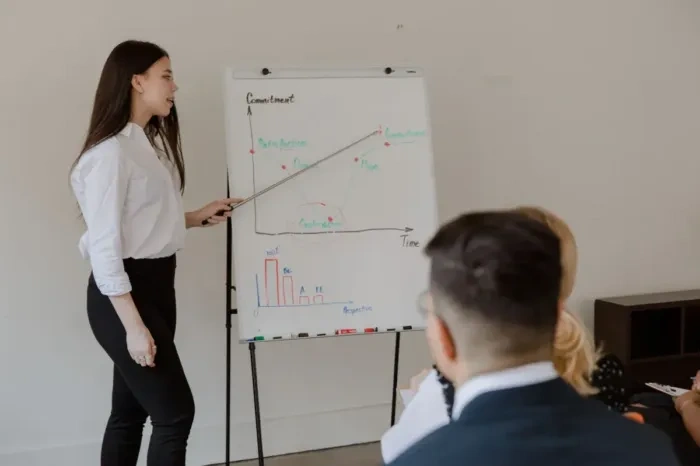
You don’t have to immediately create a paid course to test your teaching ability.
Start by sharing for 15 to 30 minutes with three colleagues who actually need that skill.
Choose one simple outcome, such as participants being able to create a presentation outline or prioritize tasks for the next week.
Explain the goal from the start, show one example, then ask them to try with a case similar to their work.
Don’t fill all the time with talking, because you need to see whether participants can use the step you taught.
If the participants are colleagues, make sure they know this is a learning space, not a performance evaluation or a hidden test.
You can ask for one specific feedback, for example which part was most useful and which part needs a simpler example.
Small feedback is more helpful than asking “How was it?” and receiving a polite answer, “It was good.”
After the session, note questions you can’t answer yet and look for suitable resources before discussing again.
Jujur tentang batasan kemampuanmu
“If I say I don’t know, will participants think I’m not competent?”
Fabricating an answer could actually damage trust, especially if participants’ decisions could affect money, health, safety, or career.
You could say, “That part is beyond my direct experience, so I need to check the right source before answering.”
That sentence doesn’t make you look weak, because you’re showing that accuracy is more important than appearing the smartest.
Explain also the limits of context, such as your experience applying to small teams, a specific industry, or devices you’ve used.
If there’s information that changes, mention when you last checked it and advise participants to verify the latest rules before making a decision.
The book Make It Stick by Peter C. Brown, Henry L. Roediger III, and Mark A. McDaniel discusses research‑backed learning methods, including the importance of testing understanding, not just feeling like you understand.
It’s a useful reminder for teachers: being able to explain smoothly doesn’t necessarily mean participants understand.
Ask participants to explain one idea back to you in their own words, then improve the parts that are still unclear.
Bangun kepercayaan melalui metode mengajarmu

Trust grows when what you say matches the ability you demonstrate.
If you promise participants they can master everything in one hour, expectations might be too high and disappointing.
It’s better to explain realistic outcomes, such as participants being able to try one basic workflow and know when to seek help.
Use examples from real situations, but remove names, data, and any confidential company information.
Don’t borrow someone else’s success story as if it were your own experience, even if the story makes the material sound cooler.
If you use someone else’s source or method, cite its origin and explain which part you apply yourself.
“I’m afraid to share something that might still be debatable.”
Acknowledge if there are other approaches, explain why you chose a particular method, and differentiate proven facts from personal opinion.
That way, participants get a footing to evaluate information, instead of just being asked to trust the person in front of the room.
Coba mulai dari satu hal yang kamu kuasai
You don’t need to wait to become the most senior figure in your field to help others understand one step you master.
But you need to check whether your experience is relevant enough, whether you can demonstrate the process, and whether you’re willing to acknowledge its limits.
If Kadika could give a suggestion, choose one skill that colleagues often ask about, and test your explanation in a small session this week.
Afterward, write down what participants managed to understand and what you still need to learn before teaching again.
Try reflecting: what knowledge can you share honestly today, and what limits do you need to mention so others can learn safely?
Read for free. If it helped, you may buy me a coffee.
Thank you, indeed
Even the smallest support helps the next article appear faster.
You may leave a comment after sending support, so I can say thank you. ^^
Enjoy this article? Get the next one via email
One email per week. Content is notes I don’t put on the blog.
No spam. Unsubscribe anytime.
Thank you! Check your inbox (also Spam/Promotions folder).
Also read other news at the News Page. Thanks for visiting thecuy. 🙂

Saya adalah jurnalis di thecuy.com yang fokus menghadirkan berita terkini, analisis mendalam, dan informasi terpercaya seputar perkembangan dunia finansial, bisnis, teknologi, dan isu-isu terkini yang relevan bagi pembaca Indonesia.
Sebagai jurnalis, saya berkomitmen untuk:
Menyajikan berita yang akurasi dan faktanya terverifikasi.
Menulis dengan bahasa yang mudah dipahami, namun tetap menjaga integritas jurnalistik.
Menghadirkan laporan mendalam yang memberi perspektif baru bagi pembaca.
Di thecuy.com, saya tidak hanya melaporkan berita, tetapi juga berupaya menganalisis tren agar pembaca dapat memahami konteks di balik setiap peristiwa.
📌 Bidang Liputan Utama:
Berita Terbaru & ekonomi, keuangan.
Perkembangan teknologi dan inovasi digital.
Tren bisnis dan investasi.
Misi saya adalah membantu pembaca mendapatkan informasi yang cepat, akurat, dan dapat dipercaya, sehingga mereka bisa membuat keputusan yang lebih cerdas dalam kehidupan sehari-hari maupun dunia usaha.
📞 Kontak
Untuk kerja sama media atau wawancara, silakan hubungi melalui halaman Kontak thecuy.com atau email langsung ke [email protected].