“There is nothing so useless as doing efficiently that which should not be done at all.”
Harus Punya Passion untuk Sukses? Cara Menilai Arah Karier Tanpa Menunggu Panggilan Hati👤 Jurnalis Berita • 30/09/2026
Peter F.
Drucker, The Effective Executive
Bingung Memilih Skill Utama? Cara Menentukan Fokus Karier Tanpa Membuang Skill Lain👤 Jurnalis Berita • 25/09/2026
Sedang menimbang dua tawaran kerja, beberapa ide bisnis, atau kursus yang tampak sama menariknya, dan kamu ragu kapan harus berhenti mencoba dan mulai menentukan satu pilihan.
Kadika pernah kesulitan membedakan mana kesempatan yang layak dicoba dan mana yang hanya membagi perhatian.
It feels wasteful to give up one option, especially if you’re not sure another will work out.
In fact, endless exploration also comes with a cost, from time lost to work that never truly matures.
Kapan saatnya kamu berhenti mencoba dan mulai fokus?

Stopping trying does not mean you have failed or lack curiosity.
It means you start using the results of exploration to determine the next step, rather than continuously gathering new possibilities.
For example, you’re interested in moving into product design and have tried a short class, completed a small project, and spoken with two people working in the field.
If there are still important questions that remain unanswered, further exploration may be useful.
However, if you keep taking new classes without ever completing a more serious project, trying can become a subtle way to avoid making a decision.
Drucker reminds us that doing something efficiently is of little use if that thing shouldn’t be done at all.
So the question is not only what is interesting to you, but also what deserves the most time and energy right now.
Focus is not a permanent decision, but a conscious choice to give one direction for an opportunity to grow for a certain period.
You can still change your mind later, after you have stronger evidence than fear or fleeting curiosity.
Eksplorasi sudah memberikan data, bukan hanya rasa penasaran

Healthy exploration should produce information that can be used to make a decision.
After trying a field, you may know the daily tasks, the parts that are exciting, the parts that feel heavy, and what skills still need to be honed.
If you only have a list of content watched and courses saved, but have never done real tasks, the data may not be sufficient.
“Aren’t I afraid of choosing before I truly know everything
You don’t have to know everything to start committing, because direct experience often provides answers that cannot be obtained from reading or comparing alone.
Bill Burnett and Dave Evans explain in the book Designing Your Life that we can test career possibilities through small experiments, such as conversations with people who do the job or trying related projects.
Small experiments help you see everyday conditions, not just imagine a job title that sounds impressive.
For example, before deciding to become a freelancer, try completing one small paid project while still employed.
Record how long it takes, which parts you enjoy, how clients give feedback, and whether that work rhythm fits your life.
If Kadika may offer advice, set a limit for experiments from the start, for example three conversations, one trial project, and four weeks to gather information.
Without limits, exploration can feel productive even though you’re just postponing a choice.
Kadika once created a spreadsheet with many tabs to weigh a choice, but still didn’t send any applications, hehehe.
Tanda-tanda bahwa kamu perlu berkomitmen
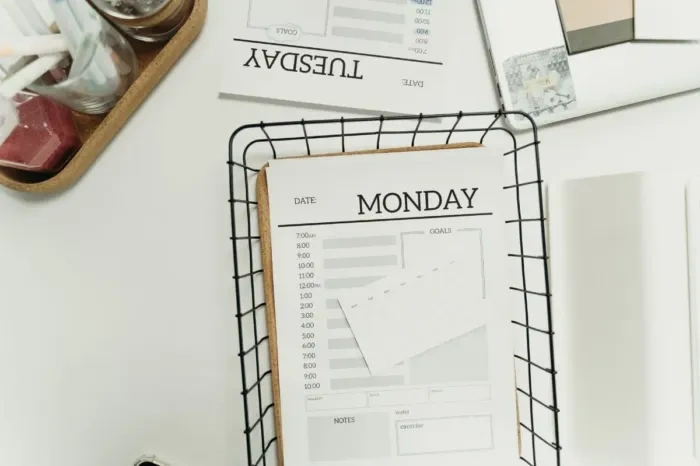
There’s several practical signs that can help you assess whether it’s time to reduce exploration.
- You have done several real experiments and begun to understand the daily work.
- The remaining questions are more about fear than lack of information.
- You keep repeating the same research, but your decisions and actions don’t change.
- The choice you’re making no longer brings you closer to an important career goal.
A single sign does not necessarily mean you have to stop immediately, but several signs appearing together are worth noting.
“What if focusing on one choice means missing other opportunities
Choosing does have an opportunity cost, because time for one choice cannot be fully used for all other choices.
However, keeping all choices open also consumes energy and makes your progress hard to see.
You can read more about opportunity costs in career decisions so that the consideration does not stop at fear of loss.
For example, you get an opportunity to lead a new project, but also want to take additional certification and start a side business.
If your free time is only six hours a week, choosing one primary priority does not mean the other two are unimportant, but rather acknowledges that your capacity is limited.
Greg McKeown discusses the importance of choosing what matters most in the book Essentialism, including the courage to say no to things that don’t fit with primary priorities.
At a stage in your career that is developing, commitment can also be a way to build stronger evidence of ability.
Three months working on a project with clear results usually provides more concrete material for stories in interviews than three months trying five things without a finished result.
How to Decide Without Guesswork

You don’t need to wait for a hundred percent conviction to set a work direction.
Try comparing choices based on observable things, not just job titles or fantasies of success.
- Define a goal for the next six to twelve months, such as building a portfolio, switching fields, or increasing income.
- Choose two or three important criteria, such as learning opportunities, market need, and fit with your life situation.
- Rate each choice from one to five based on evidence you’ve gathered.
- Determine one primary choice and write down the reasons why it makes the most sense to try now.
- Set a commitment period and evaluation time, for example, try out the choice for twelve weeks before reassessing.
Numbers in a table are not the magical answer, but a tool to explain why one choice is stronger than another.
If two choices have almost the same score, you can choose the one that is easiest to test first with risk you can still bear.
For example, before resigning to move into marketing, you can take on an internal project, help with a small campaign, or build a portfolio based on real cases.
Such a step makes your decision based on experience, not just the feeling that a new job must be more enjoyable.
Kadika also suggests writing down what would have to happen for you to change your mind, such as health issues, changing financial needs, or discovering that the main job tasks are very different from expectations.
That way, future evaluations won’t just follow the mood after a difficult week.
If you’re still confused about choosing a career direction, a guide on choosing the right profession can help you check compatibility more systematically.
“What if I make the wrong choice and lose time
The risk is real, but you can reduce it by making a time-limited commitment, checking progress regularly, and keeping options open to adjust direction.
Committing doesn’t mean you’re stuck forever
Commitment often feels scary because we imagine it as a promise to endure whatever happens.
Actually, a healthy commitment has a direction, duration, and clear measure of progress.
For example, you commit to applying for ten positions in data analysis within eight weeks while building two portfolio projects.
After that, you can check whether there are interview invitations, what needs improvement, and whether the job you’re aiming for still feels suitable.
If there is no response yet, it may not be the field that’s wrong, because your CV, portfolio, or way of finding opportunities may need improvement.
However, if after some measurable attempts you find that the daily work conflicts with the needs and values that are important to you, changing direction is also a reasonable choice.
Don’t judge a decision only based on whether the result is immediately successful.
Also evaluate whether you are gaining skills, work relationships, and understanding that can be taken to the next step.
“If I change my mind, does that mean I’m inconsistent
Consistency is not about rejecting all new information, but about sticking to the process you chose and being honest when evidence points to a different direction.
Today, try writing down one thing you’re exploring, what evidence you’ve gathered, and how much longer you’ll test it before making a choice.
If Kadika may ask one question, which choice deserves your focus for the next twelve weeks, and what evidence do you want to see after that?
Your answer may not erase all doubts, but at least you don’t have to keep spinning without knowing when it’s time to move forward.
Free to read. If it helped, you can buy me a coffee.
Thank you, yes
Even the smallest support makes the next article come out faster.
Feel free to leave a comment after sending support, so I can say thank you. ^^
Also read other news at News Page. Thanks for visiting thecuy. 🙂

Saya adalah jurnalis di thecuy.com yang fokus menghadirkan berita terkini, analisis mendalam, dan informasi terpercaya seputar perkembangan dunia finansial, bisnis, teknologi, dan isu-isu terkini yang relevan bagi pembaca Indonesia.
Sebagai jurnalis, saya berkomitmen untuk:
Menyajikan berita yang akurasi dan faktanya terverifikasi.
Menulis dengan bahasa yang mudah dipahami, namun tetap menjaga integritas jurnalistik.
Menghadirkan laporan mendalam yang memberi perspektif baru bagi pembaca.
Di thecuy.com, saya tidak hanya melaporkan berita, tetapi juga berupaya menganalisis tren agar pembaca dapat memahami konteks di balik setiap peristiwa.
📌 Bidang Liputan Utama:
Berita Terbaru & ekonomi, keuangan.
Perkembangan teknologi dan inovasi digital.
Tren bisnis dan investasi.
Misi saya adalah membantu pembaca mendapatkan informasi yang cepat, akurat, dan dapat dipercaya, sehingga mereka bisa membuat keputusan yang lebih cerdas dalam kehidupan sehari-hari maupun dunia usaha.
📞 Kontak
Untuk kerja sama media atau wawancara, silakan hubungi melalui halaman Kontak thecuy.com atau email langsung ke [email protected].