“A packed schedule isn’t a reason to stop writing, but a sign that your writing process needs to be made easier.”
Manfaat Menulis untuk Berpikir Jernih: Cara Mengurai Ide yang Kusut👤 Jurnalis Berita • 26/09/2026
Staying consistent in writing articles often feels challenging when office tasks, meetings, and household matters pile up, especially when you feel each piece must be flawless from the start.
I also used to think the solution was to wait for a long free moment, until I realized that such time rarely appears on its own.

The problem isn’t always a lack of discipline, but rather a process that’s too heavy to repeat every week.
You can publish articles regularly without lowering quality if you separate the tasks of writing, editing, and publishing, then use tools to handle repetitive parts.
Why Consistency in Writing Articles Often Goes Awry?
Imagine coming home from work at seven in the evening, still having to reply to messages, eat, and prepare tomorrow’s needs, then intending to write a 1,500-word article before sleeping.
‘Tomorrow, when I’m more focused,’ you might think.
The next day, the same pattern repeats because the target is too large and the writing task hasn’t secured a fixed place in the schedule.
Writing an article isn’t a single task, because you need to choose a topic, gather materials, create an outline, draft, fact-check, edit, then publish it.
If you force all those stages to be completed in one session, it’s understandable that writing feels like a massive project that’s constantly postponed.
Instead of waiting for motivation, make each session have a small result that can be completed in 20–40 minutes.
Research on small progress from the Harvard Business Review explains that tangible progress in work can help maintain motivation and engagement.
This means a completed outline tonight is more useful than a plan to write a full article that keeps getting postponed.
Set a Reasonable Rhythm for Writing Articles
Consistency doesn’t mean you have to write every day or publish five articles a week.
A reasonable measure is a schedule you can sustain for several months without sacrificing sleep, primary work, or writing quality.
If you’re just starting out, aim for one article per week with a length of around 800–1,200 words, then evaluate after four weeks.
If that schedule feels light, you can gradually increase frequency, not immediately creating a target that exhausts you.
Example of a Four-Session Schedule
-
Monday evening for 25 minutes to choose a topic and write one sentence stating the article’s purpose.
-
Wednesday evening for 30 minutes to find three reliable sources and create an outline.
-
Friday evening for 40 minutes to create an initial draft without constantly correcting every sentence.
-
Sunday morning for 30 minutes to fact-check, improve flow, and schedule publication.
The total time is about two hours and five minutes per week, and each session has a clear limit.
If one session is missed, don’t respond by writing until late at night; just move one task to the next available slot.
I prefer preparing one backup slot each week, because work schedules sometimes change without asking permission first, hehehe.
Break Article into Small Tasks
A target like ‘writing an article about productive work’ is still too broad to become a clear action.
Change that target to ‘writing three points about the most common work disturbances experienced by my team.’
After that, create a simple outline that answers one reader question in an easy-to-follow order.
-
What problem is the reader currently experiencing?
-
What cause or context needs to be understood?
-
What step can be tried today?
-
What example makes the advice feel tangible?
To keep the content substantial, set one article goal before typing, for example, helping readers create a realistic weekly writing schedule.
Each section must support that goal, not just add length to the writing.
If you’re still learning to build habits, the ‘Start Learning to Write’ article from this blog can be a companion for practicing the process from simple steps.
Maintain Quality with Layered Checks

Writing quickly and maintaining quality aren’t mutually exclusive, as long as you don’t ask your brain to do all the work at once.
When drafting, focus on ideas and flow first, then set aside a separate session for editing.
Use Checklist Before Publishing
-
Does the title promise what’s actually discussed?
-
Does the opening show a concrete problem recognized by readers?
-
Does each suggestion have an example or step that can be tried?
-
Has important data and claims been checked against the original source?
-
Are there any paragraphs that repeat ideas without providing new information?
-
Has spelling, links, and mobile display been checked?
Read the draft once for flow, again for facts, and finally for language, instead of editing the same sentences repeatedly.
Quality also means being brave enough to discard parts that don’t help readers, even if you’ve spent time writing them.
If your work requires accurate articles, keep source notes from the start of research, not after the manuscript is almost published.
Use Artithic to Lighten the Process
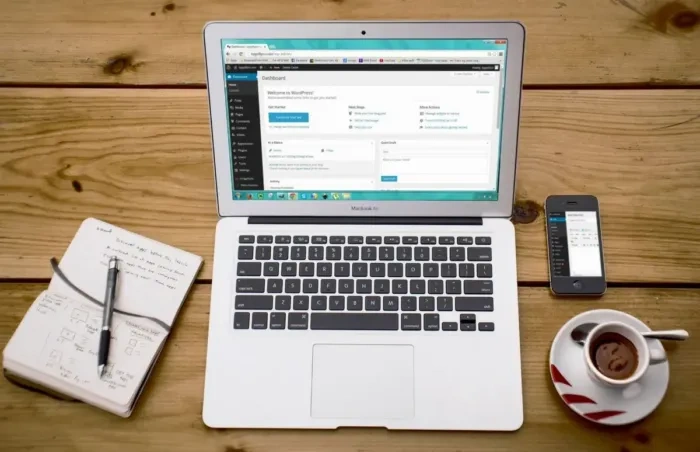
Much writing time is spent not on formulating ideas, but on repetitive tasks like preparing initial drafts and moving material to WordPress.
At this point, you might consider Artithic, a WordPress plugin to assist in automated blog writing processes.
Artithic also allows you to write via Telegram, so ideas that arise during breaks or on the way home can be directly entered into the workflow without opening a laptop.
Consider this tool as an assistant to speed up the process, not a replacement for your judgment as a writer.
You still need to determine perspective, fact-check, improve examples, and ensure the final result meets reader needs.
For example, after the initial draft is available, spend 20 minutes to replace generic examples with work situations you understand, then check if each suggestion is truly doable.
If you use automation without checking, articles may feel flat or contain inaccurate information, turning time savings into additional correction work.
Start with one trial article, note the time you saved, then see if that time can be used for better research and editing.
Create a System that Persists When Busy
Don’t store all ideas in your head, because good ideas often pass when you’re busy completing other things.
Create one topic list with simple columns: idea, reader need, initial source, status, and publication date.
When a work week suddenly becomes busy, choose a topic that already has sources and an outline, not starting research from scratch.
Also prepare a minimum version of your routine, such as 15 minutes to improve one section or write five outline points.
If this week you can only complete a draft, that’s still progress, not proof that you’re failing to be consistent.
Review the process every end of month with three questions: how many articles were published, how long the average process took, and which part most often stalls?
The answers can indicate whether you need to reduce targets, improve the schedule, or use tools for repetitive tasks.
Start with One Article You Can Sustain
You don’t need to immediately create a three-month content calendar or force yourself to write every night.
Choose one topic that is useful for readers, create four small work slots, then keep editing sessions separate from drafting sessions.
After one article is published, note which part of the process feels heavy and change the system before starting the next manuscript.
If writing via Telegram or tidying up the publication flow in WordPress can reduce your barriers, learn how Artithic works and try to assess if the tool suits your routine.
What you need to build is not just the number of articles, but the habit of publishing writing that remains worthwhile to read even when the work schedule is full.
Read for free. If it helped, you can buy me a coffee.
Thank you, yes
Even the smallest support helps the next article appear faster.

You can leave a comment after sending support, so I can say thank you. ^^
Also read other News in News Page
Thank you for visiting thecuy. 🙂

Saya adalah jurnalis di thecuy.com yang fokus menghadirkan berita terkini, analisis mendalam, dan informasi terpercaya seputar perkembangan dunia finansial, bisnis, teknologi, dan isu-isu terkini yang relevan bagi pembaca Indonesia.
Sebagai jurnalis, saya berkomitmen untuk:
Menyajikan berita yang akurasi dan faktanya terverifikasi.
Menulis dengan bahasa yang mudah dipahami, namun tetap menjaga integritas jurnalistik.
Menghadirkan laporan mendalam yang memberi perspektif baru bagi pembaca.
Di thecuy.com, saya tidak hanya melaporkan berita, tetapi juga berupaya menganalisis tren agar pembaca dapat memahami konteks di balik setiap peristiwa.
📌 Bidang Liputan Utama:
Berita Terbaru & ekonomi, keuangan.
Perkembangan teknologi dan inovasi digital.
Tren bisnis dan investasi.
Misi saya adalah membantu pembaca mendapatkan informasi yang cepat, akurat, dan dapat dipercaya, sehingga mereka bisa membuat keputusan yang lebih cerdas dalam kehidupan sehari-hari maupun dunia usaha.
📞 Kontak
Untuk kerja sama media atau wawancara, silakan hubungi melalui halaman Kontak thecuy.com atau email langsung ke [email protected].