

Hey Thecuy, have you ever found yourself unintentionally saying something like ‘I’m not good enough’ or feeling guilty whenever you want to say ‘no’ to others?
A lot of people think that traits like being easily insecure, lacking self‑confidence, or constantly trying to please others just appear in adulthood. In fact, psychology tells us that the way we see ourselves often begins to take shape during childhood, even from the words we repeatedly hear at home.

Words spoken by parents or other close adults aren’t always meant to hurt. Most of the time they come from love or from parenting methods that were considered normal back then. Still, when repeated constantly, certain phrases can turn into beliefs stored in a child’s subconscious and follow them into adulthood.

Based on the American Psychological Association (APA), childhood experiences—including verbal interactions with parents or caregivers—are crucial for shaping emotional development, self‑esteem, and the ability to build relationships with others.
Meanwhile, developmental psychologist Carol Dweck explains that how adults comment to children can shape how those children view their own abilities. Repeated words can develop into a mindset that influences behavior for years to come.
Of course, hearing one of these phrases doesn’t automatically mean someone will experience trauma or develop a specific personality. Yet, when those words are repeated often without healthy emotional support, the impact can linger into adulthood.
                                                                                                                                                                                            <section id="section-detail-2" class="multi-card " data-page="2" data-page-title="1. “Jangan Nangis, Kamu Kan Anak Kuat”" dtr-evt="halaman selanjutnya" dtr-sec="halaman selanjutnya" dtr-act="tombol halaman selanjutnya" dtr-id="322114" dtr-ttl="1. “Jangan Nangis, Kamu Kan Anak Kuat”" onclick="_pt(this)" readability="34">
                            <h2 class="fw-bold fs-5">1. “Jangan Nangis, Kamu Kan Anak Kuat”</h2>
                            <div readability="7">
                                <img src="https://akcdn.detik.net.id/visual/2026/07/23/anak-kecil-tampak-menunduk-setelah-dimarahi-oleh-orang-tuanyafoto-pexelscomneosiam-2026-1784873588250.jpeg?w=700&q=90" alt title/>
                                <p>Anak kecil tampak menunduk setelah dimarahi oleh orang tuanya/Foto: pexels.com/NEOSiAM 2026+</p>
                            </div>
                            <p>After hearing lines like, 'Don't cry, you'll be called a weenie,' or 'You're a strong kid, why are you crying?' many of us can probably relate.</p>
At first glance, this kind of speech sounds encouraging. But psychology says that when kids are constantly taught to suppress their feelings, they may grow up believing that expressing sadness is wrong or shameful.
As a result, as adults they tend to keep problems to themselves, feel uneasy about crying, or struggle to express their true feelings. Many end up bottling up all their emotions, which can turn into stress or mental exhaustion.
The American Psychological Association notes that being able to recognize and express emotions is a key part of healthy psychological development. Kids need to learn that all feelings—including sadness and disappointment—are normal to experience.
Teaching kids to manage their emotions is certainly important. But handling emotions isn’t the same as forcing them to ignore or hide them.
2. “Coba Lihat Kakak atau Temanmu, Kok Mereka Bisa?”
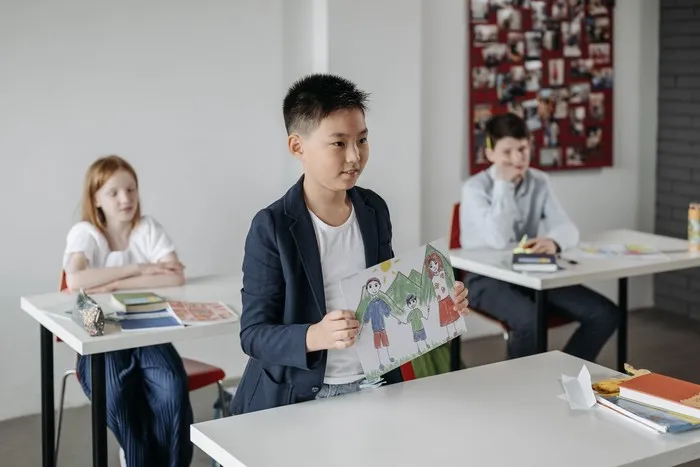
Ilustrasi anak memperlihatkan hasil karyanya di kelas/Foto: pexels.com/Pavel Danilyuk
This phrase is probably one of the most common kids hear. It’s often meant to motivate them. But when it happens too often, the outcome can be different.
Children who are constantly compared to siblings, friends, or others risk building a self‑esteem that hinges on achievement. They learn that they’re only seen as ‘good enough’ if they can match or surpass someone else.
As adults, they’re more prone to feeling insecure, constantly comparing their lives to others, or feeling like failures when they see friends’ accomplishments on social media.
Hey Thecuy, comparing occasionally might seem harmless. But if it becomes a habit, kids can grow up believing their worth always depends on other people’s standards, not on their own growth and development.
3. “Ah, Masa Gitu Aja Nggak Bisa?”
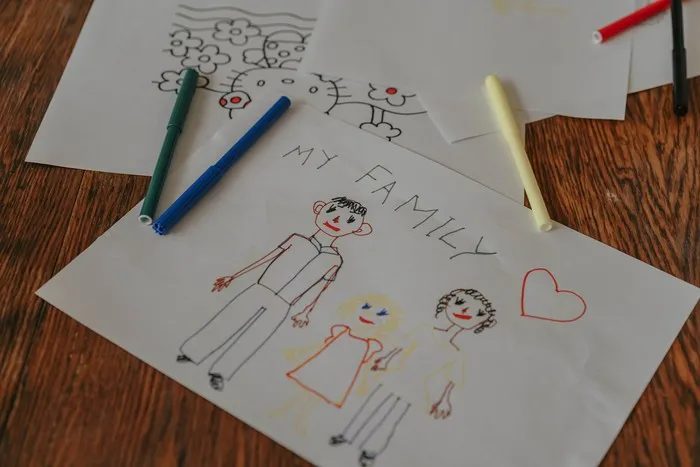
Ilustrasi hasil karya anak/Foto: pexels.com/olia danilevich
Hey Thecuy, some parents might say this to get their kids more excited about learning. But when kids hear it too often, it can make them doubt their own abilities.
Comments that downplay a child’s effort can affect the development of self‑esteem. Kids become more worried about making mistakes than enjoying the learning process.
As adults, they tend to feel incompetent easily, are afraid to try new things, or constantly think they’re ‘not good enough.’ Many also experience imposter syndrome—feeling undeserving of achievements they have actually earned.
That’s why psychologist Carol Dweck advises parents to give more constructive feedback, like praising a child’s effort and guiding them to find solutions when they face challenges.
4. “Anak Kecil Nggak Usah Ikut Campur”
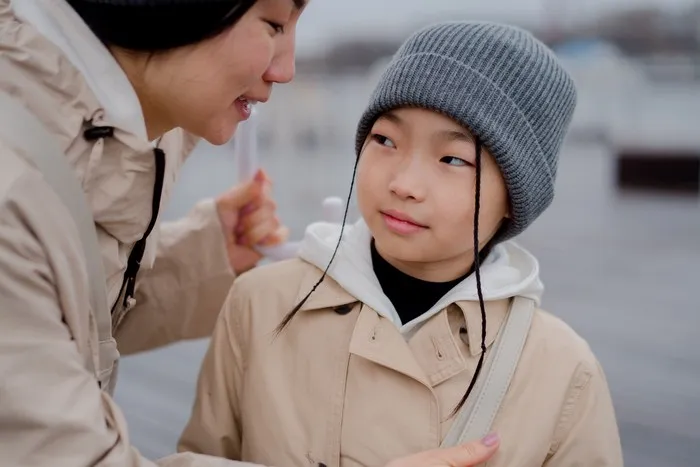
Seorang anak terlihat diam saat ingin menyampaikan pendapat kepada orang tuanya/Foto: pexels.com/Ron Lach
Ever heard something like this, Thecuy?
In some situations, parents do need to set limits. But if kids are constantly told their opinions don’t matter, they might grow up believing their voice isn’t worth hearing.
Kids need chances to express their thoughts and feelings so they can learn healthy communication. When adults listen and respond well, children feel valued and important.
Harvard University’s Center on the Developing Child explains that back‑and‑forth interaction between a child and an adult is key for brain development, language skills, and social‑emotional growth.
On the flip side, if kids are regularly silenced or ignored, they can become people who struggle to speak up in meetings, hesitate to express needs in relationships, or always fear being a bother.
Actually, being able to communicate assertively is important for building healthy relationships, both at work and in personal life.
5. “Mama/Papa Melakukan Ini Demi Kamu”

Perempuan dewasa tersenyum happy/Foto: pexels.com/bertellifotografia
This phrase is often used to show parental sacrifice. However, when repeated in a way that makes children feel guilty, the impact can carry over into adulthood.
Children who habitually feel responsible for their parents’ happiness or feelings are at risk of growing into people who always put others’ needs before their own. They find it easier to feel guilty when refusing requests, struggle to set boundaries, and tend to be people‑pleasers.
Psychology Today says that the tendency to please often stems from childhood experiences that make a person feel they must constantly meet others’ expectations to be accepted or loved. This pattern then carries over into friendships, work, and romantic relationships in adulthood.
Hey Thecuy, it’s not that every parental statement is necessarily harmful—the biggest influence is the communication pattern that repeats over and over and how the child interprets it.
The good news is, childhood experiences aren’t a verdict on someone’s future. By recognizing patterns that formed early on, we can start building healthier ways of thinking, learn to accept ourselves, and create warmer relationships with those around us.
***
Ready to join the Buzznesia Community, where you can take part in all kinds of exciting online and offline events hosted by Buzznesia/Beautynesia? This community is open to everyone, both women and men, and we even have a special group for students. Come on in and become part of Buzznesia Community—it’s easy, just SIGN UP HERE!
<p>(ria/ria)</p>

Saya adalah penulis di thecuy.com, sebuah website yang berfokus membagikan tips keuangan, investasi, dan cara mengelola uang dengan bijak, khususnya untuk pemula yang ingin belajar dari nol.
Melalui thecuy.com, saya ingin membantu pembaca memahami dunia finansial tanpa ribet, dengan bahasa yang sederhana.