
Thecuy.com – The Google Pixel Tag is an item‑tracking device designed to integrate with the Google ecosystem. In addition to using the Find Hub network, it includes features such as UWB, Bluetooth Channel Sounding, a built‑in speaker, and a user‑replaceable battery. So, what are the full specifications of the Google Pixel Tag? See more below.
Contents of this article

Technical specifications of Google Pixel Tag
| Specification | Google’s Pixel Tag |
| Dimensions | 1.1 × 1.8 × 0.2 inches |
| Weight | 0.4 oz with battery, 0.3 oz without battery |
| Material | Polycarbonate and metal |
| Color | Mist |
| Durability |
IP67, water resistant up to 1 meter depth for up to 30 minutes |
| Connectivity |
Bluetooth Channel Sounding, Ultra Wideband (UWB) for precise location finding
Spesifikasi TECNO POVA 8 Pro 5G: Hadir dalam edisi Tonino Lamborghini!
👤 anindya • 20/08/2026
|
| Battery |
CR2032 coin cell, user‑replaceable, lasts more than one year |
| Compatibility | Android 9 or later smartphones |
| Sensor | Accelerometer |
| Speaker | Built‑in speaker |
| Packaging | 100% plastic‑free |
| Warranty | 1 year |
Also read: What Is Android Drop? Understand Its Functions, Features, and Benefits of Regular Google Updates
Design and Build
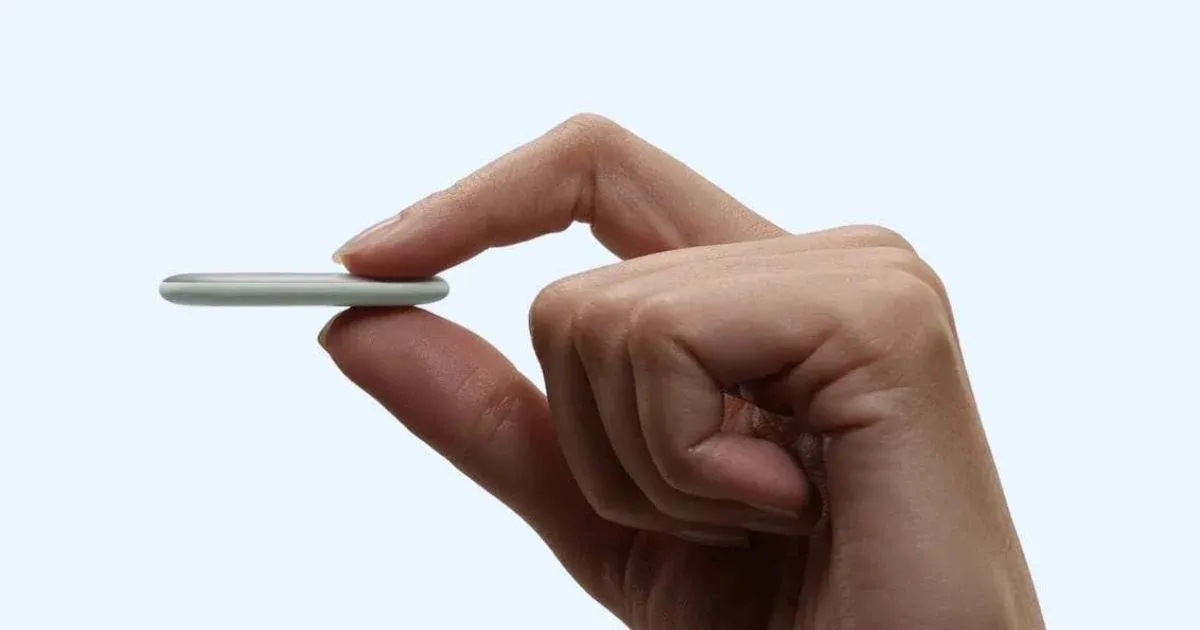
The Google Pixel Tag features an oblong or pill‑shaped design that distinguishes it from the round Apple AirTag and other Bluetooth trackers with a boxy design. Its dimensions are 46.1 x 28 x 5.4 mm and it weighs approximately 11.8 grams, including the battery.
Its body uses a polycarbonate and metal blend engineered for resistance to bending and cracking. The device also carries an IP67 certification, making it dust‑and water‑resistant. The Pixel Tag can survive immersion up to roughly 1 meter for a maximum of 30 minutes.
At launch, it was offered in a single colour option called Fog or Light Fog. Unfortunately, the Pixel Tag lacks a built‑in hole for direct attachment to a keyring, so users need a holder or extra accessory.
All searching, setup, item naming, and location monitoring are performed via Android devices and the Find Hub app. Google has not disclosed the specific chipset or processor used in this device. Available information only mentions support for Ultra‑Wideband (UWB) and Bluetooth Channel Sounding to enable more precise searching.
Pixel Tag Tracking Technology
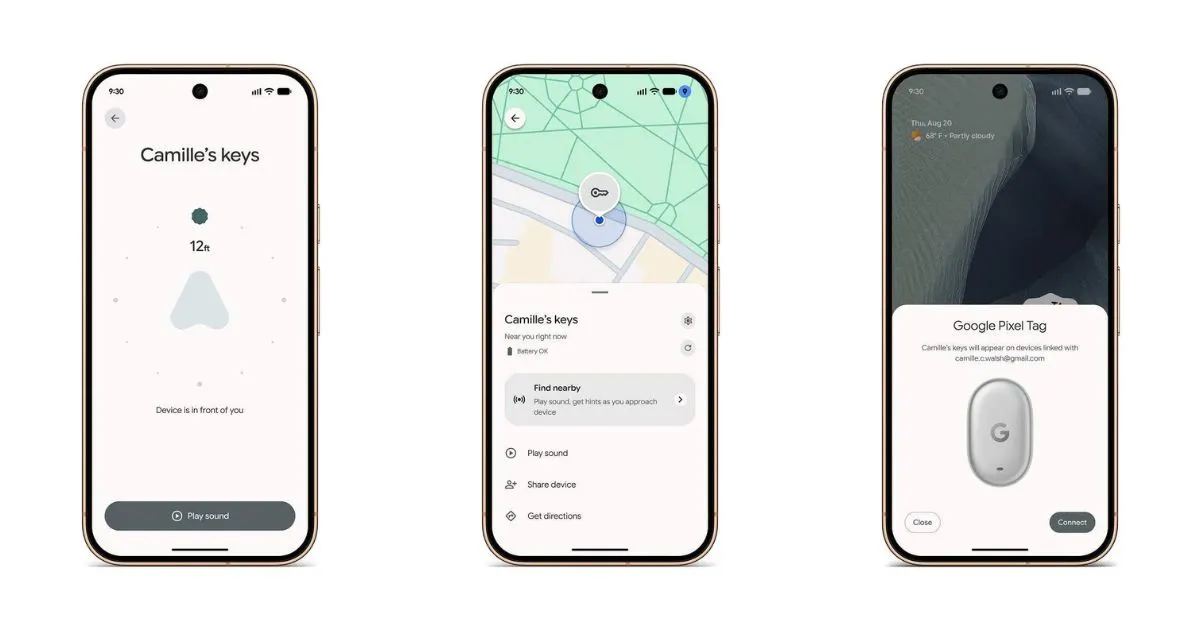
Integration with the Google Find Hub network is a key advantage of this device. While within Bluetooth range, users can view the tag’s location via Find Hub and also emit a sound from the built‑in speaker to help locate it directly.
More precise searching is supported by Ultra‑Wideband (UWB) and Bluetooth Channel Sounding. UWB provides a Precision Finding feature, while Channel Sounding helps measure distance more accurately than conventional Bluetooth methods.
Search guidance can also display distance and direction, and Precision Finding can operate up to roughly 50 metres from a compatible phone. Bluetooth Channel Sounding technology uses Phase‑Based Ranging for more precise distance measurement compared to the RSSI method, which only estimates distance based on signal strength.
However, this feature requires a device running Android 16 or newer and Bluetooth 6.0. Meanwhile, UWB Precision Finding needs a phone with UWB hardware. The device can still be used on older Android versions, but not all precise tracking features will be available.
Also read: Google Disco, an AI browser experiment that transforms how you surf the web
Find Hub and Reverse Phone Finding Feature
When the device is outside the phone’s Bluetooth range, the Google Find Hub network can help locate it via more than 1 billion Android devices near the tag’s location. Nearby Android devices can assist in sending location information, so users still have a chance to find the item even when far from their phone.
Google also employs end‑to‑end encryption to protect location information when the crowdsourced network is used. Interestingly, a built‑in button makes the tracking process bidirectional.
The button can be pressed to make the connected phone emit a sound. This way, users can not only search for the tag via the phone but also use the tag to help locate a phone that is misplaced or hard to find.
Speaker, Fast Pair, and Security Features
The built‑in speaker helps users locate items when the tag is still within Bluetooth range. The emitted sound can make searching easier when the tag is hidden between sofa cushions, piles of clothing, or other hard‑to‑see places.
Setup is also simplified via Fast Pair. Users just need to pull out the battery tab, bring the device close to an Android phone, and follow the on‑screen instructions. The device works with Android 9 or newer, and the tag can be named through the Find Hub app based on item category or a custom name.
A single tag can be shared with up to 10 people, so shared items like family luggage, house keys, or other belongings can be searched by multiple users. To help prevent items from being left behind, a Left Behind alert feature provides a warning when a tagged item starts to lag behind the user.
Security is also addressed with an Unknown Tag Alerts feature. The phone can issue a warning when it detects an unfamiliar tag traveling with the user. The system then provides information about the tag’s location, instructions on how to make it emit a sound, and further steps that can be taken. This feature helps mitigate the risk of tracker misuse.
Also read: Google Assistant will be turned off on Android, Gemini will replace it
Battery and Pixel Tag Ecosystem Support
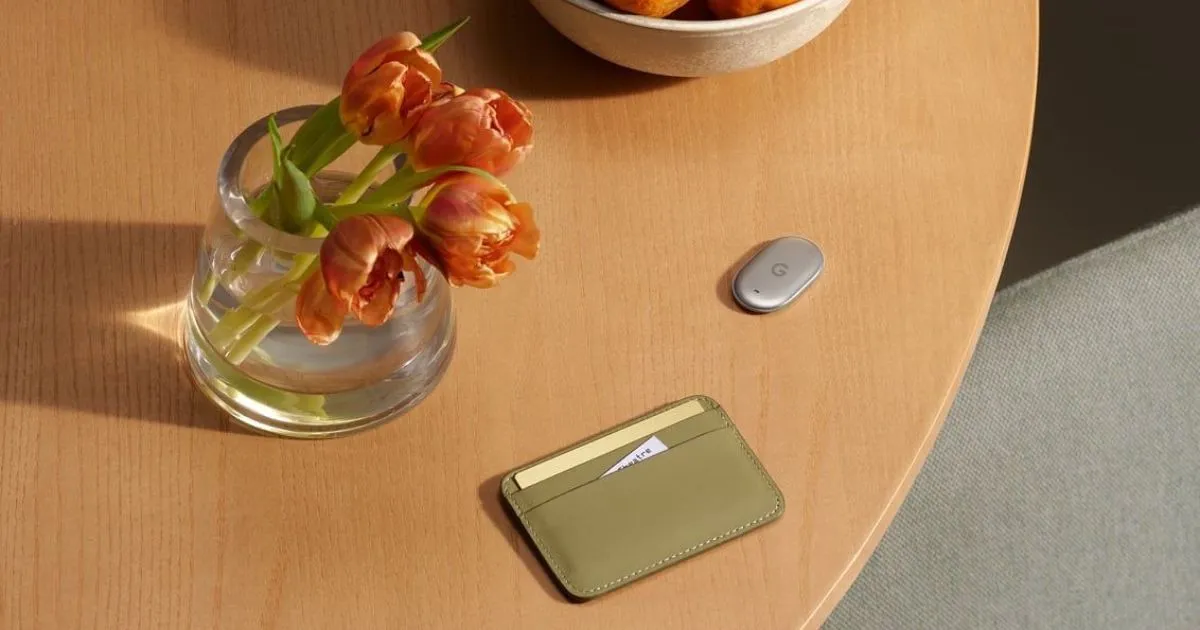
Power for the Pixel Tag comes from a CR2032 coin cell battery that users can replace themselves and that lasts up to a year. When the battery runs out, users simply swap it for a new one, so the device does not need to be discarded.
A low‑battery reminder feature is also available, sending a notification every two weeks until the battery is completely drained. This system helps users avoid forgetting to replace the battery after receiving the first warning.
The experience of locating items can also be performed via other devices within the Google ecosystem. Users can find and sound the Pixel Tag through a Pixel Watch using Find Hub or a browser. Additionally, integration with Gemini via Pixel Buds allows users to ask Gemini to emit a sound from the tag hands‑free.
Google Pixel Tag Price
The Google Pixel Tag is priced at US$29.99 for a 1‑Pack, while a 4‑Pack costs US$99.99. Converting to Indonesian rupiah at an exchange rate of roughly Rp16,000 per US$1, the price is approximately Rp480,000 for a single unit and Rp1.6 million for four units.
For the Indonesian market, there is currently no official information regarding the price or release schedule of the Google Pixel Tag. If the device is not officially marketed in Indonesia, you may consider purchasing it from abroad or through stores that offer imported products.
Also read other Gadget info at Latest Gadget Info
thanks for visiting thecuy. 🙂

Saya adalah penulis di thecuy.com, sebuah website yang berfokus membagikan tips keuangan, investasi, dan cara mengelola uang dengan bijak, khususnya untuk pemula yang ingin belajar dari nol.
Melalui thecuy.com, saya ingin membantu pembaca memahami dunia finansial tanpa ribet, dengan bahasa yang sederhana.